Cora Merrick Park’s planned wellness offering warrants a closer look at daily usability. For buyers, the decisive questions concern simultaneous occupancy, guest privileges, independent-practitioner access, and enforceable service commitments.
For a buyer who treats wellness as part of everyday life, the meaningful luxury is dependable access. A recovery space has greater value when it accommodates a preferred morning routine, welcomes a visiting family member, or permits an established practitioner. At Cora Merrick Park, those operational questions deserve as much attention as the planned facilities themselves.
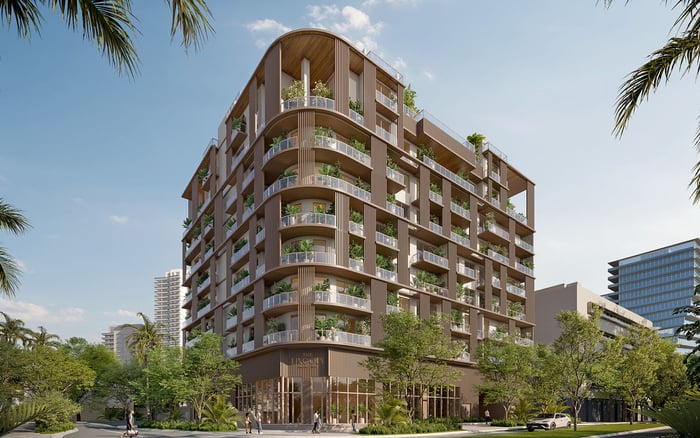
The planned 13-story condominium comprises 74 residences at 4241 Aurora Street in Coral Gables, opposite The Shops at Merrick Park. Homes range from one-bedroom residences to three-bedroom-plus-den penthouses. The planned wellness offering includes a fitness center, rooftop pool with sun shelf and cabanas, outdoor wellness lounge, yoga terrace, and recovery amenities.
The distinction is straightforward: an advertised amenity is not a fully defined access entitlement. Maximum simultaneous occupancy, guest eligibility, and independent-practitioner permissions remain publicly unresolved. That establishes neither a prohibition nor a deficiency. It identifies what a buyer should confirm before assigning personal value to the program.
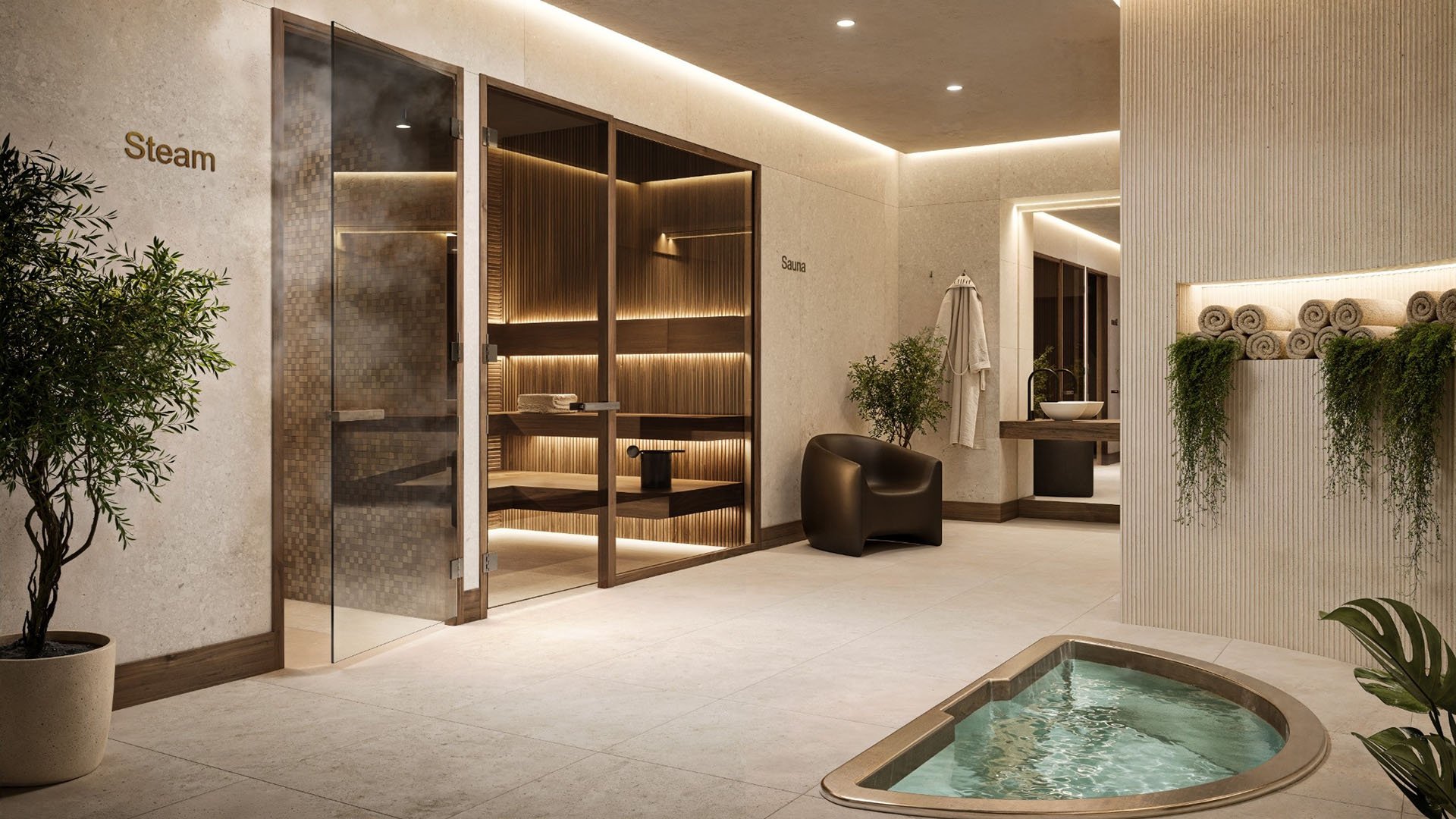
Planned recovery amenities include hot and cold plunges, a steam room, infrared sauna, and red-light therapy. A spa with cold plunge is also described, but its final floor area, treatment-room count, operating hours, and service menu are not established in the available public details. Buyers should not assume these descriptions refer to separate installations or a staffed treatment business.
A useful review distinguishes three categories: physical facilities, permission to use them, and services delivered by people. Equipment can be planned without a corresponding treatment menu. A concierge can be advertised without a contractual obligation to arrange a particular practitioner.
Request final layouts and equipment specifications alongside the operating policy. Establish which facilities are self-directed, which require reservations or supervision, and whether any treatments carry separate charges. These are matters for written confirmation, not existing promises.
The residence count does not establish wellness capacity. Maximum simultaneous occupancy remains undisclosed for the fitness center, spa, sauna, steam room, plunges, yoga terrace, and recovery areas. Without those limits, a buyer cannot reliably equate an extensive amenity offering with convenient peak-hour access.
Ask for an area-by-area schedule covering occupancy, opening hours, reservation windows, session lengths, and restrictions on consecutive bookings. Clarify whether guests count against the same capacity limits and whether organized sessions temporarily displace individual use.
Then test a realistic scenario: two household members exercising before work, followed by a recovery session, perhaps with a visiting guest. The point is not to predict congestion, but to establish whether the rules accommodate the routine for which the residence is being considered. Ask how cleaning, maintenance, and equipment downtime will affect availability.
The wellness spaces are marketed as residential amenities. Public day passes and general-public access are not confirmed. Nor does residential positioning establish whether an owner's guests may use every facility, under what conditions, or at what cost.
Guest allowances, age restrictions, booking requirements, access hours, and resident-accompaniment rules remain undocumented in the public details. Request a policy that distinguishes overnight visitors from day guests and explains whether access differs across the pool, fitness center, and recovery spaces. Ask whether guest privileges can be suspended during busy periods.
For buyers also considering Ponce Park Coral Gables, the useful comparison is documentary rather than visual: obtain each property's guest rules before comparing how comfortably either would support entertaining or extended family visits. Do not presume equivalent privileges.
Independent-practitioner access remains undocumented, including whether residents may bring trainers, therapists, physicians, or other providers into their residences or shared wellness areas. Permission for a professional to enter a private home should not be treated as permission to conduct sessions in a common facility.
Request separate answers for in-residence appointments, one-to-one training in the fitness center, and treatments in shared recovery spaces. Clarify permitted work locations, appointment hours, visitor registration, licensing and insurance requirements, and responsibility for credential checks. Ask how liability is allocated and whether facility or service charges apply.
If continuity with an existing practitioner is central to the purchase, resolve that point before relying on the amenity program. The same discipline applies when considering The Well Coconut Grove: wellness positioning alone is not evidence of permission to bring an independent provider.
A dedicated wellness concierge trained in wellness is advertised. The publicly described role does not establish whether that person provides clinical advice, coordinates practitioners, schedules treatments, or assists only with amenity use. Buyers should not interpret the title as evidence of clinical qualifications.
Request the concierge's scope, staffing model, employer, hours, and contractual service commitments. Confirm whether appointment coordination, if offered, includes any assurance of availability. Launch-event demonstrations of red-light therapy and lymphatic compression do not establish continuing resident treatment services.
The development is described as pursuing WELL residential certification through the International WELL Building Institute; completed certification is not conclusively documented. Planned features include advanced air and water filtration, biophilic design, natural materials, lighting considerations, and acoustic measures. Verify the current certification status and final specifications separately. Neither the pursuit of certification nor an equipment description establishes medical suitability or uninterrupted operation.
A planned 5,000-square-foot public park at street level is separate from the private residential amenity program. Plans also include approximately 8,000 square feet of ground-floor retail and 13,000 square feet of office space on the second and third floors. These commercial spaces do not establish confirmed medical tenants or a resident practitioner program.
Ask how park, retail, and office visitors will be separated from residential circulation and wellness-area access. Assess privacy through the access-control plan rather than inferring it from the residential offering.
Nearby businesses named in the neighborhood wellness offering include Equinox Coral Gables, JETSET Pilates, and Pure Executive Health & Wellness. Their inclusion does not promise memberships, discounts, preferred access, or appointment availability. Treat neighborhood convenience and included resident benefits as separate propositions.
Before applicable cancellation deadlines, request the declaration, condominium documents, rules and regulations, and final amenity-use policy. Have counsel identify where material assurances appear, what remains subject to change, and who has authority to revise the rules.
Prioritize the few conditions that would change your decision: usable hours, guest access, continuity with a practitioner, or a defined concierge service. Where terms remain unsettled, do not treat the preferred outcome as part of the purchase. The strongest wellness proposition is one whose written operating framework supports the life you intend to lead.
Explore South Florida residences with a more discerning buyer perspective at MILLION.
If branded residences are on your mind — as a home or as an allocation — we would be glad to share what we are seeing, privately.
Begin a quiet conversationThe planned residential address is 4241 Aurora Street in Coral Gables, opposite The Shops at Merrick Park.
The 13-story development is planned to contain 74 residences, ranging from one-bedroom homes to three-bedroom-plus-den penthouses.
The planned offering includes a fitness center, rooftop pool, outdoor wellness lounge, yoga terrace, hot and cold plunges, steam room, infrared sauna, and red-light therapy.
Maximum simultaneous occupancy remains undisclosed for the principal wellness spaces. Buyers should request written limits and reservation policies for each area.
Guest eligibility remains undocumented in the public details, rather than confirmed or prohibited. Allowances, age limits, accompaniment requirements, and booking rules need written clarification.
Public day passes and general-public access are not confirmed. The facilities are marketed as residential amenities.
Independent-practitioner access is not publicly established. Buyers should distinguish permission for in-residence appointments from permission to work in shared wellness areas.
A dedicated wellness concierge trained in wellness is advertised, but the service scope is not defined. Clinical advice, practitioner coordination, and treatment scheduling should not be assumed.
The development is described as pursuing WELL residential certification. Completed certification is not conclusively documented and should be verified directly.
Request the declaration, condominium documents, rules and regulations, and final amenity-use policy before applicable cancellation deadlines. Seek written clarification of capacity, guest access, practitioner permissions, and concierge commitments.