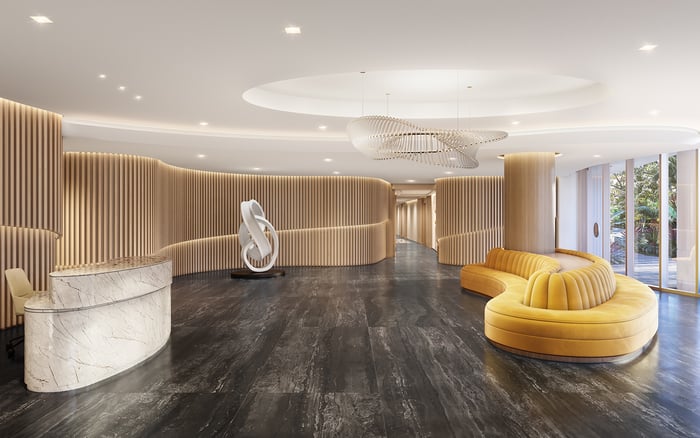
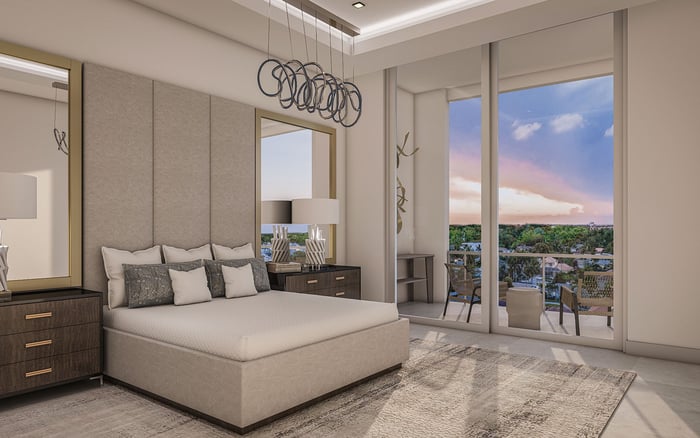
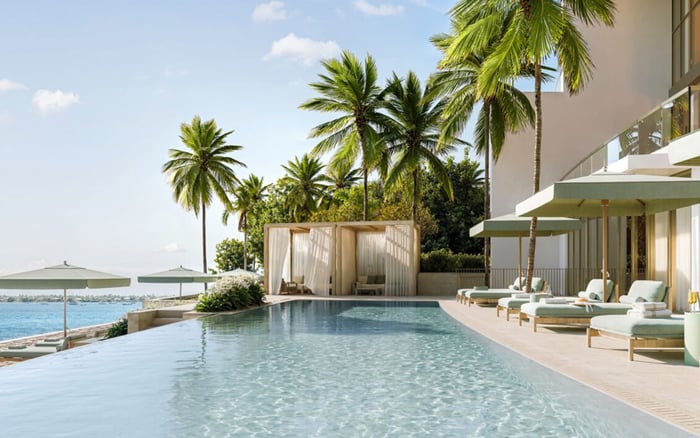
A buyer’s guide to evaluating reserves, capital obligations, hospitality agreements, and projected ownership costs at 619 Residences in Miami and Mandarin Oriental Residences, West Palm Beach.
In a hospitality-branded residence, the most consequential luxury may be clarity: knowing which services the association funds, which expenses remain personal, and how future capital work will be paid for. An elegant arrival experience cannot answer those questions. The governing documents and financial assumptions must.
First, distinguish the locations. 619 Residences by Foster + Partners + Nobu Hospitality is identified as 619 Brickell, also called Nobu Residences Miami, at 619 Brickell Avenue in Miami. It is not a West Palm Beach project. Mandarin Oriental Residences, West Palm Beach is at 5400 N. Flagler Drive.
This comparison concerns two distinct developments and ownership structures-not neighboring buildings with interchangeable costs. Neither a hospitality name nor an opening assessment, on its own, establishes long-term fee predictability.
Plans for 619 call for a 75-story condominium tower, with 13th Floor Investments and Key International as developers, Foster + Partners as architect, and Nobu Hospitality providing hospitality branding. Its stated closing target is 2031. Mandarin Oriental’s projected program comprises approximately 31 stories and 87 residences, with construction forecast to begin in 2027 and completion projected for 2031. These dates are targets, not delivery guarantees.
For a buyer, the time remaining until occupancy makes the assumptions behind an assessment especially important. A projected budget describes anticipated operations; it does not establish what insurance, staffing, maintenance, and hospitality services will actually cost when the building opens.
Begin with the prospectus’s estimated operating budget rather than treating an advertised fee as definitive. Request the latest version and identify its preparation date, occupancy assumptions, reserve contribution, and treatment of services supplied by outside parties. Ask what could change before closing and how revised estimates will be communicated.
Advertised association fees at Mandarin Oriental include $4,302 monthly for unit 903 and $4,385 monthly for unit 801. A separate advertised median is $5,326 monthly. These figures offer useful starting points, but they are not equivalent measures. Two unit-specific quotations and a median cannot establish a building-wide assessment schedule.
The differences alone do not indicate inconsistent budgeting. Confirm each quotation’s effective date, included expenses, and allocation to the particular residence. Then reconcile the figure with the current estimated budget. A median is no substitute for the assessment attached to the home being purchased.
For 619, obtain the assessment figure from the purchaser documents rather than inferring it from pricing or the hospitality program. A defensible fee comparison requires comparable budget versions and expense categories for both residences.
Hotel-style staffing, concierge services, and extensive amenity operations can add operating costs. Yet access to a service does not necessarily mean its cost is included in the association assessment.
At 619, Nobu Hospitality is expected to oversee restaurant service, in-residence dining, and private-chef offerings. Common-area Nobu dining is expected to depend on a license that the condominium association must enter into and maintain. Some services may carry separate charges or be delivered by third parties.
That distinction warrants legal review. Request the applicable license and service agreements, then ask who pays recurring charges, what renewal terms apply, and what happens if an agreement changes or ends. These are questions to resolve, not assumptions about an adverse outcome.
For buyers also considering Mr. C Residences West Palm Beach, the same framework applies: separate association-funded operations from optional hospitality spending before comparing monthly totals. A brand name alone does not establish identical inclusions or contractual protections.
Reserve contributions fund future capital repairs and replacement of major building components. Their purpose differs from paying today’s staff or maintaining an amenity in ordinary use. An attractive operating assessment should therefore be read alongside the capital funding schedule, not in isolation.
Request the reserve schedule or study. Review the components it covers, their assumed replacement timing, estimated costs, and planned contributions. Ask how those assumptions will be updated and how costs are allocated to the selected residence. A reserve line item is a starting point, not a complete explanation of adequacy.
Inadequate funding can expose owners to additional assessments. Equally, the absence of a reserve document from a marketing presentation does not prove that reserves are missing or deficient. Advertised fees alone cannot establish either project’s reserve strength or future special-assessment exposure.
The useful test is whether the proposed funding plan matches the association’s actual obligations. A lower opening fee is not automatically the more disciplined financial choice.
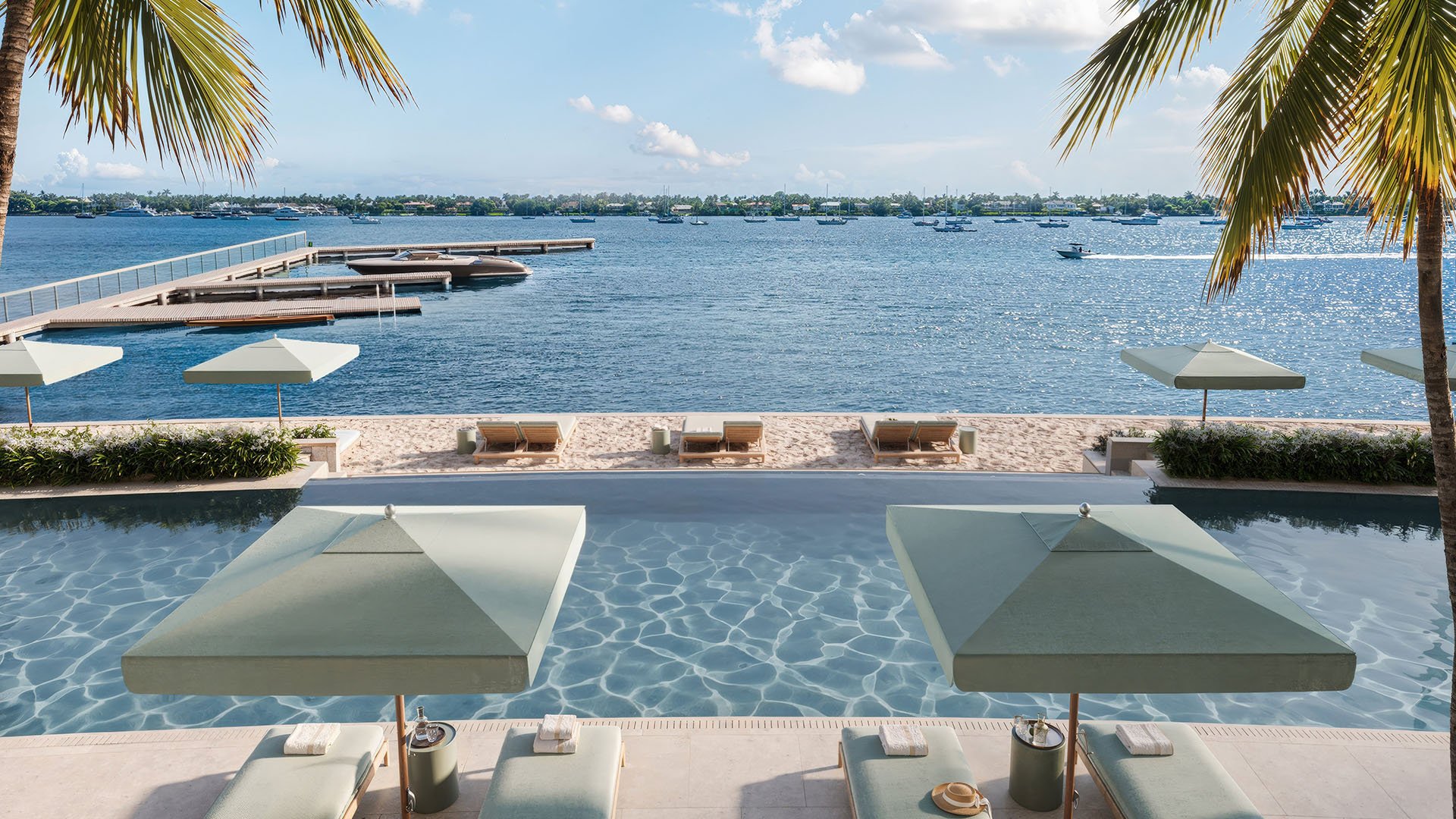
Waterfront structures, where applicable, belong in the same ownership review as roofs, elevators, pools, and parking components. For each relevant asset, determine whether the condominium association must maintain and replace it, whether another entity shares the expense, and which document establishes that allocation.
Ask for forecast replacement timing and the intended funding source. Distinguish routine maintenance from major replacement, and separate association-funded capital work from any developer obligation. If a subsidy, reimbursement, or capital commitment is presented, request its written terms, duration, limits, and expiration conditions.
Do not assume that a developer or hospitality operator will absorb future costs simply because it is associated with the project. Conversely, do not presume owners bear every expense without reviewing the allocation. Establish responsibility before projecting cost.
Create a side-by-side schedule for the actual residences under consideration. Start with association-funded insurance, staffing, security, valet, amenities, utilities, management, and reserves, confirming which categories apply. Then add separately billed dining, hospitality, utilities, valet, and owner insurance where relevant, taking care not to count any expense twice.
Before committing, have advisers review the declaration, prospectus, estimated budget, reserve materials, insurance assumptions, staffing plan, amenity agreements, brand licenses, and any subsidy provisions. Ask them to test how changes in major expenses would affect the owner’s obligation without presenting those scenarios as forecasts.
The objective is not an assurance that assessments will never rise. It is a clear explanation of what the opening estimate buys, how future work is funded, and which contractual obligations can change the cost of ownership.
For a considered approach to South Florida’s exceptional residences, explore MILLION.
If branded residences are on your mind — as a home or as an allocation — we would be glad to share what we are seeing, privately.
Begin a quiet conversationNo. It is identified as 619 Brickell, also called Nobu Residences Miami, at 619 Brickell Avenue in Miami.
It is at 5400 N. Flagler Drive in West Palm Beach.
Unit 903 has an advertised monthly association fee of $4,302, while unit 801 has a quotation of $4,385. Confirm each amount and its coverage against the current estimated budget.
No. That figure is an advertised median, not a unit-specific assessment schedule.
No. The 619 closing date is a target, and Mandarin Oriental’s completion date is a forecast.
Start with the prospectus’s estimated operating budget. Reconcile its assumptions and expense allocations with the particular residence being considered.
Buyers should not assume so. Some services may involve separate charges or third-party providers, and common-area Nobu dining is expected to depend on an association-maintained license.
Reserves fund future capital repairs and replacement of major building components. Inadequate funding can expose owners to additional assessments.
No. Reserve adequacy requires evaluating the funding schedule against the association’s obligations, component costs, and replacement assumptions.
Ask who maintains and replaces relevant roofs, elevators, pools, waterfront structures, and parking components. Confirm the funding plan and any written developer subsidy or reimbursement terms.