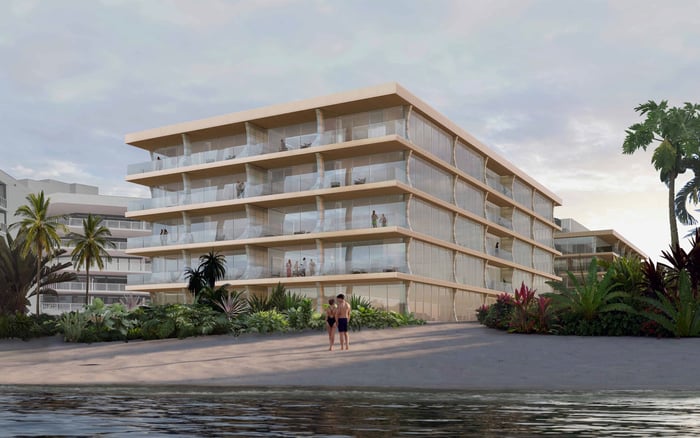
Before reserving a West Palm Beach residence, examine the financial structure behind the service promise: vendor escalation clauses, fully costed staffing, operating variances, and reserve funding. A disciplined review distinguishes an attractive opening assessment from a credible long-term ownership budget.

A residence can meet every aesthetic expectation and still warrant a closer review of its operating economics. Before reserving in West Palm Beach, the financial question is not simply whether the monthly assessment feels proportionate to the address. It is whether the budget credibly supports the service experience you intend to purchase.
For a buyer considering Alba West Palm Beach, that means treating financial review as a distinct part of the selection process. Ask what is included today, what can change, and which assumptions determine future owner contributions. Apply the same discipline across your shortlist, without presuming that any particular building has unfavorable contracts or insufficient staffing.
Three areas deserve attention: how service-contract costs increase, how staffing is costed, and how closely spending follows the budget. Read them together, not as unrelated disclosures.
For an operating association, request the adopted budget, the prior two budgets, and year-to-date actual spending. Add 24-36 months of budget-to-actual statements, the latest reserve study, current reserve balances, and the most recent 12 months of board minutes. These are recommended review periods-not statutory requirements or a promise of unrestricted inspection rights for prospective purchasers.
Request a breakdown of estimated revenues and expenses by account and expense classification, with reserve funding shown separately from annual operating expenses. Use that detail to distinguish payroll, insurance, utilities, and routine repairs from major replacement obligations.
Ask your advisers to identify which documents are adopted, proposed, or provisional. A polished summary can provide orientation, but it should not replace the underlying schedules. Where access requires coordination, have counsel clarify the appropriate route and the scope of available records.
An annual vendor amount is only a starting point. Request the written agreement for each major service and a summary of its escalation formula, cap, renewal deadline, termination rights, reimbursable charges, and minimum service levels. Include agreements for material purchases, equipment leases, and rentals in the review where they affect the operating budget.
The essential question is what triggers the next increase: a fixed adjustment, an index-linked change, a wage pass-through, or a price negotiated at renewal? Does the increase apply only to labor or to the entire contract? Ask whether reimbursable expenses fall inside or outside any stated cap.
When evaluating Forté on Flagler West Palm Beach, include those questions in the document request rather than drawing conclusions from the assessment alone. Ask how each material contract maps to its budget line, including when increases take effect within the financial year.
Finally, ask what happens if service falls below the agreed standard. Price predictability and enforceable service expectations deserve equal attention.
Staffing deserves more detail than a single payroll figure. Request a schedule showing positions, shifts, coverage hours, compensation, benefits, payroll taxes, overtime, holiday coverage, and outsourced labor assumptions. Then ask how those inputs reconcile to the operating budget.
A useful review follows the resident experience through an ordinary day. Which roles support arrival, requests, maintenance, and shared spaces? Who covers breaks, leave, or vacancies? Are outsourced personnel included in the staffing schedule or charged through separate vendor accounts? These questions help establish whether the budget and the advertised service describe the same operating model.
For a buyer comparing Mr. C Residences West Palm Beach with other residences, the point is not to assume a particular headcount. It is to request a costed explanation of the services being offered.
Ask how staffing changes with anticipated occupancy. Identify any developer subsidy, its expiration date, and the projected owner-funded cost after it ends. A supported opening budget and a sustainable ongoing budget are different tests.
Historical spending is most useful when management can explain it. Review insurance, repairs, utilities, payroll, and vendor costs across the requested 24-36 months. For each material variance, ask for the dollar amount, the cause, and whether it represents a one-time event or a recurring obligation.
An isolated expense and a repeatedly underbudgeted service should not be interpreted the same way. Ask whether the latest adopted budget incorporates recurring overruns or still relies on assumptions that actual spending has already challenged. Where costs appear below budget, ask whether the savings reflect efficiency, timing, unfilled positions, or postponed work.
Read the latest 12 months of board minutes alongside the numbers. Look for discussions of deferred maintenance, insurance renewals, special assessments, vendor disputes, and unfavorable variances. The objective is a coherent explanation, not a perfectly smooth expense history.
For unresolved variances, request a written response identifying the proposed correction and whether it could affect future assessments. A verbal assurance is not a substitute for a revised budget assumption.
Where a development has no operating actuals, historical analysis is unavailable. Use a multiyear forecast and a clear schedule of assumptions instead, without treating projections as demonstrated performance.
If Shorecrest Flagler Drive West Palm Beach is on your shortlist, first establish which financial materials represent forecasts and which, if any, reflect actual operations. This is a question to verify, not an assertion about the project's operating status.
Ask for a forecast showing the effects of contract escalators, fuller staffing, changing occupancy, and the expiration of any subsidy. Request a sensitivity analysis illustrating how higher labor or vendor costs would affect owner contributions. The assumptions should be explicit enough for your financial adviser to evaluate independently.
A service budget cannot answer every ownership-cost question. Review the reserve study and balances separately, then consider them alongside operating expenses. Ask which major replacement and deferred-maintenance items are included, what remaining useful lives and cost estimates support the calculations, and how the reserve schedules reconcile with the budget.
Do not assume an association can waive reserve funding or borrow reserve money to resolve operating pressure. Have counsel verify the requirements and restrictions applicable to the property.
Before reserving, seek a clear explanation of contract increases, funded staffing, recurring variances, reserve obligations, and any remaining projections. The goal is not the lowest opening assessment, but an ownership commitment whose costs and service expectations you understand.
For a considered approach to your West Palm Beach residence search, explore MILLION.
If branded residences are on your mind — as a home or as an allocation — we would be glad to share what we are seeing, privately.
Begin a quiet conversationRequest the adopted budget, the prior two budgets, year-to-date actuals, reserve information, and recent board minutes. These requests are due-diligence recommendations, not guarantees of prospective-buyer access.
Request 24–36 months where operating history exists. That period can help distinguish isolated expenses from repeated overruns.
Ask what triggers the increase, how it is calculated, whether it is capped, and whether it applies to labor alone or the entire contract. Clarify the treatment of reimbursable charges.
Written agreements let you examine escalation formulas, renewal terms, reimbursable charges, and service expectations directly. Compare those terms with the amounts and timing assumed in the budget.
Review positions, shifts, coverage hours, compensation, benefits, payroll taxes, overtime, holiday coverage, and outsourced labor. Reconcile those assumptions with the operating budget and advertised services.
A subsidy can affect the amount owners initially fund. Ask whether one exists, when it expires, and what owner-funded costs are projected afterward.
No. Ask whether it arose from a one-time event or a recurring cost, and whether the next budget incorporates any continuing expense.
Request a multiyear forecast with explicit contract, staffing, occupancy, and subsidy assumptions. Treat it as a projection rather than evidence of past performance.
Operating expenses fund ongoing services, while reserves address capital expenditures and deferred maintenance. Reviewing both gives a fuller picture than the monthly assessment alone.
Review the latest 12 months for discussions of deferred maintenance, insurance renewals, special assessments, vendor disputes, and unfavorable variances. Compare those discussions with the financial statements.