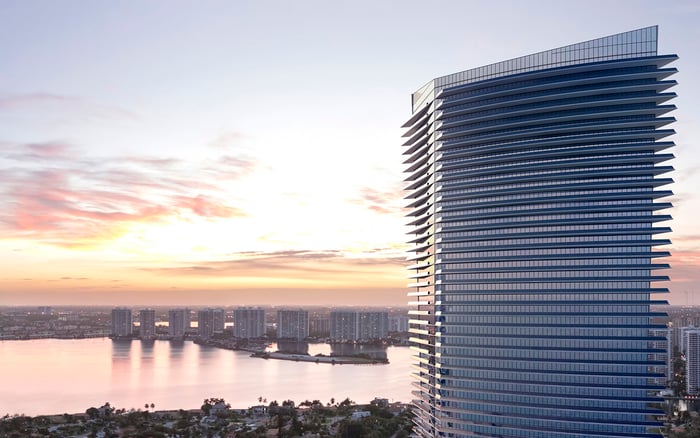
Before reserving an Aventura residence, connect address-specific flood information with garage elevations, essential equipment, evacuation procedures, and written temporary-housing terms.

In Aventura, a reservation decision deserves the same precision as the residence itself. A considered floor plan and exceptional outlook belong in the conversation, but so do the garage ramp, electrical equipment, and arrangements for leaving and returning. The question is not simply whether a property occupies a flood zone. It is how that designation connects to the building’s physical systems and your household’s plans.
An address-specific flood review is essential; findings for the neighborhood or a neighboring tower are no substitute. For a buyer considering Avenia Aventura, the starting point should be the same as for any other residence: request the mapping, elevation documentation, and written operating procedures before committing.
A Special Flood Hazard Area has a 1% or greater chance of flooding in any given year. Treat that annual probability as a planning consideration, not a prediction of when a particular building will flood.
Obtain the address-specific flood-zone designation, applicable map panel, and base flood elevation where shown. Flood maps identify zones, floodplain boundaries, and base flood elevations; review them alongside the building’s elevation documentation. The objective is to connect mapped information with actual levels, not merely collect a zone label.
Have the building team identify the garage’s lowest elevation and explain its relationship to the base flood elevation. Request the same comparison for essential equipment. If the figures are difficult to reconcile, ask a qualified professional to explain them before taking reassurance from them.
Ask local floodplain officials what property-specific map guidance and flood-protection assistance are available, and whether a property visit would help assess conditions.
A garage review should follow your vehicle’s route, then examine the systems that support it. Ask for documentation rather than accepting broad descriptions such as protected parking or backup power.
Request clear answers to these questions:
Where is the lowest garage level relative to the applicable base flood elevation?
What barriers and pumps are provided, and what documentation explains their operation?
Which systems have backup power, and who activates or checks them?
How do vehicle gates operate during an outage?
When must vehicles be removed, and how are absent owners notified?
Then move beyond parking. Ask where switchgear, generators, elevator controls, fire pumps, water pumps, and HVAC equipment sit. Request a written explanation of what remains operational if particular equipment is unavailable. The residence’s floor alone does not answer questions about the systems serving it.
If your search extends to Bentley Residences Sunny Isles, carry the same questions into that review. Each property requires its own documentation; a project name or presentation establishes neither equipment protection nor operational continuity.
Flood-zone and evacuation-zone checks serve different purposes. Complete both for the exact address. Check the applicable storm-surge planning zone as well, using current county planning information to confirm it.
Obtain written garage-closure, stair-access, evacuation, and re-entry procedures. Ask who communicates decisions, how occupants receive updates, and what arrangements apply when elevators are unavailable. For households with mobility needs, discuss the departure sequence before it becomes urgent.
Confirm the applicable evacuation routes for the address. A mapped route is a starting point for planning, not an assurance that a road will be available during a particular event. Evacuation-route and zone maps are general-reference tools, not real-time road guarantees.
Ask how the property’s exit connects to the wider route network and what current official instructions govern departure. Follow local evacuation orders rather than relying on a blanket hurricane-category threshold.
For a household dividing time between cities, establish who can act when the owner is away. Confirm whether an authorized person can access the vehicle, receive building notices, and coordinate departure before a garage closes. Obtain any relevant permissions and deadlines in writing.
Apply that discipline across a broader search, including One Park Tower by Turnberry North Miami. Repeat the address-specific checks rather than transferring an Aventura property’s findings to another location.
The plan should assign responsibility for each task. Ask who sends notices, who assists with access, and who confirms re-entry. Separately, establish who in your household arranges transport, medication, documents, and accommodation. Do not assume the building accepts those responsibilities.
Temporary housing deserves its own written review. Ask whether a relocation arrangement exists, who provides it, and whether accommodation is guaranteed or subject to availability. Confirm duration, booking responsibility, reimbursement limits, and the documentation needed to claim expenses.
Account explicitly for pets, caregivers, accessibility requirements, and accessible transportation. A lodging option is not a workable household plan unless those details align. Ask what happens if the proposed accommodation is unavailable or the return date changes.
Review applicable master and unit policy declarations with an insurance professional. Request details of flood deductibles, exclusions, contents coverage, loss-assessment terms, and any additional-living-expense provisions. Do not assume either policy pays for relocation, or that a service promise amounts to insurance coverage.
Do not treat archived shelter listings as confirmed destinations in a private relocation plan. Reconfirm current openings through official instructions. Households needing higher-level medical shelter support should also verify current advance-registration requirements and arrangements well before departure is necessary.
Before reserving, organize the review into four parts: mapped exposure, physical protection, operational access, and household continuity. For a proposed residence, ask which materials describe planned systems and which confirm completed conditions. Keep that distinction clear when weighing the answers.
Request a dated response identifying the documents supplied and the person responsible for each operational question. If an answer remains unresolved, ask your adviser how the reservation terms address that uncertainty. Do not substitute an oral assurance for a written commitment.
The decision is not whether a residence can promise an uninterrupted life under every condition. It is whether the available documentation lets you understand the exposure, the departure plan, and the financial responsibility if occupancy is interrupted. That clarity belongs alongside architecture, service, and location in a considered luxury purchase.
For a more considered South Florida residential search, explore MILLION.
If branded residences are on your mind — as a home or as an allocation — we would be glad to share what we are seeing, privately.
Begin a quiet conversationDo not assume a uniform designation. Check the exact address rather than relying on findings for the neighborhood or a neighboring tower.
It is an area with a 1% or greater chance of flooding in any given year. It is not a prediction of when a particular property will flood.
Request the applicable flood map and base flood elevation where shown, alongside the building’s elevation documentation. Ask the building team to relate garage and essential-equipment elevations to that information.
Ask about the lowest garage elevation, barriers, pumps, backup power, and gate operation during outages. Obtain vehicle-removal deadlines and absent-owner notification procedures in writing.
Ask about the location and protection of switchgear, generators, elevator controls, fire pumps, water pumps, and HVAC equipment. Request an explanation of which services remain operational if equipment becomes unavailable.
No. Check both separately for the exact address, confirm the storm-surge planning zone, and follow current local evacuation orders.
No. Evacuation maps are general-reference tools, so current official instructions and road conditions must guide departure.
No. Obtain written terms covering availability, duration, reimbursement, pets, caregivers, accessibility, and transportation before relying on a relocation arrangement.
Review applicable master and unit policy declarations, flood deductibles, exclusions, contents coverage, and loss-assessment terms. Ask an insurance professional whether any additional-living-expense coverage applies.
Not without current confirmation of official opening decisions. Households requiring higher-level medical shelter support should verify current advance-registration requirements and arrangements.