Three boutique Surfside developments pair low residence counts with disclosed construction financing, but buyers still need to examine association budgets, reserves, insurance terms and deductible exposure before contracting.
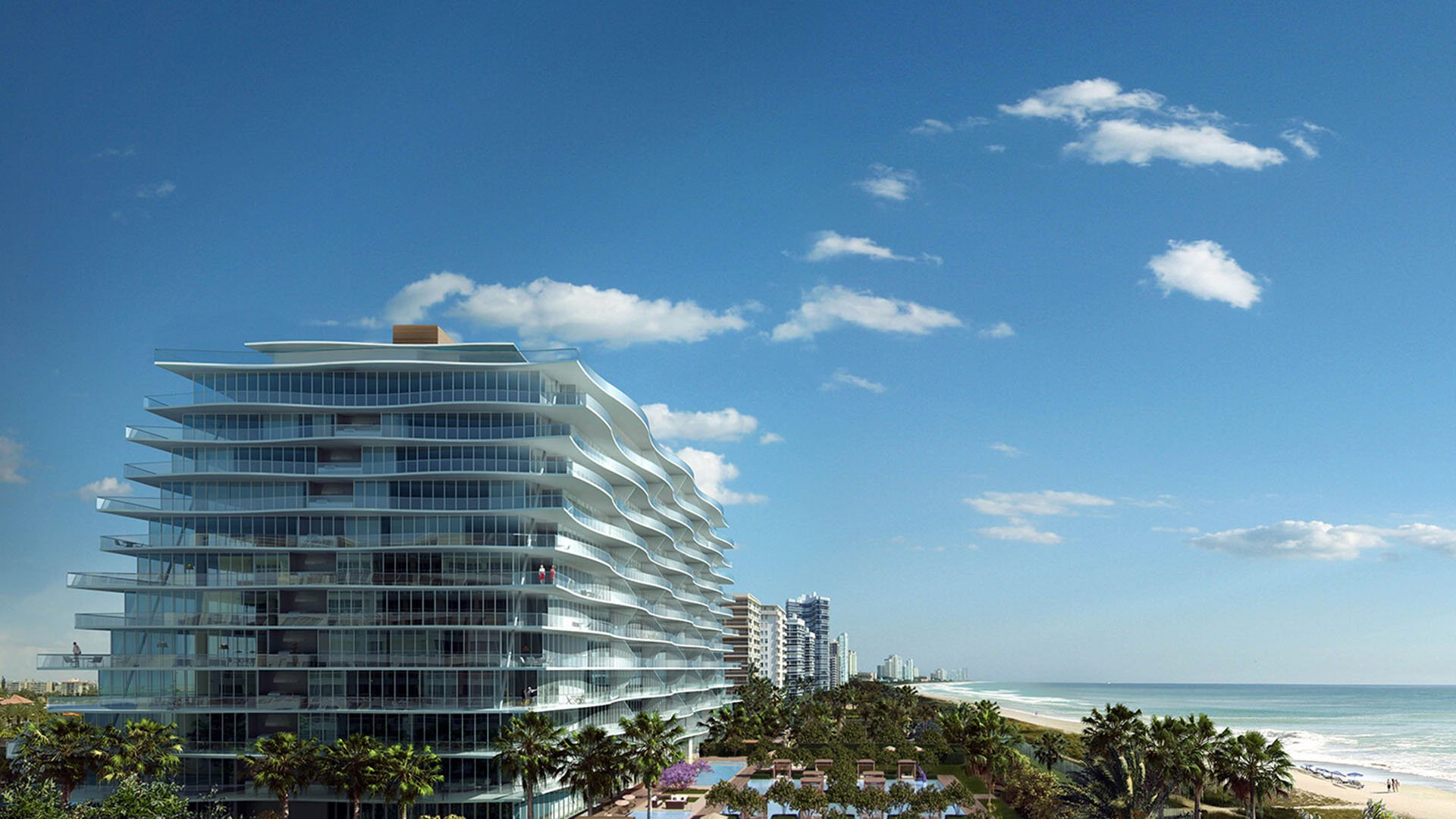
Surfside has long appealed to buyers who favor discretion over spectacle. In a boutique condominium, fewer residences can mean quieter common areas, more intimate governance and a greater sense of privacy. Yet low density also concentrates financial responsibility. Insurance premiums, storm deductibles and major capital obligations are divided among fewer owners, making each household's potential exposure especially important.
That tension defines today's new-construction conversation. A substantial construction loan can show that a developer has secured project financing, but it does not establish how the future condominium association will fund reserves, procure insurance or allocate deductibles. Those answers belong in the contract, proposed budget and governing documents.
Boutique scale is most compelling when privacy is matched by financial visibility.
For oceanfront buyers, the best choice is not simply the smallest building or the most impressive residence. It is the project whose scale, capitalization and disclosed association framework can be evaluated together.
1. Ocean House: 9317 Collins Avenue
Ocean House is the strongest overall expression of boutique oceanfront living in this comparison. Planned as a 12-story condominium with 25 residences, it is located at 9317 Collins Avenue. Construction has begun, residences are marketed from approximately $5 million, and completion is expected in 2027.
Multiplan Real Estate Asset Management secured a $30 million construction loan from Bradesco Bank. The financing is a meaningful marker of capitalization, but purchasers should separately verify the proposed association budget, reserve assumptions and master insurance specifications. With only 25 owners, clarity around the allocation of fixed costs is particularly important.
2. Surf Row Residences: 8800 Collins Avenue
Surf Row Residences is the strongest boutique option at a lower entry point. Planned for 24 residences, the development is identified with 8800 Collins Avenue and was formerly associated with 8809 Harding Avenue. The concept evolved from eight townhouses into a 24-residence condominium with smaller units and lower entry pricing. Prices begin near $1.4 million.
Developers LD&D and One Capital secured a $30.5 million construction loan from Maxim Capital Group. Buyers drawn to the relative entry point should still scrutinize the long-term operating assumptions. A lower purchase price does not necessarily translate into lower per-unit exposure to insurance costs, deductibles or future capital needs.
3. Surf House: 8995 Collins Avenue
Surf House is the choice for very low-density, large-format living. Approved for 19 condominiums across 11 stories, the project is planned for a 25,171-square-foot site. Residences are expected to average more than 4,000 square feet, creating a distinctly private proposition.
Fort Partners obtained a $111 million construction loan for the development. Separate financing tied to adjacent holdings or related development should not automatically be treated as financing for Surf House. Purchasers should use the relevant offering and loan materials to confirm which obligations and collateral apply specifically to 8995 Collins Avenue.
All three projects have disclosed construction financing, giving buyers a concrete starting point for evaluating capitalization. Ocean House has a $30 million loan, Surf Row has a $30.5 million loan, and Surf House has a $111 million loan. These figures are not directly comparable measures of buyer safety because the developments differ in scale, residence format and project scope.
More importantly, a developer's construction facility is not an association reserve account. It does not prove that reserves will be fully funded after turnover, that insurance renewals will remain affordable or that deductibles will be allocated on buyer-friendly terms. Construction financing answers a development-stage question; association documents answer ownership-stage questions.
For a broader Surfside perspective, buyers can review Ocean House Surfside alongside established local properties such as Arte Surfside. The purpose is not to assume identical economics, but to compare the quality and specificity of documents presented across the market.
The master insurance specifications should identify contemplated coverages, limits and key exclusions. Buyers should focus on wind and flood deductibles, including whether they are expressed as percentages, fixed amounts or another structure. Equally important is the language explaining how an uninsured loss or deductible may be allocated among owners.
A careful review should also establish which components the association insures and which are the residence owner's responsibility. The practical objective is to understand the boundary between the master policy and an owner's individual coverage before closing-not to discover gaps after an event.
Nearby luxury properties such as Fendi Château Residences Surfside and The Surf Club Four Seasons Surfside can provide useful comparison points when assessing how clearly a building communicates ownership responsibilities. Their inclusion offers context, not a claim that their insurance structures mirror those of any project in the ranking.
Begin with the proposed association budget and reserve schedule. Identify the included items, the useful-life assumptions applied to major components and the planned annual contributions. Then determine how those contributions translate to each residence under the proposed allocation formula.
Developer-controlled association provisions warrant equal scrutiny. Buyers should understand the developer's voting rights, the anticipated transition process and any authority to amend budgets or operating arrangements. The central issue is not whether control exists during development, but whether its scope and duration are clearly disclosed.
The disciplined approach is to evaluate privacy and financial structure together. A building with 19, 24 or 25 residences may offer exceptional intimacy, but a smaller ownership base makes every budget assumption more consequential.
Ocean House ranks first for buyers seeking a boutique oceanfront condominium with construction underway and a stated 2027 completion horizon. Surf Row offers the most accessible entry among the three based on its starting price, while Surf House has the lowest residence count and the largest stated average home size.
None should be selected on financing alone. Before contracting, request the proposed budget, reserve schedule, master insurance specifications, wind and flood deductible terms, deductible-allocation language and developer-control provisions. Appropriate legal and insurance advisers should evaluate how these documents interact.
Surfside rewards buyers who value restraint, but discretion should never obscure the economics of collective ownership. The most refined purchase aligns low density and capitalization with transparent operating obligations.
For discreet guidance on Surfside's boutique condominium market, connect with MILLION.
If branded residences are on your mind — as a home or as an allocation — we would be glad to share what we are seeing, privately.
Begin a quiet conversationOcean House ranks first for its 25-residence oceanfront scale, active construction and disclosed $30 million construction loan.
Ocean House is planned as a 12-story condominium with 25 residences at 9317 Collins Avenue.
Ocean House is expected to be completed in 2027.
Surf Row Residences reportedly starts near $1.4 million.
Surf House is approved for 19 condominiums across 11 stories.
The residences are planned to average more than 4,000 square feet.
No. Construction financing indicates project capitalization, but it does not establish the future association's reserve funding or insurance terms.
Review master policy specifications, coverage limits, exclusions, wind and flood deductibles, and the language governing deductible allocation.
Fixed insurance costs and large deductibles are divided among fewer owners, potentially making each residence's share more consequential.
Request the proposed association budget, reserve schedule, allocation formulas and relevant developer-controlled association provisions.