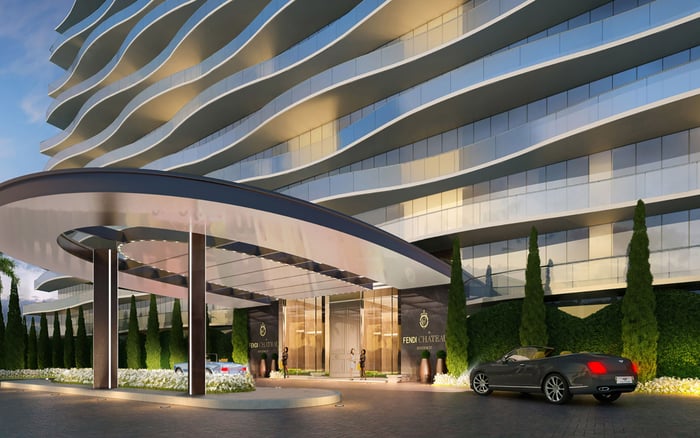
A buyer-focused framework for evaluating acoustic specifications, equipment adjacency, flooring controls, and noise enforcement at Rivage Bal Harbour, with precise questions for counsel and management.
At Rivage Bal Harbour, marketed as a luxury oceanfront condominium at 10245 Collins Avenue, Bal Harbour, FL 33154, quiet deserves the same attention as the residence plan. A considered purchase should examine not only the rooms within the home, but also the equipment, assemblies, and operating rules surrounding it.
Verified floor/ceiling acoustic ratings and complete equipment-room locations around each residence remain unestablished in the publicly available materials. That is not evidence of deficient performance. It is a reason to request residence-specific documentation before treating acoustic comfort as settled.
For counsel and management, the objective is straightforward: distinguish design intentions from documented performance, then identify who must act if intrusive sound develops.
Begin with Sound Transmission Class, or STC, and Impact Insulation Class, or IIC. Ask which targets apply to complete floor/ceiling assemblies, which STC targets apply to demising walls and entry doors, and what independent testing supports each answer.
The operative word is complete. Request the assembly description associated with each rating rather than accepting an isolated number for a material or component. Ask whether the documentation describes a design target or a tested installation, and whether it corresponds to the residence's proposed finishes.
Have an acoustical professional review what the documentation establishes about airborne and impact sound. Counsel should then identify which specifications, if any, are incorporated into enforceable purchase documents and what recourse those documents provide if performance falls short.
A buyer also considering Oceana Bal Harbour should apply the same documentary standard. This is a framework for comparison, not a claim that either property's acoustic performance is better or worse.
A residence floor plan is not a complete adjacency study. Request annotated plans locating mechanical rooms, pumps, elevators, generators, and amenity spaces above, below, and beside the specific home.
Ask management to distinguish confirmed locations from those still subject to revision. Where an adjoining space carries a general label, request its intended use and equipment schedule. Counsel should ask whether relevant changes must be disclosed and whether any contractual protection addresses them.
Focus the review on the relationship between potential sound sources and bedrooms, living areas, and other quiet spaces. Do not assume that a high floor, a large residence, or separation from a visible equipment room resolves every sound-transmission question.
A useful deliverable is a marked plan paired with written answers identifying nearby equipment, intended operating patterns, and the person responsible for resolving outstanding adjacency questions.
In a different condominium, rooftop mechanical noise reached a home despite a concrete slab at least 12 inches thick and reported sound attenuation of at least STC 56. Structure-borne transmission through the curtain wall was identified, with attention directed toward isolating machinery at its source.
That example establishes nothing about Rivage's construction or performance. Its relevance is narrower: slab thickness alone is not a sufficient answer to a mechanical-noise question.
Ask what resilient mounts, spring isolators, and flexible connections are specified for nearby machinery. Clarify the acoustical engineer's review, the testing contemplated for installed equipment, and how an unsatisfactory result would be corrected.
For any proposed mitigation, ask who will verify the outcome. A commitment to investigate is not the same as a documented obligation to remedy a problem and confirm that the work has succeeded.
Quiet enjoyment also depends on what owners may change and how recurring activities are managed. Request the declaration, bylaws, renovation standards, and operating rules rather than relying on a general assurance that noise is prohibited.
For hard-floor replacements, ask whether approved underlayments, acoustic submittals, installation inspections, or onsite testing are required. Clarify who approves the work, what evidence must accompany an application, and what happens if an installation departs from the approved specification.
Separately, ask how the rules address free weights, fitness equipment, furniture movement, and recurring impacts. Obtain the relevant restrictions and enforcement provisions in writing; Rivage's specific flooring minimums and fine schedule are not established here.
The same questions belong in a review of Fendi Château Residences Surfside. For a buyer comparing Bal Harbour and Surfside residences, consistent questions are more useful than assumptions drawn from luxury positioning.
Ask management to describe the full path from an initial complaint to resolution. Who receives the complaint, investigates it, authorizes measurements, and communicates findings? What response deadlines apply, and who pays for testing?
The process should distinguish recurring neighbor impacts from building-machinery noise. Ask what evidence is required, how repeat incidents are handled, and what remedies the governing documents actually authorize. Do not assume that a warning, fine, or testing obligation exists without the supporting provision.
For building-system noise, counsel should identify potential responsibility among the relevant parties and examine applicable warranties, developer obligations, and association funding provisions. Ask who can authorize corrective work and how payment disputes would affect the response.
The goal is not a promise of absolute silence. It is a clear allocation of responsibility when an acoustic concern requires investigation or correction.
Bal Harbour's historical Ordinance No. 2017-597 includes Residential Neighborhood thresholds of 57 dBA Leq from 7 a.m. to 10 p.m. and 54 dBA Leq overnight. It separately lists Commercial Apartment Neighborhood thresholds of 64 dBA by day and 61 dBA by night. Neither classification should be assigned to Rivage without confirmation.
The historical provisions address loud, excessive, or unusual noise, not construction alone. They call for calibrated-meter measurements at the complaining dwelling's location and treat threshold exceedances as prima facie evidence of a violation. That wording should not be recast as an automatic requirement for indoor testing.
Construction restrictions require separate review. The amendment history includes Saturday restrictions in residential areas, subsequent attention to the Business District, and broader weekend and holiday restrictions. Discussion of a 9 p.m. cutoff and 55 dBA receptor-site cap for certain interior construction should not be treated as current permission without reconciliation with later provisions.
Ask counsel for the current consolidated requirements, Rivage's applicable classification, the measurement protocol, and any stricter association renovation rules.
Before committing, assemble the acoustic specifications, adjacency plans, flooring rules, complaint procedures, and counsel's legal review into one residence-specific file. Mark unresolved questions clearly and ask counsel which written commitments should become part of the transaction documents.
The most useful assurance is tied to an identifiable assembly, a defined responsibility, and an enforceable obligation.
For a discreet perspective on South Florida residential decisions, explore MILLION.
If branded residences are on your mind — as a home or as an allocation — we would be glad to share what we are seeing, privately.
Begin a quiet conversationThe available marketing and floor-plan materials do not establish verified ratings. Request complete assembly specifications and supporting independent testing.
They do not establish complete equipment-room locations around each residence. Ask for annotated plans covering spaces above, below, and beside the exact home.
No. A separate condominium case study illustrated mechanical-noise transmission despite substantial concrete, but it provides no evidence of a Rivage defect.
Ask about resilient mounts, spring isolators, flexible connections, and acoustical-engineer review. Also clarify testing and responsibility for any corrective work.
Request the declaration, bylaws, renovation standards, and rules. Ask whether they require approved underlayments, acoustic submittals, inspections, or onsite testing.
The specific restrictions and fine schedule are not established here. Obtain the governing provisions for recurring impacts, fitness equipment, and repeat violations.
That responsibility requires confirmation in the applicable documents and procedures. Ask who authorizes testing, bears its cost, and communicates the findings.
No. Counsel must confirm the applicable neighborhood classification and current law before assigning those historical Residential Neighborhood thresholds.
It specifies measurements at the complaining dwelling's location using a calibrated meter. Counsel should review the measurement provisions before interpreting that as an indoor-testing requirement.
No. The 9 p.m. cutoff and 55 dBA cap discussed in 2024 amendment materials require reconciliation with later provisions and any stricter association rules.