Ponce Park’s planned amenities invite a closer look at everyday access. Before purchasing, buyers should clarify maintenance closures, peak-season booking priorities, private-event restrictions and the written rules that will govern resident use.
For a luxury residence, the amenity collection is only part of the proposition. The more personal question is whether those spaces will be available when an owner wants to use them. At Ponce Park Coral Gables, that means looking beyond the planned rooftop pool and wellness offering to the rules governing maintenance, reservations and everyday access.
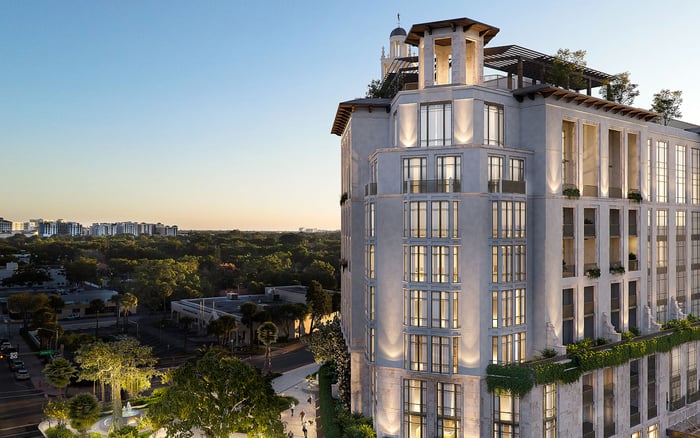
The development is planned as an 11-story condominium with 58 residences at 3000 Ponce de Leon Boulevard in Coral Gables. Allen Morris Company is the developer, and the residential collection includes two- to five-bedroom homes and penthouses. That scale alone does not establish how competing requests for shared spaces will be handled.
Annual maintenance-blackout dates, a peak-season booking hierarchy and a comprehensive resident-use calendar remain unconfirmed-not necessarily absent from future operations. Buyers should distinguish an advertised amenity from a documented right to use it at a particular time.
The planned aquatic program includes a rooftop resort pool, zen pool, cold plunge and hot tub. The broader offering includes a spa, fitness center, meditation courtyard, screening lounge and wine cellar. Each warrants specific access questions, rather than a blanket assurance that amenities will be available.
Request the anticipated maintenance schedule for each facility, including whether work would require a full closure or could proceed in phases. If several water amenities share a maintenance period, ask whether another facility would remain accessible. Recurring closure dates remain unconfirmed, so buyers should assume neither uninterrupted operation nor a particular annual shutdown.
Notice is equally important. Ask how far in advance planned closures would be announced, how emergency interruptions would be communicated and whether substitute facilities are contemplated. Any credits, fee adjustments or contractual remedies should be confirmed in writing, not presumed. For an owner planning limited stays, a closure’s timing may matter more than its duration.
Before discussing priority, establish which amenities would require reservations at all. Reservation requirements for pools, lounges, spa facilities and fitness services remain unspecified. Treatment appointments, private-event bookings and ordinary resident access should be addressed separately in the proposed rules.
Then request a written explanation of how access would be allocated during high-demand periods. Clarify booking windows, reservation duration, limits on simultaneous bookings, waitlist procedures and any separate holiday terms. If deposits, cancellation penalties or no-show charges are contemplated, request the amounts and conditions before treating a service as part of an effortless daily routine.
Eligibility deserves equal precision. It remains unconfirmed whether owners, tenants, guests, larger-home owners or repeat users would receive priority. A penthouse purchase should not be interpreted as a preferential booking entitlement without express documentation. Ask whether privileges attach to the residence, the registered resident or an individual account, and how guest use affects household limits.
The hospitality offering includes concierge assistance with restaurant reservations both on and off the premises. Preferred restaurant reservations are also advertised, but that wording does not define booking windows, priority tiers, holiday allocations or cancellation rules.
The distinction is material: help securing a table is not the same as an allocation of resident-priority seating. Ask whether any tables or time slots would be reserved for residents, which venues would participate and whether the benefit would extend to accompanying guests. Clarify what happens when the preferred time is unavailable.
When considering Cora Merrick Park alongside Ponce Park, apply the same standard to service language presented during the purchase process. Compare written commitments rather than assuming similar descriptions carry equivalent privileges. This is a diligence principle, not a statement that the projects offer matching services.
Ponce Park’s planned rooftop includes a bar and lounge, and is also marketed as a private-event venue. How private bookings would be balanced against ordinary resident use remains unconfirmed.
Request a clear distinction between reserving a designated area and closing an entire shared space. Ask whether a private event could affect pool access, lounge seating or circulation, and whether any resident-only areas would remain available. Exclusive-use rights, fees and required advance notice remain unconfirmed.
Scheduling authority matters as much as the reservation itself. Identify who would approve events, set restrictions and resolve conflicts. Ask whether limits on event frequency, duration or holiday bookings are contemplated, and how residents would be notified. Do not assume that a privately booked rooftop would remain fully accessible or become entirely unavailable.
A useful resident-use calendar should answer practical questions before an owner books a visit: operating hours, holiday restrictions, maintenance closures, private-event blocks and resident-only access periods. A consolidated calendar covering those details remains unconfirmed.
Ask whether residents would have access to a digital schedule, how far ahead it would display availability and who would update it. Distinguish a calendar that shows availability from a system that confirms reservations. Ask how changes would be communicated after a booking is accepted and what happens if maintenance displaces a confirmed reservation.
For buyers also considering The Village at Coral Gables, a personal-use calendar can provide a disciplined basis for comparison. Set out intended visits, guest stays and entertaining dates, then ask each project to explain the applicable access rules. Let the buyer’s intended use guide the comparison, without assuming identical amenity programs.
Delivery expectations are inconsistent: estimates range from 2027 to early 2028. Neither should be treated as a guaranteed occupancy or amenity-opening date. Request the current construction schedule and separate anticipated opening dates for the facilities most important to the purchase.
Before committing, seek the latest condominium declaration, proposed rules and applicable amenity-management and hospitality agreements. Have counsel identify which representations become binding, who may change operating policies and what protections apply if access differs from expectations. If a policy remains undecided, request written confirmation of that status rather than filling the gap with an assumption.
The objective is not to demand a building without maintenance or competing reservations. It is to understand how those realities would be managed. A compelling amenity collection becomes more meaningful when its operating terms support the way an owner intends to live.
For a discreet discussion of your Coral Gables purchase priorities, connect with MILLION.
If branded residences are on your mind — as a home or as an allocation — we would be glad to share what we are seeing, privately.
Begin a quiet conversationPonce Park is planned as an 11-story condominium with 58 residences at 3000 Ponce de Leon Boulevard. Allen Morris Company is the developer, with two- to five-bedroom homes and penthouses in the collection.
Recurring maintenance-blackout dates remain unconfirmed. Buyers should request expected closures, notice periods and whether shutdowns would be full or phased.
The planned aquatic amenities include a rooftop resort pool, zen pool, cold plunge and hot tub. Their operating hours and maintenance schedules should be confirmed separately.
Reservation requirements for pools, lounges, spa facilities and fitness services remain unspecified. Request proposed rules that distinguish everyday access from appointments and private bookings.
Priority for larger-home owners or other resident categories remains unconfirmed. Buyers should not assume preferential booking rights without written confirmation.
The advertised benefit does not establish guaranteed seating or a defined resident allocation. Clarify whether it means concierge assistance or actual priority access to tables.
The rooftop is marketed as a private-event venue, but the balance between events and ordinary access remains unconfirmed. Ask which areas could be reserved exclusively and what access would remain available.
A consolidated calendar covering operating hours, holidays, maintenance and event closures remains unconfirmed. Ask whether residents would receive a digital schedule and booking-change notifications.
Delivery estimates differ between 2027 and early 2028. Request the current construction schedule and separate amenity-opening dates rather than treating either estimate as guaranteed.
Request the latest condominium declaration, proposed rules and applicable amenity-management and hospitality agreements. Have counsel confirm which access promises become binding and who can change operating policies.