A buyer-focused guide to distinguishing controlled residential arrival from verified staff circulation at One Thousand Museum, with practical checks for household access, deliveries, and residence-specific privacy.
For a household with regular staff, visiting specialists, and carefully scheduled deliveries, privacy depends on more than the resident’s arrival. It also depends on how everyone else enters, moves through the building, and reaches the residence. At One Thousand Museum Downtown Miami, purchase planning should distinguish controlled residential access from independently verified service circulation.
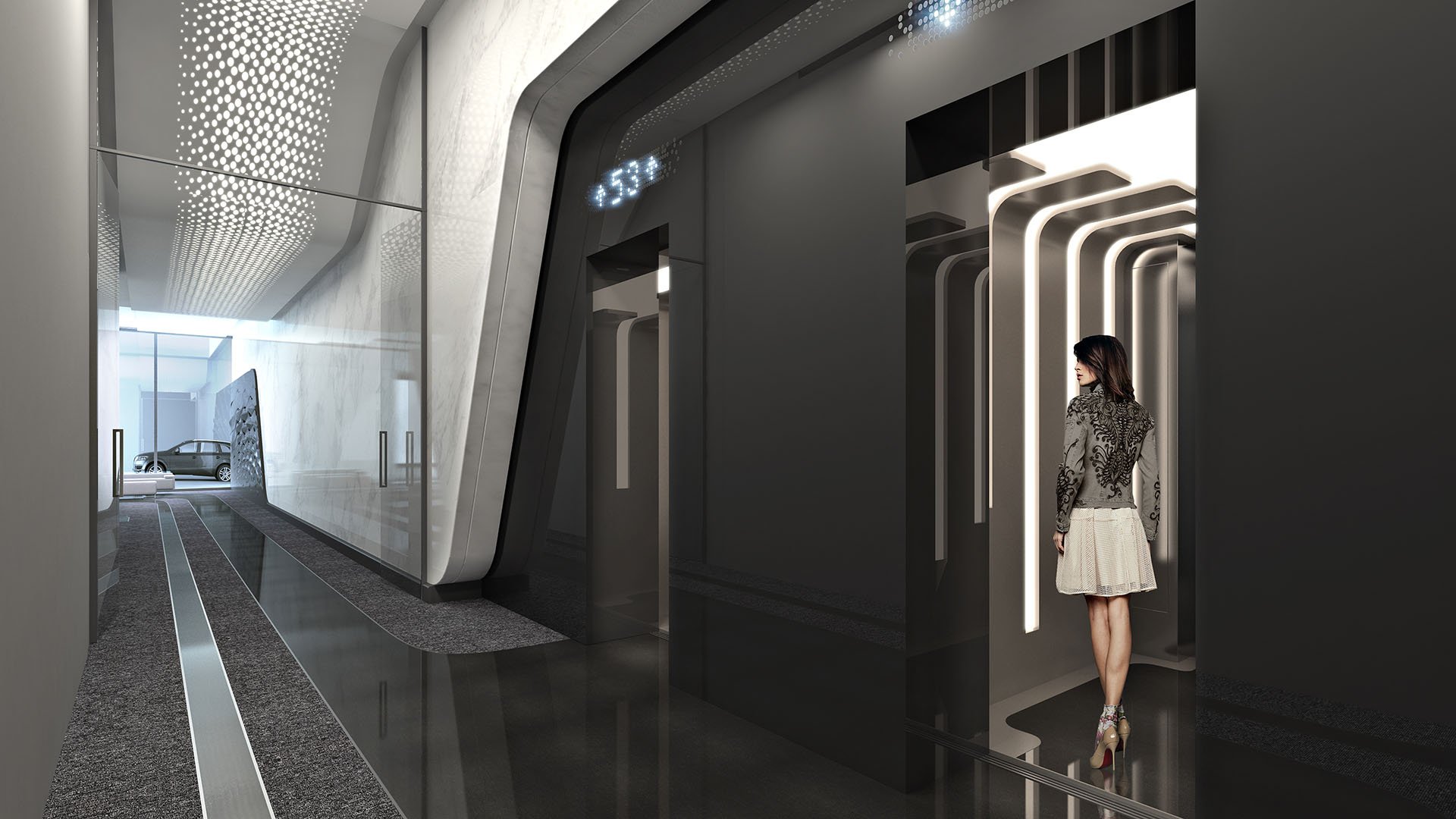
The building stands at 1000 Biscayne Boulevard, Miami, FL 33132, in Downtown Miami. Its offering includes secure, high-speed elevators with destination-entry smart technology, 24-hour concierge service, and on-site security personnel. These are meaningful elements of controlled arrival. They do not, by themselves, establish a dedicated staff entrance, separate service corridors on every floor, or specific permissions for household vendors.
The buyer’s task is precise: confirm whether the physical layout and current operating rules support the household’s daily routine. An elegant arrival and discreet household logistics are related qualities, but they are not interchangeable.
Private elevator landings and direct residential entry do not, on their own, establish that a housekeeper, installer, or art handler can reach a secondary door without crossing the resident’s arrival space. A private landing defines an arrival arrangement, not necessarily an independent service route.
Likewise, expansive service rooms should not be read as evidence of a separate corridor network. The term alone establishes neither their dimensions and locations nor their connections to residential floors. Ask management to identify their intended function and, where relevant to the purchase, explain their relationship to the residence under consideration.
An elevator count of three also requires careful interpretation. It does not confirm current passenger, freight, or service allocations. Request each elevator’s current designation and clarify whether service trips use dedicated equipment, shared equipment, or scheduled access. Treat these possibilities as questions, not established arrangements.
For buyers also considering Aston Martin Residences Downtown Miami, apply the same distinction independently. Compare confirmed routes and permissions rather than assuming that similar privacy language describes equivalent operations.
Concierge availability is not standing authorization for a household employee. Controlled access alone does not specify a staff check-in protocol. Before committing, request the current written requirements for registering recurring personnel, approving individual visits, presenting identification, and entering outside standard service hours.
Build the inquiry around the people who will use the residence. A daily housekeeper, occasional chef, caregiver, and household manager may have different scheduling needs. Ask whether the rules distinguish among these roles, who may authorize access, and how a resident changes or withdraws permission. Do not assume one approval covers every type of visitor.
Second-home buyers should pay particular attention to owner-absent access. Ask whether a designated household representative can coordinate entry and what confirmation management requires when the owner is away. If recurring permissions are available, establish their duration and renewal requirements.
The goal is a written account of permitted access that both the household and management understand. Verbal reassurance can help frame the discussion, but it should not replace current rules when daily routines depend on predictable entry.
The valet and doorman’s role in attending to residents’ cars and packages does not establish equivalent access privileges for installers, contractors, art handlers, or household employees. Receiving an item and admitting a team to work inside a residence are distinct activities.
Before a furnishing or installation program, request details of the loading and receiving location, service-elevator arrangements, reservation windows, move-in rules, elevator protection requirements, and contractor insurance requirements. Clarify which apply to a small delivery, a large installation, or work extending across several days.
For oversized or delicate pieces, ask management to review the proposed delivery route with the relevant vendor. Obtain the required route measurements and approvals before making commitments that depend on successful access. Neither elevator speed nor a private landing establishes that a particular object can reach the residence.
Treat the private rooftop helipad with the same discipline. Its inclusion in the building’s offering does not establish screening or circulation procedures for aviation personnel, baggage handlers, or ground vendors. If those arrangements matter to the purchase, request separate written clarification rather than extending assumptions from residential concierge service.
Building-wide descriptions cannot resolve every question about a particular home. Review the residence’s actual plans and inspect the relationship between its arrival point, living spaces, and any secondary entrance. Verify whether a private foyer, secondary or service door, staff quarters, or secondary kitchen exists. None should be assumed.
Where a secondary door is present, establish what it connects to and how its use is governed. A door on a plan does not, without further confirmation, establish an authorized staff route. Equally, a service-oriented room inside the residence does not prove access to separate common-area circulation.
A useful inspection exercise is to trace a normal household day: a staff arrival, a grocery delivery, a maintenance visit, and an evening guest arrival. Ask where each person checks in, waits, travels, and enters. This is a practical test of compatibility, not a claim about the building’s current procedures.
Obtain current condominium rules, the resident handbook, delivery policies, and relevant board or management notices. Read them alongside the residence plans and management’s written responses. Where descriptions differ or a procedure remains unclear, resolve the issue before relying on it in purchase planning.
Keep the review focused on three categories: physical separation, authorization, and scheduling. Physical separation concerns doors, corridors, and elevator connections. Authorization concerns who may enter and who can approve entry. Scheduling concerns when work or deliveries may occur and whether reservations are required. Strength in one category does not settle the others.
If Waldorf Astoria Residences Downtown Miami is also on the shortlist, use those same categories for a separate evaluation. This allows a disciplined comparison without assigning either property procedures that have not been confirmed.
One Thousand Museum’s arrival technology and service offering provide a starting point. The decisive question is whether the specific residence and current policies accommodate the buyer’s household without relying on assumed separation or informal exceptions.
Before proceeding, distinguish essential requirements from preferences. Then match each essential requirement to a confirmed plan detail or written operating rule. For a staffed home, this practical clarity is part of luxury itself: privacy that works as intended, with fewer unresolved arrangements after ownership begins.
For a discreet conversation about your South Florida purchase priorities, connect with MILLION.
If branded residences are on your mind — as a home or as an allocation — we would be glad to share what we are seeing, privately.
Begin a quiet conversationOne Thousand Museum is at 1000 Biscayne Boulevard, Miami, FL 33132, in Downtown Miami.
Secure, high-speed elevators with destination-entry smart technology are described for lobby-to-residence access. That description does not establish a separate staff circulation system.
A dedicated staff entrance is not established by the published access description. Buyers should request current management confirmation and inspect the relevant layout.
No. Private landings and direct residential entry do not establish independently routed staff access or fully separated corridors on every floor.
They establish an advertised service-room offering, but not its dimensions, locations, or connections to residential floors. They should not be treated as proof of a separate corridor network.
No. The published count of three elevators does not confirm current passenger, freight, or service allocations; management should clarify those designations.
Package handling does not establish access privileges for installers, art handlers, contractors, or household employees. Request the applicable authorization and check-in rules separately.
Request registration, identification, recurring authorization, and after-hours requirements. Buyers who will be away should also clarify owner-absent access and representative permissions.
Confirm loading and receiving arrangements, elevator designations, reservation windows, protection requirements, move-in rules, and contractor insurance requirements. Have the proposed route reviewed before relying on access for oversized pieces.
No. The advertised private rooftop helipad does not establish screening or circulation procedures for aviation personnel, baggage handlers, or ground vendors.