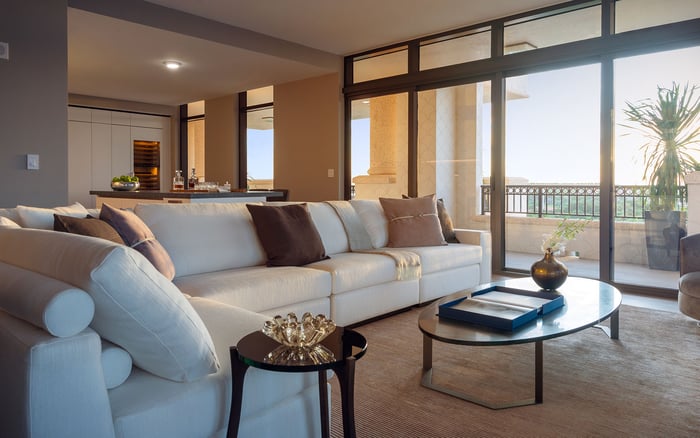
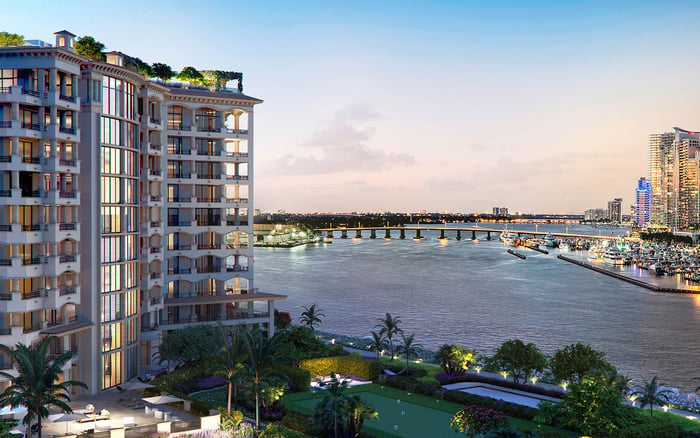
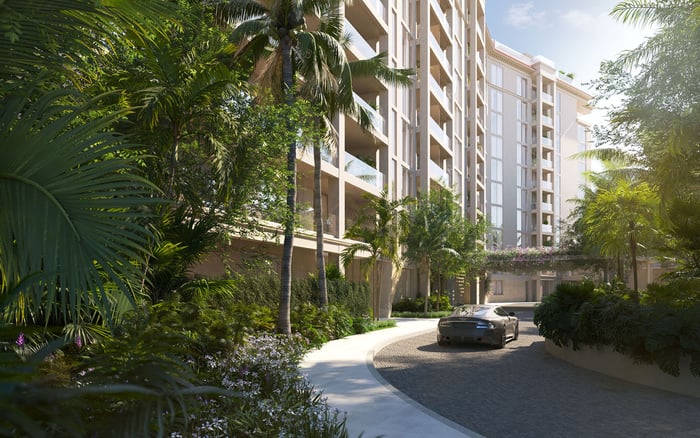
On Fisher Island, acoustic due diligence should test the residence, its service core, and changing port conditions before design and views eclipse quieter risks.
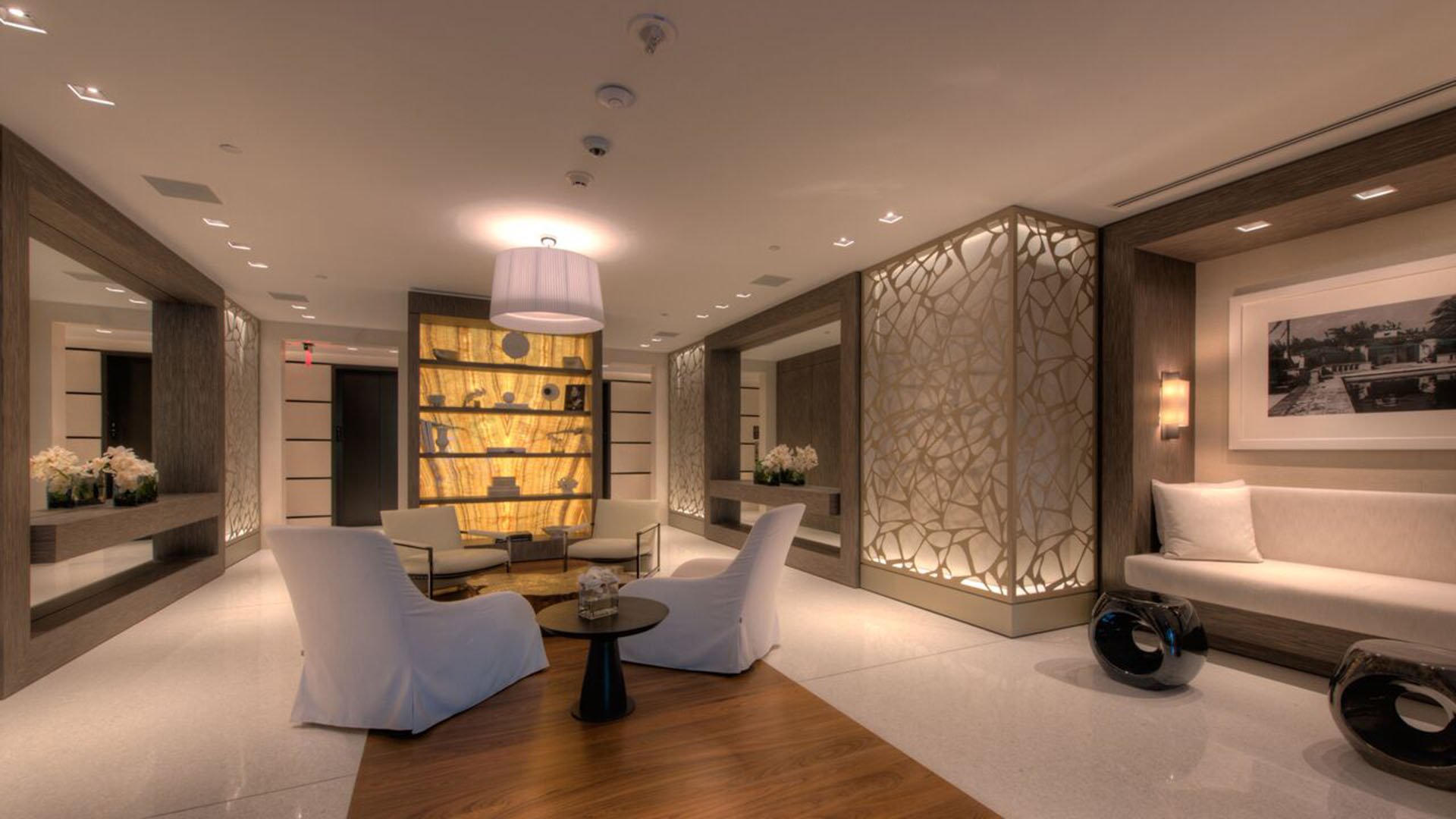
Fisher Island offers a particular form of seclusion, but controlled access does not guarantee acoustic privacy. A residence may feel exceptionally quiet during a curated daytime showing yet perform differently when elevators cycle, mechanical equipment runs, a generator is tested, or loading activity intensifies across the water. For buyers at this level, sound is not a cosmetic concern. It affects sleep, conversation, concentration, terrace use, and the felt quality of every room.
The prudent inquiry begins before emotional commitment. Orientation, floor height, glazing, partitions, doors, penetrations, air-distribution systems, and proximity to service infrastructure all shape the experience. A polished finish can conceal a weak junction or mechanically transmitted vibration. Likewise, a private elevator vestibule may be visually discreet while its doors, shafts, equipment, and adjacent spaces still require careful review.
The most valuable acoustic question is not whether a home is quiet, but when it is quiet.
Acoustic review therefore belongs alongside legal, structural, and financial diligence in any Fisher Island Buyer's Guides framework. It is equally central to Investment analysis because a disturbance discovered after closing may be difficult to diagnose and material to personal enjoyment.
Fisher Island sits across an approximately 600-foot-wide channel from port operations. Sound reaching its high-rise condominiums has included diesel engines, container impacts, metal plate impacts, and crane warning sirens. Under certain operating scenarios, conditions have been characterized as less than ideal for residential land use.
That history does not establish how any particular residence performs today. It does establish why one quiet appointment is insufficient. If access permits, revisit while ship loading or unloading is active. Listen with terrace doors closed and open, then move through the primary bedroom, secondary bedrooms, living areas, study, kitchen, and elevator vestibule. A Waterfront view can have distinct acoustic qualities depending on orientation, room, and operating period.
Port-side mitigation concepts have included electric rather than diesel crane power, cushioned impact points, and shielded sirens directed downward. Buyers should not assume that proposed or broader mitigation measures resolve conditions inside a specific home. The residence itself remains the object of diligence.
Request plans locating the unit in relation to passenger and service elevator shafts, mechanical rooms, equipment areas, and generator spaces. The goal is not merely to measure distance, but to understand what shares a wall, floor, ceiling, or structural path with quiet rooms.
Elevator-related sound may enter through doors and vestibules, but buyers should also listen for cycling equipment, door operation, signaling, and vibration. Schedule access when staff movement and deliveries are more likely rather than testing only while the service system is idle. If possible, ask management to hear and inspect any repeatable condition.
Mechanical review deserves the same specificity. High-efficiency HVAC and linear air diffusers are among the features at Palazzo del Sol, yet equipment location, air velocity, controls, and operation still warrant unit-level observation. Acoustic planning at both Palazzo del Sol and Palazzo della Luna addressed mechanical-system noise, partition design, and construction detailing, with defined criteria intended for occupied spaces. That integrated work is relevant, but it does not replace verification of the exact residence.
Determine whether any commercial tenant, service room, receiving point, staff route, or loading function sits beneath, beside, or in structural connection with the residence. The presence and configuration of those uses should be verified rather than assumed. Ask when deliveries occur, which elevator they use, where carts wait, how doors close, and whether refuse or equipment movements coincide with sleeping hours.
Separate building activity from port activity. Both may be described casually as loading noise, yet they can differ in timing, direction, duration, and transmission path. During each visit, record the room, time, intensity, duration, and character of a sound. A dated log helps distinguish a recurring pattern from a single impact and gives management or an acoustic professional a clearer condition to investigate.
For buyers comparing formats within Fisher Island, The Links Estates at Fisher Island and The Residences at Six Fisher Island can remain part of the broader search. The diligence principle remains constant: evaluate the exact home's relationship to circulation, equipment, service activity, and the waterfront environment.
Palazzo del Sol features STC 55 sound attenuation between residences and private elevator entrances with “zero tolerance” doors. Treat these as stated specifications to verify in technical or contractual documents, not as substitutes for inspection. STC addresses a defined aspect of sound isolation; by itself, it does not answer every question about impact sound, mechanical vibration, exterior noise, workmanship, or door performance.
Completed in 2016, the 43-residence, 10-story building is accessible only by ferry, yacht, helicopter, or seaplane. Buyers searching Palazzo del Sol Fisher Island should therefore assess acoustic privacy within the broader promise of controlled arrival and exclusivity.
At Palazzo della Luna, features also include private elevator entry and an on-site emergency generator serving elevators and life-safety systems. Ask where that generator sits in relation to the candidate home and when testing occurs. The 11-story property at 6800 Fisher Island Drive comprises 50 residences of approximately 3,700 to 10,100 square feet, with pricing from about $6.2 million to $40 million. For those researching Palazzo della Luna Fisher Island, an overlooked acoustic issue can therefore be material to the purchase decision.
Begin with repeat visits at meaningfully different times. Include a period of active port loading or unloading when feasible, along with a window when building services, staff circulation, and deliveries can be observed. Stand silently in each principal room long enough to detect cycles rather than only instantaneous sound.
Next, verify plans and written specifications. Confirm the residence's relationship to elevator shafts, mechanical equipment, generator areas, service corridors, and any commercial or receiving interface. Review stated partition, door, and sound-attenuation criteria with qualified advisers. Where shared-wall, privacy, or urban-noise concerns emerge, a professional acoustic consultation can identify appropriate testing and potential responses.
Finally, preserve a dated log during any available inspection or access period. Note whether doors and glazing were open or closed, where the sound was strongest, and whether it repeated. Invite management to hear a reproducible condition. This disciplined record is more useful than a general impression that a room seemed noisy.
Ultra-premium real estate is judged by what a home allows its owner not to notice. On Fisher Island, that standard demands attention to airborne sound, vibration, service circulation, mechanical operation, and activity across the channel. Design distinction and controlled access remain compelling, but they should be paired with evidence that the residence performs quietly under realistic conditions.
For confidential guidance on evaluating an exceptional South Florida purchase, connect with MILLION.
If branded residences are on your mind — as a home or as an allocation — we would be glad to share what we are seeing, privately.
Begin a quiet conversationNoise and vibration can affect sleep, privacy, and daily enjoyment, while some conditions may be difficult to diagnose after closing.
No. Revisit at different times, including during active port loading or unloading when feasible.
Identified sources have included diesel engines, container impacts, metal plate impacts, and crane warning sirens.
Request plans showing the residence relative to passenger and service shafts, mechanical equipment, service corridors, and generator spaces.
No. Door operation, shaft location, equipment cycling, signaling, and vibration still require unit-specific review.
Palazzo del Sol advertises STC 55 attenuation between residences, a stated metric buyers should verify in technical or contractual documents.
Equipment location, airflow, controls, and operation can shape the sound experienced in individual rooms.
Ask where the on-site emergency generator is located relative to the residence and when testing occurs.
Keep a dated log noting the room, time, duration, intensity, character, and recurrence of each sound.
Seek professional consultation when shared-wall, mechanical, privacy, vibration, or urban-noise concerns need diagnosis or testing.