A buyer’s framework for evaluating Sixth & Rio’s insurance documents, reconstruction valuation, code-related coverage and the interior finishes that may require a separate HO-6 policy.
At Sixth & Rio Fort Lauderdale, the waterfront setting is one part of the purchase decision. Another warrants equally deliberate attention: how the association’s insurance and the buyer’s own policy would work together after a covered loss. For an owner investing in carefully selected interiors, acquiring a residence and insuring its reconstruction are distinct considerations.
The prospectus, exhibits and fully executed purchase agreement govern the sale terms-not marketing materials alone. The agreement and offering documents also determine what comes with the unit. These documents should anchor the insurance review, but inclusion in the purchase does not establish inclusion in the master policy.
Developer-installed does not automatically mean master-policy-insured. The task is to reconcile what the buyer receives, what the association must insure and what the owner’s policy actually covers. This is not a finding that Sixth & Rio is adequately insured or underinsured.
Request the certificate of insurance, declarations, complete policy and endorsements, replacement-cost appraisal, governing documents, and any separate flood or wind policies. Ask for claims history and pending insurance-related assessments as well. Have counsel review the purchase and disclosure documents alongside the insurance broker’s coverage analysis.
Have counsel confirm the association’s insurance responsibilities under Florida condominium law, including how they apply to property as originally installed, like-kind replacements and qualifying alterations or additions. Review exclusions rather than assuming every component delivered with the residence belongs under the master policy.
Ask the reviewing professionals to translate that framework into a written allocation of responsibilities. Use three columns: association-insured property, owner-insured property and items requiring clarification. Each unresolved item should prompt a specific document request, not an assumption about coverage.
The valuation question is straightforward: what does the master policy’s insured value represent, and how was it established? Ask the association’s broker to identify the valuation basis, appraisal date and treatment of current reconstruction costs. Neither the residence’s purchase price nor the original development cost is a substitute for that review.
Request a written reconciliation of the replacement-cost appraisal and the policy declarations. Identify which property the valuation includes and how that scope aligns with the association’s insurance responsibilities. Any difference warrants an explanation before the buyer accepts the stated limit as a complete answer.
For a Broward buyer also considering Andare Residences Fort Lauderdale, apply the same questions separately to each property. A consistent audit is more useful than a comparison of headline limits without the underlying property and valuation assumptions.
The goal is a documented understanding of what was valued, when it was valued and how the policy responds to that valuation. A large number alone answers none of those questions.
Ordinance-and-law coverage addresses additional rebuilding costs arising from building-code requirements that did not apply when the property was originally constructed. Review it separately rather than treating it as an automatic extension of the principal building limit.
Ask for written confirmation of the actual ordinance-and-law limits and relevant endorsements. Request an explanation of how the policy treats demolition, debris removal, professional fees and increased construction costs, including whether each falls within this coverage, another policy provision or an exclusion. Do not assume these expenses share one unrestricted limit.
Do not use a homeowners-policy provision to infer Sixth & Rio’s master-policy ordinance-and-law limit. Use the actual contract to answer the project-specific question, and ask the broker to explain how the relevant limits interact in a rebuilding scenario. A percentage without its policy context is not enough.
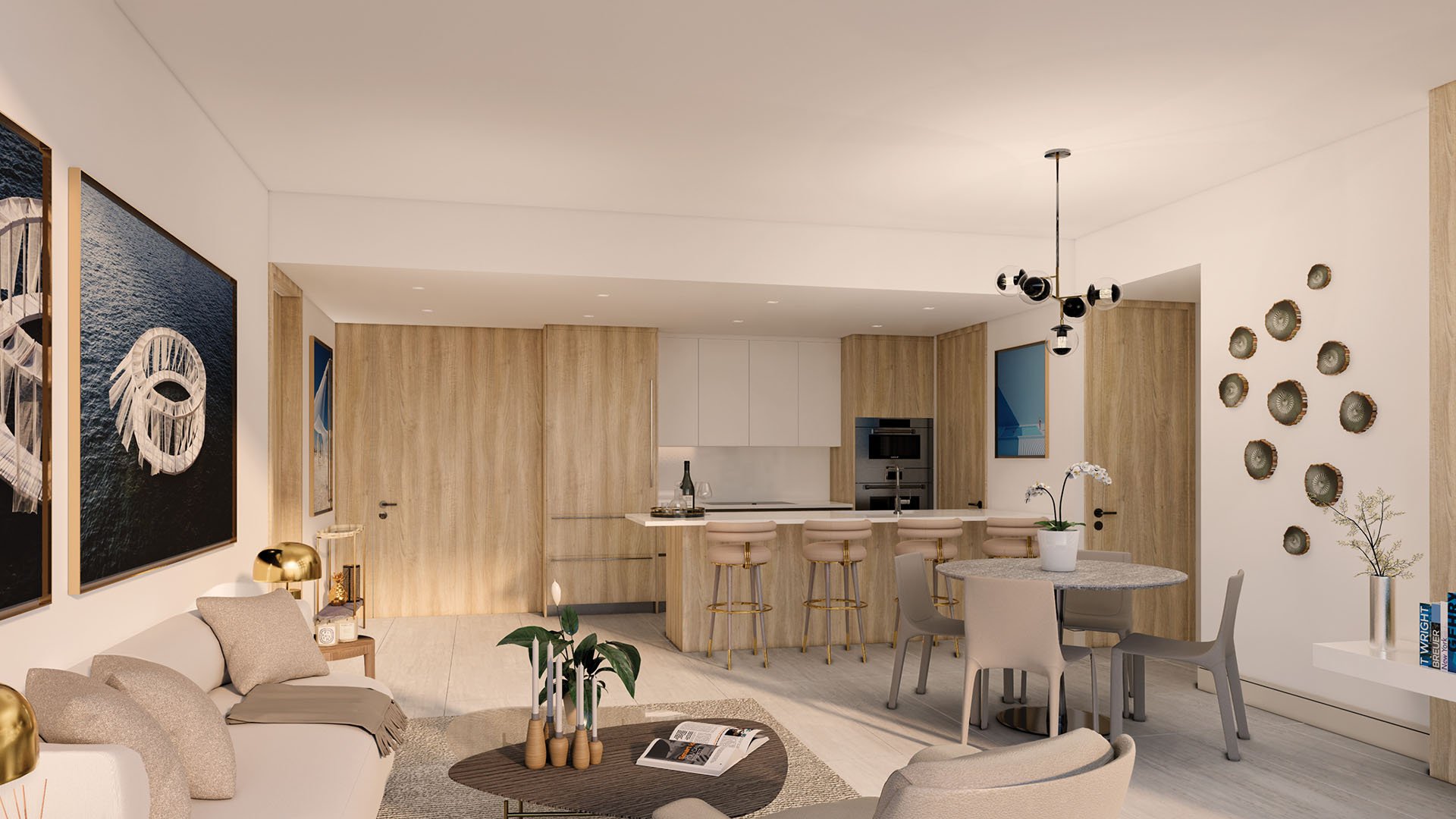
For a luxury buyer, the most easily overlooked coverage boundary may be inside the residence. The association-coverage framework excludes floor, wall and ceiling coverings; electrical fixtures; appliances; water heaters; water filters; built-in cabinets and countertops; and window treatments located within a unit and serving only that unit. Insurance on those components is generally the owner’s responsibility.
That distinction can apply to original finishes, not just later upgrades. A kitchen delivered with the residence therefore deserves the same insurance attention as a subsequent renovation. Standard association master coverage also generally does not insure an owner’s personal belongings, personal liability or owner-installed upgrades.
Build a room-by-room inventory from the offering specifications and proposed improvements. Obtain replacement-cost estimates for the applicable components, then reconcile them with the proposed HO-6 building-property coverage, often called Coverage A. Do not focus solely on the personal-property limit while leaving cabinetry, surfaces and fixtures unexamined.
Apply the same inventory discipline when comparing Four Seasons Hotel & Private Residences Fort Lauderdale. Evaluate each residence’s specifications and insurance documents independently; a project name cannot establish where the owner’s responsibility begins.
Request a schedule identifying any separate wind, named-storm, flood, water-damage, mold, equipment-breakdown and sewer-backup deductibles, exclusions and sublimits. Ask the broker to distinguish existing coverage from coverage that is excluded or requires a separate policy.
Flood generally requires separate insurance; it is not automatically included in a standard property master policy. For a waterfront purchase, confirm the association’s flood arrangements and ask what separate protection the owner should consider.
Then examine loss-assessment coverage alongside the master-policy deductibles. Have the owner’s broker confirm the applicable loss-assessment requirements and the purchased policy’s limits and terms. Do not assume every hurricane-related assessment, or every assessment arising from a master-policy deductible, will be insured.
Ask the owner’s broker to explain how the proposed policy would respond to a specific assessment scenario. Clarify both the insured response and the potential amount the owner would retain.
Before committing, seek a written reconciliation of the master-policy valuation, ordinance-and-law provisions, deductibles, flood arrangements and unit-interior inventory. Ask counsel and the insurance professionals to resolve remaining ambiguities within their respective areas of responsibility.
For Sixth & Rio, this is a buyer’s due-diligence framework, not a judgment about a particular coverage gap. The purchase decision should rest on the actual documents and a clear understanding of any exposure the buyer chooses to retain.
For a considered approach to South Florida luxury ownership, explore MILLION.
If branded residences are on your mind — as a home or as an allocation — we would be glad to share what we are seeing, privately.
Begin a quiet conversationNo. It is a due-diligence framework, and a project-specific conclusion requires review of the actual policies, valuation and related documents.
Request the certificate of insurance, declarations, complete policy and endorsements, replacement-cost appraisal, governing documents and any separate flood or wind policies. Also request claims history and pending insurance-related assessments.
No. Ask the broker to explain the replacement-cost valuation basis, appraisal date and treatment of current reconstruction costs rather than relying on purchase price or original development cost.
No. Exclusions can apply to original cabinetry, countertops, flooring and other listed interior components, not just later upgrades.
Building-property coverage, often called Coverage A, should be reviewed for excluded interior components and improvements. Its limit should be reconciled with the residence’s specifications and replacement-cost inventory.
It addresses additional rebuilding costs arising from building-code requirements that did not apply when the property was originally constructed. Buyers should confirm the actual limits and relevant policy provisions in writing.
No. Review the actual master policy and endorsements with the association’s broker to establish the applicable limits.
Generally not. Flood typically requires separate insurance, so buyers should confirm the association’s arrangements and discuss any separate owner protection with their broker.
No such assumption should be made. Review the purchased policy’s limits and terms, including how it responds to assessments associated with master-policy deductibles.
Have counsel and insurance professionals compare the governing and offering documents, master policy and proposed HO-6 coverage. Resolve unclear responsibilities and identify any exposure the buyer would retain.