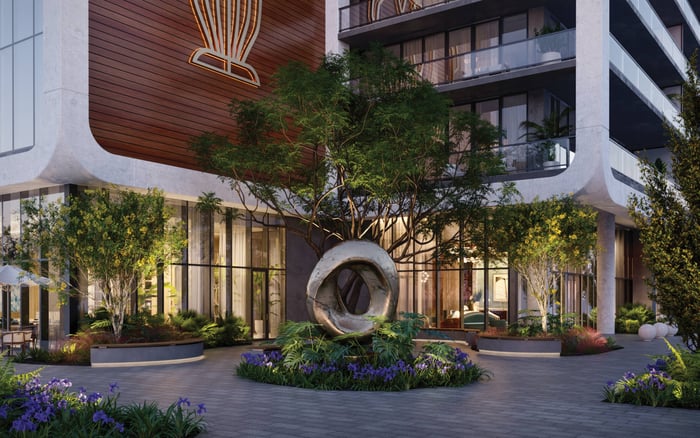
Mandarin Oriental Residences, West Palm Beach pairs a waterfront residential vision with important long-term ownership questions. Buyers should distinguish projected dues from reserve funding, examine investment and liquidity policies, and seek documentary clarity on potential capital calls.
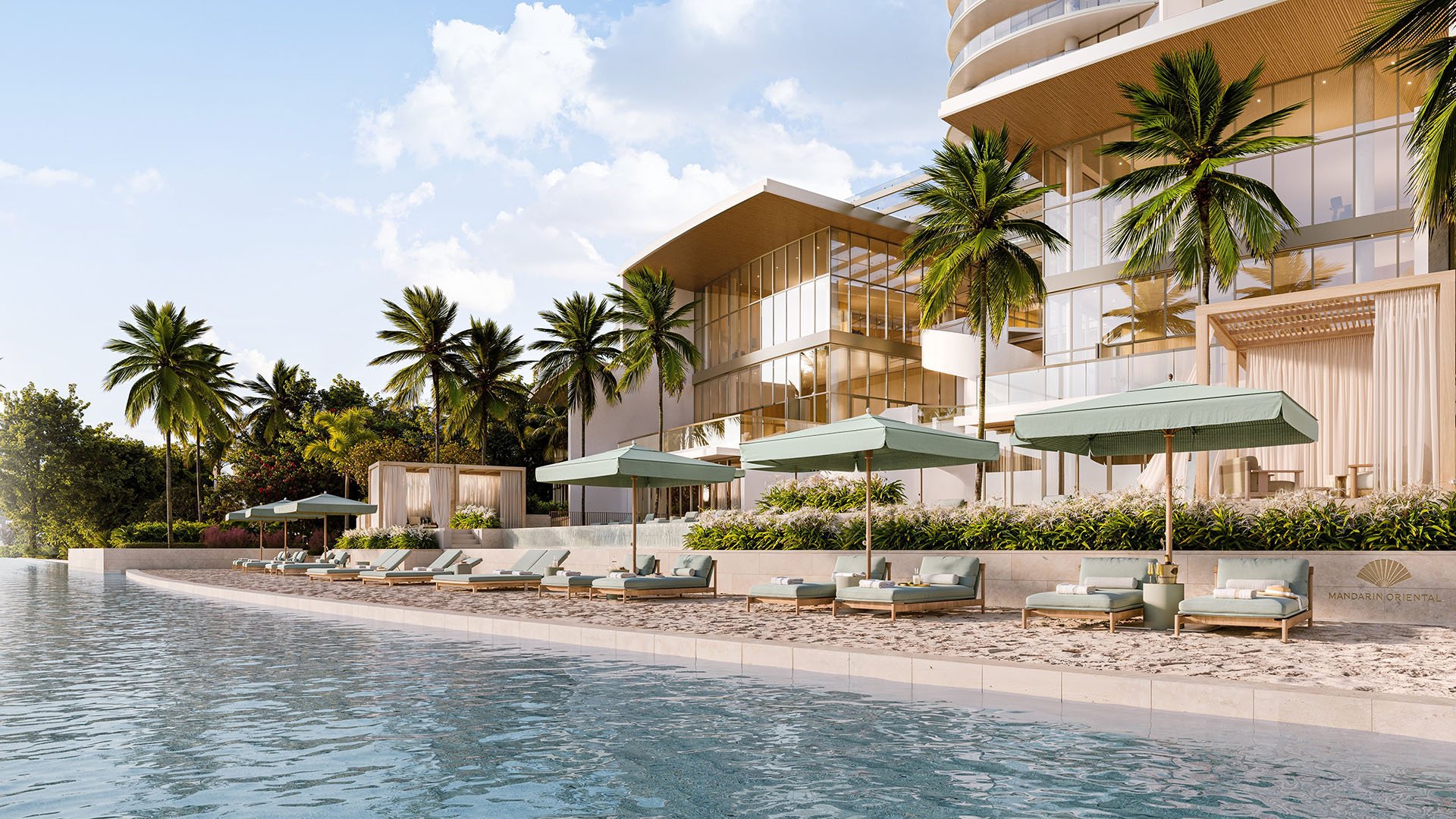
At Mandarin Oriental Residences, West Palm Beach, the ownership proposition begins with privacy, service and a waterfront setting. Great Gulf is developing the planned condominium as the brand’s first standalone residential property in South Florida. The proposed 31-story, 87-residence building occupies a 2.5-acre site at 5400 North Flagler Drive.
For a buyer considering a long holding period, the consequential questions extend beyond the residence itself. How will funds for future capital work accumulate? How readily will they be available? And what happens if a significant expenditure arrives before sufficient funds are on hand?
Reserve balances, contribution levels, investment holdings, liquidity requirements, and the timing and size of major capital calls remain unestablished. That uncertainty is neither evidence of inadequate funding nor assurance of sufficient funding. It is a reason to make financial documentation part of the purchase decision.
The planned residences include two- to four-bedroom layouts with direct elevator entry and expansive wraparound balconies, alongside two multilevel villas and a full-floor penthouse. Planned amenities include ground-level and rooftop pools, cabanas, spa facilities, a fitness center and a pickleball court. Launch pricing began at $3.5 million in February 2026.
These details describe the intended living experience, not the future cost of preserving it. Buyers should ask which building systems and amenities are included in the capital-planning assumptions, how maintenance is distinguished from replacement spending, and who bears each category of expense.
For a purchaser also considering Alba West Palm Beach, a useful comparison starts with consistent questions-not an assumed equivalence between budgets. Ask each project for its operating assumptions, reserve allocations and allocation of responsibilities. An attractive monthly figure is no substitute for understanding what it covers.
The quoted preconstruction association fee for Unit 801 is approximately $4,385 per month, with a condominium association and mandatory participation. This is a unit-specific figure, not a verified building-wide fee schedule. No supported breakdown between operating expenses and reserve contributions accompanies it.
The first request should therefore be the proposed budget for the residence under consideration. Ask how much of the quoted payment is intended for routine operations, how much for reserves, and which assumptions could change before occupancy. Seek a clear explanation of expense allocation among residences rather than assuming an equal division across 87 homes.
Two other disclosures warrant caution. “Association Deposit: Yes” does not identify the payment’s amount or purpose. It should not be treated as reserve funding, working capital or prepaid assessments without documentation. Likewise, “Membership Fee Required: No” does not establish that every service is included in association dues. Request a written distinction between included services and separately charged offerings.
A reserve balance and immediately available cash answer different questions. For this project, neither the funding level nor access to those funds is established. The practical question is how the proposed financial structure would align accumulated funds with expenditure dates.
Ask for the reserve funding assumptions and any available component-level capital schedule. The review should connect anticipated work, estimated costs, planned contributions and the dates funds would need to be available. Where estimates remain preliminary, request that they be identified as such rather than presented as settled obligations.
Then ask what would happen if work needed to begin earlier than expected. Would the proposed arrangement allow timely access to funds? Would investments need to be sold? What approval process would apply? The answers belong in the governing documents and proposed policies; they cannot be inferred from a brand name or projected completion date.
The objective is to understand how the funding plan would handle an earlier expense-not to suggest that one is expected.
No project-specific reserve investment policy or holdings are established here. A buyer should not infer that funds will remain entirely in cash, be invested in particular securities, or earn a specified return.
Instead, request any proposed or adopted written policy and ask what it permits. Review its treatment of principal preservation, permitted holdings, maturity limits, access restrictions and the alignment of investment maturities with expected spending. Ask who would authorize transactions, who would oversee accounts and how owners would receive information about balances and performance.
Interest assumptions also deserve scrutiny. If anticipated earnings support a contribution forecast, ask how that forecast changes when returns are lower or cash is needed sooner. The purpose is not to prescribe an investment strategy for the association, but to understand whether the financial plan depends on assumptions the buyer has not yet seen.
Expected completion is 2031. That is a projected delivery date, not a timetable for special assessments or other future capital calls. There is no established basis to say those calls are scheduled, capped or unlikely.
A useful review separates three categories: amounts due in connection with acquisition, recurring association payments and potential future extraordinary funding. Each deserves its own explanation. Ask counsel to identify the documents governing expense allocation, assessment authority and owner payment obligations, without assuming any particular deadline or voting requirement.
For personal planning, ask an adviser to model hypothetical conditions rather than predict an assessment. Those conditions might include earlier capital work, higher replacement costs or lower investment earnings. Any resulting cash requirement should be labeled a planning scenario, not a project forecast.
Buyers weighing Mr. C Residences West Palm Beach alongside Mandarin Oriental should apply the same distinction between projected carrying costs and contingent obligations. No reserve-quality comparison is supported here.
The most useful next step is a coordinated review of the proposed budget, reserve assumptions, any investment policy, relevant condominium documents and the explanation of deposits and service charges. Request current versions, distinguish proposals from adopted provisions, and identify unresolved questions before committing to a financial model.
For an owner planning to retain the residence through multiple market cycles, the goal is not a promise that costs will never change. It is a clearer understanding of who decides, how funds accumulate, when they can be accessed and how additional obligations would affect the household balance sheet.
The residential vision is compelling; the long-term financial structure deserves equally careful attention. Evaluate the experience and the obligations together, without allowing either to stand in for the other.
For a considered approach to South Florida luxury ownership, explore MILLION.
If branded residences are on your mind — as a home or as an allocation — we would be glad to share what we are seeing, privately.
Begin a quiet conversationGreat Gulf is developing the planned condominium, announced as Mandarin Oriental’s first standalone residential property in South Florida.
The planned 31-story condominium comprises 87 residences on a 2.5-acre waterfront site at 5400 North Flagler Drive.
Completion is projected for 2031. That date does not establish when future capital assessments might occur.
It is a preconstruction figure for Unit 801, not a verified building-wide fee schedule. No supported operating-versus-reserve breakdown is supplied.
The available project information does not establish reserve balances or contribution levels. It therefore does not support a conclusion that reserves are adequate or inadequate.
Liquidity addresses whether money can be accessed when capital spending is needed. Buyers should request funding assumptions and ask how access to funds would align with expenditure dates.
No project-specific reserve investment policy or holdings are established by the available information. Buyers should request any proposed or adopted policy and review its permitted holdings, access provisions and oversight.
The Unit 801 disclosures identify an association deposit but do not establish its amount or purpose. It cannot be classified as reserve funding without further documentation.
No. That disclosure does not establish that all services are covered by association dues, so buyers should request a written explanation of included and separately charged services.
The available information does not establish the timing, size or caps of future capital calls. Buyers should review the documents governing assessment authority and owner obligations with counsel.