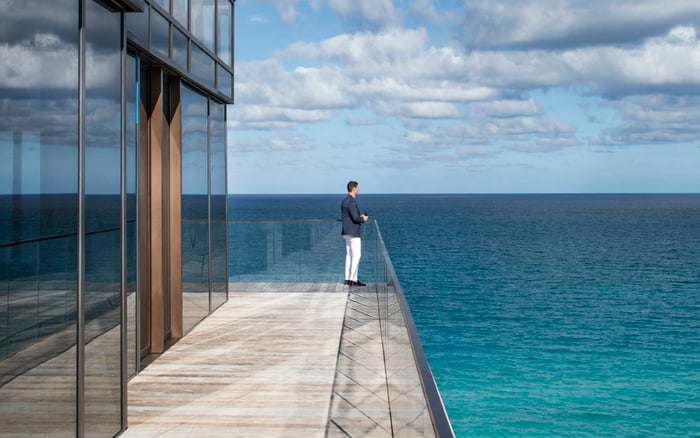
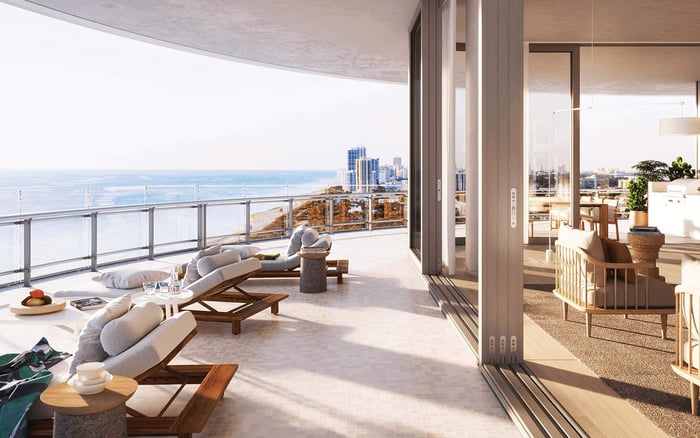
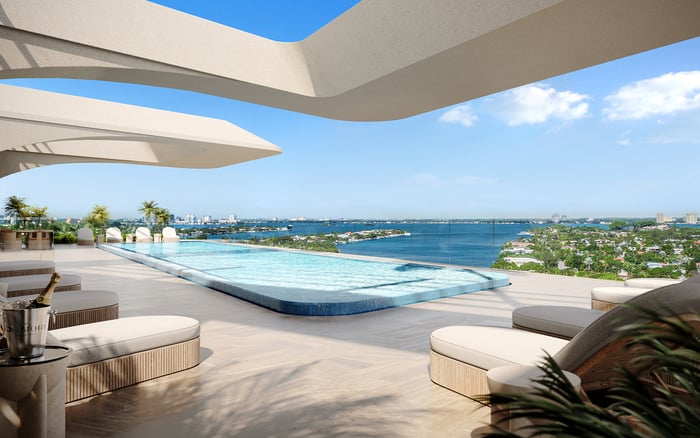
At Arte Surfside, hurricane readiness calls for more than confidence in the architecture. Buyers should establish the residence’s balcony-clearance obligations, protection-system instructions, and written arrangements for access and preparation during owner absences.
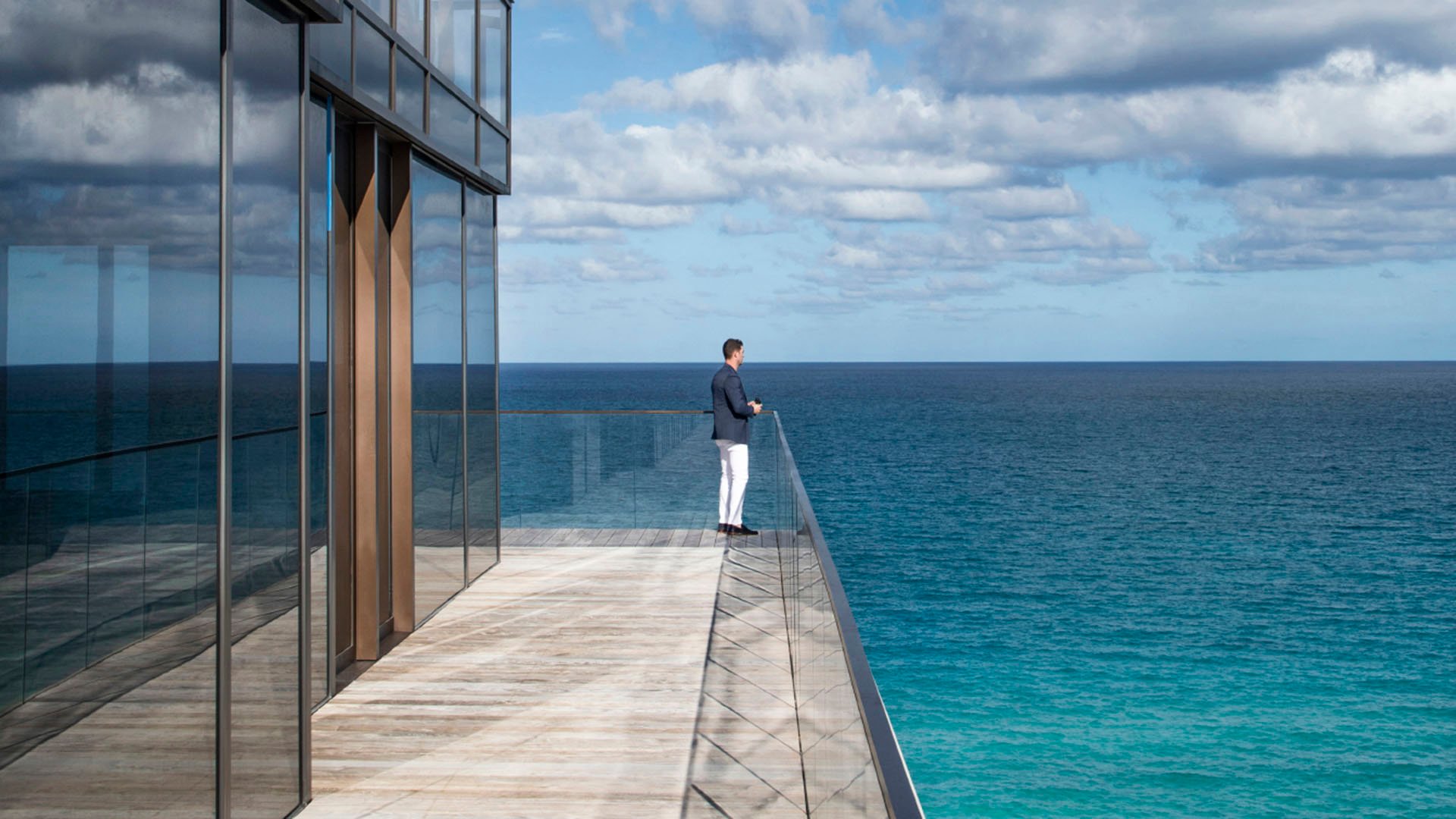
The appeal of Arte Surfside is architectural and intimate: 16 oceanfront residences at 8955 Collins Avenue in Surfside. The first U.S. project by Antonio Citterio and Patricia Viel, developed in architectural collaboration with Kobi Karp Architecture and Interior Design, invites close attention to the relationship between interior space and the shoreline.
For a buyer, that relationship also warrants operational scrutiny. Cantilevered balconies and operable walls make terrace preparation and the securing of openings essential subjects for residence-specific due diligence. The questions are practical: what must be moved, when, and who has both permission and responsibility to act if the owner is elsewhere?
Architectural protection and an executable preparation plan are distinct. A carefully considered purchase should establish both, without mistaking design pedigree, impact-tested glazing, or a front desk for a promise of storm-preparation service.
Request the current declaration, Rules & Regulations, emergency procedures, owner-absence policy, and any access-authorization forms. Ask management to identify the provisions that apply to the particular residence and clarify which instructions govern if a storm notice adds requirements to the standing rules.
The objective is not simply to assemble a closing file. It is to establish a clear account of owner obligations, association responsibilities, and services that require a separate arrangement. A requirement to prepare the residence is not an agreement that someone else will perform the work.
Seek written answers to unresolved questions, including the preparation trigger, permitted access arrangements, and limits on staff assistance. Verbal reassurance cannot replace a defined scope of work.
For a purchaser also considering Fendi Château Residences Surfside, the same document-led approach makes comparison more meaningful. Put an identical set of questions to each association rather than assuming neighboring addresses share operating policies.
Balcony furnishings are part of the residence’s everyday experience, but their storm-season treatment should be settled before they are selected. Confirm which furnishings and plants are permitted, what must be removed, and whether different instructions apply during an extended absence.
Other condominium rules illustrate why the distinction matters. Some require unattached balcony objects to come indoors during a hurricane warning and require balcony clearance when residents are absent between June 1 and November 30. These are comparison points, not confirmed Arte requirements. Arte’s own documents should establish its trigger and scope.
A useful clearance plan should answer four questions:
Which items must be brought indoors, and are any exceptions expressly allowed?
Does clearance begin with an association notice, a weather warning, or another defined event?
Where will the furnishings be stored inside the residence?
Who performs the work when the owner is unavailable?
Walk through the proposed storage arrangement. Consider the route from terrace to interior, the handling of large pieces, and whether the designated person can complete the agreed tasks. Ask whether management offers preparation services and, if so, what booking requirements, charges, and availability limits apply. Do not assume such services are available.
Arte’s Tecnoglass windowpanes were impact-tested to withstand hurricanes and tropical storms. That is a meaningful technical detail, but it neither guarantees storm protection nor tells an owner how every opening must be secured.
Request the applicable glazing certifications and operating instructions for the residence’s operable walls and terrace doors. Have the appropriate building representative explain the required closed and secured condition, including any hardware procedures. Establish who is responsible for checking that condition before an owner departs and before a storm.
Additional shutters are a separate inquiry, not an automatic enhancement. Miami-Dade requires express homeowners’ association approval before permit issuance for permanent storm shutters. For Arte, establish whether an additional system is permitted, which approvals apply, and who would deploy it. Do not infer permission from another building’s installations.
Keep design guidance separate from operating rules. Surfside’s adopted guidelines address balcony depth and frontage setbacks; they do not establish Arte’s clearance policy. Neither architectural dimensions nor a glazing specification replaces residence-specific preparation instructions.
For an owner who travels frequently, the decisive issue is not merely whether someone can be called. It is whether that person is authorized, equipped, and available to carry out the necessary tasks.
Confirm whether Arte requires a written local designee and whether its authorization process distinguishes routine preparation from emergency entry or post-storm inspection. Ask who may enter, how consent is recorded, what key or credential arrangements are accepted, and whether an outside representative must complete any registration before access is needed.
Treat access and service as separate questions. Permission to enter does not establish an obligation to move furniture. Nor is a designated contact necessarily responsible for securing operable walls unless that task has been expressly agreed.
A proposed owner-absence arrangement should identify the primary contact, a backup, the permitted tasks, and the method for confirming completion. Ask management how the arrangement should be documented and acknowledged. Set a completion deadline rather than relying on last-minute availability.
Buyers weighing The Surf Club Four Seasons Surfside alongside Arte should carry this distinction into their comparison: evaluate written authorization and the actual scope of preparation separately from the broader service offering.
Once the governing requirements are clear, consolidate them into a concise departure checklist for the owner and authorized representative. This is a recommended organizational step, not a statement that Arte mandates a particular checklist.
Include the confirmed clearance trigger, the inventory of items to be moved, the approved indoor placement, and the instructions for securing openings. Add contact details, access arrangements, and each participant’s agreed responsibilities. Keep written confirmations with the current building procedures so those responsibilities can be reviewed together.
Before an extended absence, ask whether management needs updated travel dates or contact information. Confirm the representative’s availability and agree on how completion will be communicated. If staff assistance has been arranged, retain the specific scope of work rather than relying on a general expectation of service.
At Arte, the most useful due diligence connects the architecture to the realities of ownership. Buyers should understand the protection systems, balcony obligations, and authority required for someone else to act.
The result should be a documented plan that fits the residence and the owner’s travel pattern, with unresolved responsibilities addressed before they become urgent.
For a discreet conversation about evaluating South Florida residences with ownership details in view, connect with MILLION.
If branded residences are on your mind — as a home or as an allocation — we would be glad to share what we are seeing, privately.
Begin a quiet conversationArte Surfside comprises 16 oceanfront residences at 8955 Collins Avenue, Surfside, Florida 33154.
Request the current declaration, Rules & Regulations, emergency procedures, owner-absence policy, and any access-authorization forms. Ask management to identify the provisions applicable to the residence.
Confirm the precise deadline or storm trigger in Arte’s current procedures. A hurricane-warning rule used by another association should not be treated as Arte policy.
It should identify the items to remove, the clearance trigger, indoor storage arrangements, and the person responsible for the work when the owner is away.
No. Arte’s Tecnoglass windowpanes were impact-tested for hurricanes and tropical storms, but that does not establish guaranteed protection or replace instructions for securing openings.
Request the applicable operating instructions and have the appropriate building representative explain the required secured condition. Confirm who will perform and check those tasks.
Miami-Dade requires express homeowners’ association approval before permit issuance for permanent storm shutters. Confirm separately whether Arte permits the proposed system and which approvals apply.
Confirm that requirement directly through Arte’s current owner-absence policy and authorization forms. Another association’s written-designee requirement does not establish Arte’s rule.
No. Confirm whether staff provide preparation services, the agreed scope, and any booking or availability limits; a front desk does not itself establish those services or entry authority.
Clarify who may enter, accepted consent and key arrangements, authorized tasks, and how completion will be confirmed. Identify a backup contact and obtain management’s acknowledgment where appropriate.