At Eighty Seven Park, private dining reframes an amenity as part of a resident-focused service environment. For buyers, its relevance lies in privacy, convenience, informal social connection and the practical details that determine everyday use.
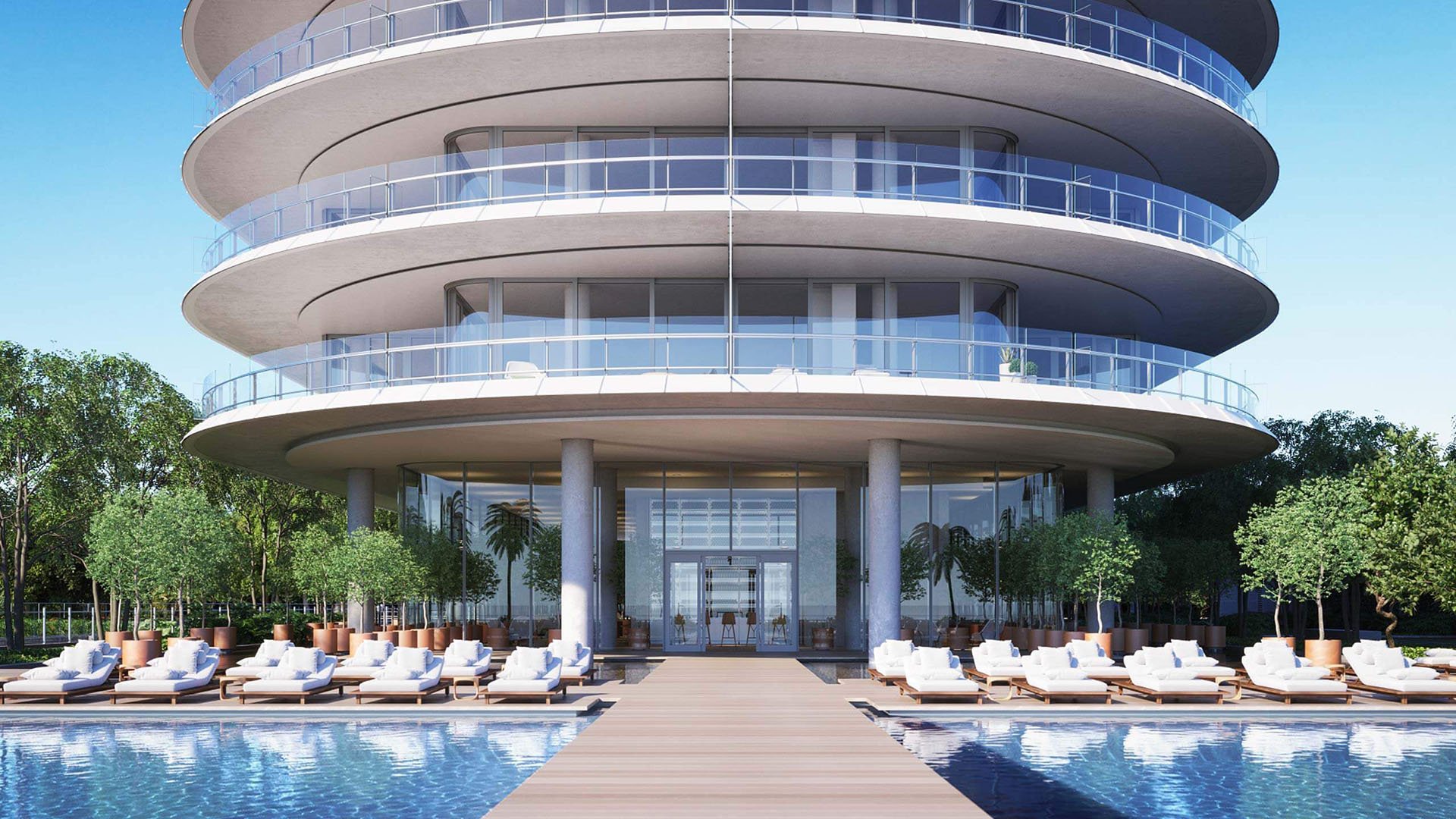
At Eighty Seven Park Surfside, private dining reflects a broader idea of ownership: the residence does not end at the front door. Serviced common areas, food-and-beverage offerings and shared spaces are designed to work together, extending domestic life into a resident-focused hospitality environment.
The setting is central to that proposition. Positioned directly on the Atlantic Ocean, the glass residential tower emphasizes its connection to the waterfront. Its low-density model and boutique residence count distinguish it from a large resort-condominium format, lending the shared hospitality spaces a more controlled character.
For an owner, the meaningful question is not whether private dining sounds impressive, but whether the service will become a useful, recurring part of life at home.
Club-style dining can make an ordinary meal feel less operational. An owner may avoid arranging transportation, navigating traffic or coordinating an outside reservation. The value becomes especially clear when convenience matters more than novelty-whether for an unplanned meal, time with guests or a quieter alternative to dining out.
That shifts how an amenity should be evaluated. A formal room admired during a tour may have limited relevance if it is rarely used. A food-and-beverage program woven into daily routines can be more consequential, even when its role is understated. At Eighty Seven Park Surfside, private dining is presented as an element of resident hospitality rather than merely a special-occasion feature.
This is the practical expression of lifestyle ownership: service reduces friction without making the building feel public.
A publicly accessible hotel restaurant must accommodate a broad audience. Resident-only hospitality can provide a more private, predictable environment shaped around those who live in the building and the people they host.
That distinction complements Surfside’s appeal to buyers who value discretion. It also aligns with the building’s boutique scale. Lower density can support a more intimate experience in shared areas, although the quality of that experience ultimately depends on how access and service are managed in practice.
Resident-only should not automatically be interpreted as residents without guests. The current policy for accompanied guests is not specified, making it an important point to confirm before purchase.
Private food-and-beverage areas can function as informal social rooms as much as places to eat. Encounters may feel more natural than a scheduled building event, while the resident-focused setting preserves a degree of separation from the wider public.
The balance matters. Some owners will value spontaneous familiarity among neighbors; others will prioritize quiet and limited interaction. Prospective buyers should consider whether the atmosphere suits their preferred level of engagement, not simply whether dining appears on an amenity schedule.
Eighty Seven Park is part of a coastal market where architecture, privacy and service increasingly operate as a single residential proposition. Nearby choices can help buyers clarify their priorities. Arte Surfside offers another point of reference for intimate luxury living, while The Surf Club Four Seasons Surfside provides a useful contrast for buyers considering a hospitality-led environment.
Ocean House Surfside further broadens the local conversation around residential scale and coastal living. These properties are not interchangeable comparisons. Instead, they illustrate why buyers should assess each property’s operating experience rather than treat amenity labels as standardized promises.
Oceanfront real estate has traditionally been evaluated through views, architecture and access to the shore. Those qualities remain fundamental, but service now plays a larger role in how a home performs each day. Private dining makes that shift tangible by bringing physical space, staffing, operations and access policies together.
A buyer who expects to use on-site services frequently may assign substantial value to that integration. One who routinely dines elsewhere may regard it as secondary. Neither view is inherently correct. The relevant measure is the alignment between the building’s hospitality platform and the owner’s actual habits.
Menus, operating hours, reservation procedures, guest access, pricing and whether food-and-beverage charges are included in common charges are not specified. These are not minor details; they determine availability, spontaneity and the real cost of use.
Buyers should request current answers directly from the condominium and review the applicable ownership materials. Useful questions include who may reserve the space, whether accompanied guests are permitted, how charges are assessed and how often the offering operates. Hospitality programs can evolve after initial marketing, so current operations deserve more weight than assumptions drawn from an amenity description.
The strongest ownership decision separates the beauty of the setting from the mechanics of the service, then evaluates how effectively the two work together.
What is private dining at Eighty Seven Park? It is presented as part of the condominium’s resident-focused hospitality offering, integrating food-and-beverage service with shared residential spaces.
Is the dining space open to the public? The offering is characterized as resident-only hospitality, creating a more controlled environment than a publicly accessible restaurant.
Can residents bring guests? The governing guest policy is not specified. Resident-only should not automatically be interpreted as excluding accompanied guests.
Are meals included in common charges? Whether dining charges are included is not specified. Buyers should confirm current pricing and the method of assessment.
Are menus and operating hours available? Menus and hours are not specified. Current operations should be verified directly before purchase.
Why does on-site dining matter to owners? It can reduce the time spent traveling, arranging transportation and coordinating outside reservations.
Does private dining add social value? It can serve as an informal social hub for residents and their guests while maintaining a more private setting.
How does low density affect the experience? A boutique residence count supports a more private ownership model and can shape the atmosphere of shared hospitality areas.
Is private dining equally valuable to every buyer? No. Its value depends largely on how often an owner expects to use building-based services in everyday life.
What should a buyer verify before closing? Confirm access rules, guest policies, hours, reservations, pricing and whether the current program differs from earlier marketing.
For a tailored shortlist and next-step guidance, connect with MILLION.
If branded residences are on your mind — as a home or as an allocation — we would be glad to share what we are seeing, privately.
Begin a quiet conversation