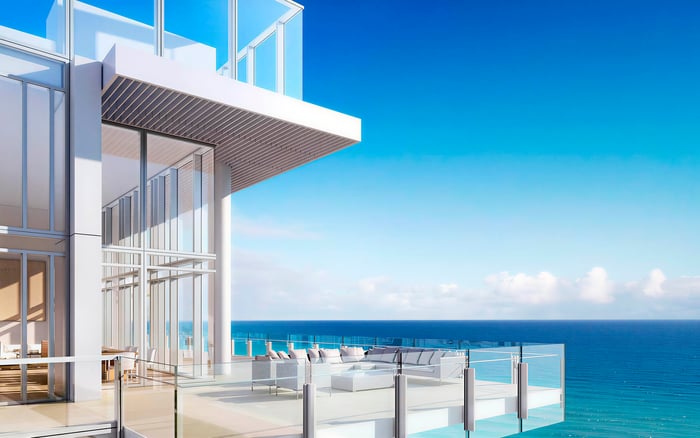
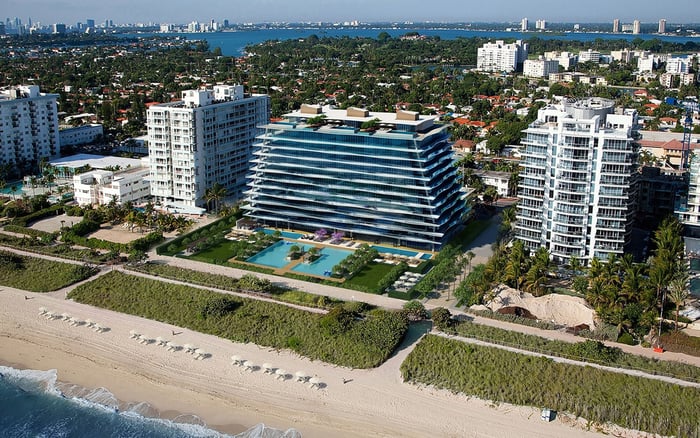
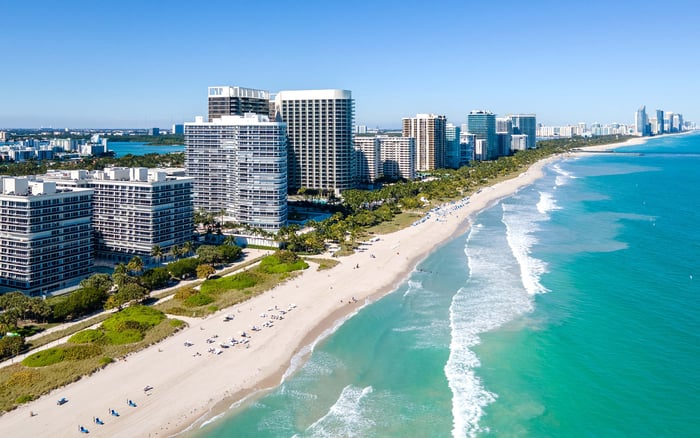
A disciplined framework for separating Ocean House Surfside’s intrinsic real estate value from the premium attached to its name, positioning, service promise, and current asking price.
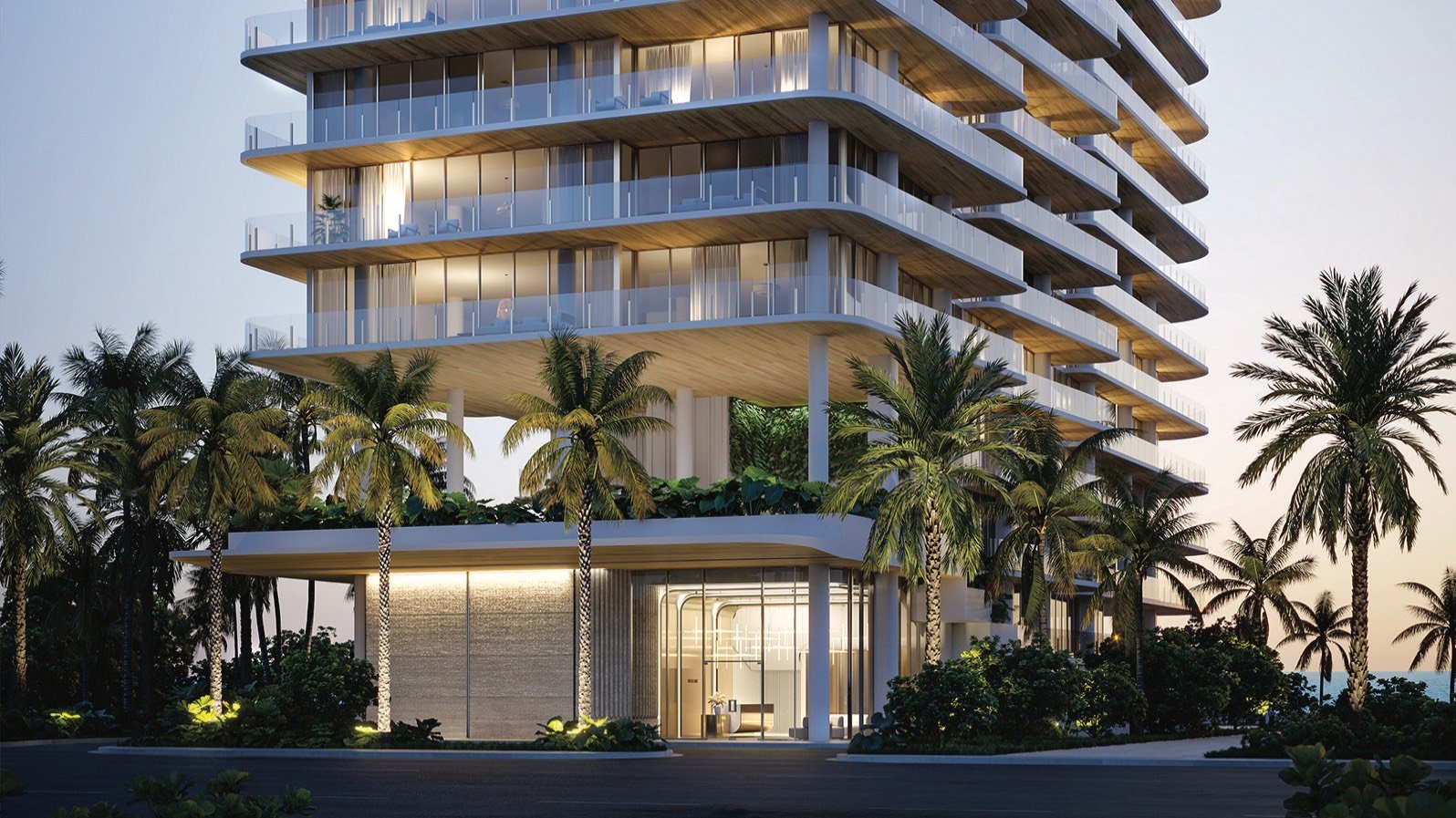
Ocean House Surfside is positioned as an ultra-luxury oceanfront residential property in Surfside. That positioning may command attention, but it should not settle the valuation question. A recognized name can shape perception, reinforce scarcity, and inspire buyer confidence without guaranteeing stronger investment performance.
For purchasers, the objective is not to dismiss the name, but to identify precisely what the asking price buys beyond recognition. Oceanfront land, views, residence size, condition, privacy, design quality, low density, amenities, and operating standards may each justify part of an uplift. Only after isolating those components can a buyer determine whether an additional premium remains-and whether that residual amount is rational.
The first test is price per square foot against closely matched oceanfront alternatives. Broad neighborhood averages are too blunt for an ultra-premium decision. Comparables should align as closely as possible in location, building age, residence size, views, condition, and service level.
Potential buyers can begin a Surfside-oriented screening set with Arte Surfside and The Surf Club Four Seasons Surfside, then determine whether individual residences are sufficiently similar to carry analytical weight. These properties are not automatic equivalents. Each prospective comparable must withstand adjustment for its specific attributes.
The same discipline applies when considering Eighty Seven Park Surfside or The Delmore Surfside. Their relevance depends on the residence and transaction under review, not merely on coastal proximity or luxury positioning. A smaller, renovated home with a superior view may warrant a different valuation from a larger residence requiring substantial work.
A useful valuation exercise divides the apparent premium into layers. Begin with the location. Then account for residence-specific qualities, including view, scale, layout, condition, and outdoor space. Next, consider the building itself: design quality, privacy, low density, amenities, and operations. The remainder is the amount most plausibly associated with reputation, identity, or name recognition.
This is where design and architecture require independent judgment. If the physical experience is unusually coherent, functional, and enduring, design may explain part of an uplift too casually labeled a brand premium. Low density may do the same by supporting privacy and reducing the sense of shared occupancy. Neither benefit should be credited to the name when it is an intrinsic property characteristic.
An amenity has value only to the extent that it improves ownership in practice. Buyers should assess how often they expect to use each offering, whether the program is delivered consistently, and whether its utility is proportionate to its ongoing cost.
Service warrants separate scrutiny. Luxury positioning expresses an aspiration; building operations determine the lived result. Request details on staffing, service scope, maintenance standards, vendor arrangements, and the mechanisms that sustain delivery. A polished presentation at purchase does not establish that the same standard will endure through changing budgets or ownership priorities.
The downside scenario matters as much as the current experience. If services could be reduced after closing, the ownership proposition may weaken even as the fixed real estate attributes remain. Buyers should ask which elements are contractually supported, which are discretionary, and what financial burden is required to preserve them.
Association finances can protect or erode a luxury premium. Before quantifying any value attached to the operating model, buyers should review current financial statements, reserves, obligations, service contracts, and a detailed fee history.
Rising obligations or weakening reserves may pressure fees, services, or both. The relevant question is not simply whether current charges appear acceptable, but whether the association can fund the promised standard without compromising the future ownership experience.
A disciplined pricing and trends review should therefore connect monthly ownership costs with actual services and financial resilience. Even the most impressive amenity program becomes less compelling if its economics are fragile. Conversely, sound finances and reliable operations can support confidence, even when they are less visible than architecture or interiors.
Current listings reveal seller expectations, not proven market acceptance. Buyers should request closed-sale data and study how comparable residences performed on resale. Examine the relationship between original asking and closing prices, adjusting for the same variables applied in the initial comparable set.
Resale evidence is particularly important because a name may be powerful in an enthusiastic market yet less protective when liquidity tightens. Stress-test the proposed premium under a weaker cycle. Consider whether a future buyer would still pay for the same combination of location, design, privacy, service, and identity if choices expand or sentiment cools.
The strongest purchase thesis does not require permanent market excitement. If the residence remains compelling after the name is mentally removed, the premium rests on a more durable foundation. If the thesis depends primarily on recognition and current asking prices, the buyer is accepting a less measurable form of risk.
The rational approach is straightforward: pay first for demonstrable intrinsic value, then decide what recognition is worth personally. A name can enhance enjoyment and marketability, but it should not substitute for evidence.
Before signing, reconcile the adjusted comparable analysis, closed resales, association finances, reserve position, service contracts, fee history, and the practical utility of the amenities. The final price should reflect the residence an owner will actually inhabit and eventually resell-not solely the prestige implied by its presentation.
Does the Ocean House name guarantee superior investment performance? No. Name recognition should be tested against intrinsic property value and resale evidence.
What is the first pricing comparison to make? Compare the asking price per square foot with closely matched oceanfront alternatives.
Which factors should comparable residences share? Match location, age, size, views, condition, and service level as closely as possible.
Why are current asking prices insufficient? They reflect seller expectations, while closed sales reveal prices buyers actually accepted.
Can design justify part of the premium? Yes. Design quality should be valued independently rather than attributed automatically to the name.
How can low density affect value? Low density may support privacy and scarcity independently of branding or marketing.
How should amenities be evaluated? Test their practical utility against recurring costs and expected frequency of use.
Why review association finances? Weak reserves or rising obligations can pressure fees, services, and the property’s premium.
What service risk should buyers consider? Determine whether services could be reduced after purchase and how that would affect ownership.
How should a buyer stress-test the premium? Ask whether future purchasers would preserve it during a weaker market cycle.
If you'd like a private walkthrough and a curated shortlist, connect with MILLION.
If branded residences are on your mind — as a home or as an allocation — we would be glad to share what we are seeing, privately.
Begin a quiet conversation