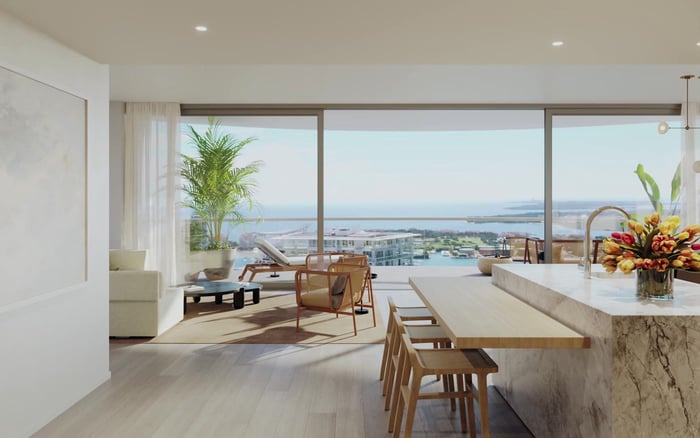
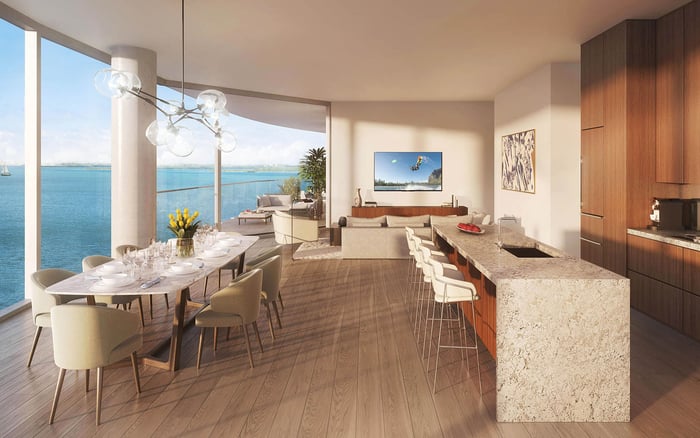
Private dining can shape daily ownership through convenience, privacy and a more controlled approach to entertaining. Buyers considering Aston Martin Residences Downtown Miami should verify how the amenity operates, including access, reservations, charges, guest policies and service standards.

At Aston Martin Residences Downtown Miami, the private-dining proposition raises a practical question: how can hospitality within a residential building affect everyday ownership? Its relevance is not limited to the dining room itself. Access, privacy, convenience and service delivery determine whether the experience becomes a useful extension of the home.
Resident-only hospitality differs from a conventional public restaurant model because it is framed around owners and permitted guests. In principle, that can reduce the transitions involved in arranging a meal or gathering. The precise experience, however, depends on current operating rules and should not be inferred from branding or presentation alone.
For buyers, the central issue is repeat utility. An amenity has greater practical value when it suits ordinary routines as well as special occasions. Prospective owners should therefore assess how private dining would fit their own schedules, entertaining preferences and expectations for service.
Keeping hospitality within a residential setting can make hosting feel more streamlined. Owners may value the ability to move from their residence to a shared dining environment without coordinating a separate public venue. Whether that advantage exists in practice depends on availability, reservation procedures and guest-access policies.
A controlled setting may also appeal to owners who prefer discretion. That does not establish any particular level of privacy, exclusivity or service. Buyers should ask who may use the space, how guests are registered, whether events receive priority and what limits apply to gatherings.
On-site dining should be viewed as an additional option rather than a substitute for South Florida’s broader restaurant culture. When comparing hospitality-oriented properties such as Cipriani Residences Brickell, buyers should focus on the operating model that best matches their actual habits.
A polished dining environment does not by itself establish a residential-club experience. Operations determine whether the amenity feels dependable: reservation access, staffing, menu structure, service consistency and the treatment of private events can all affect its usefulness.
Prospective owners should request current information about operating hours, booking procedures, cancellation terms, guest allowances and event policies. They should also determine whether food and beverage costs are charged separately and whether any additional fees, minimums or deposits apply. Because no fee structure is established here, those points require direct verification.
The same framework can guide comparisons with Waldorf Astoria Residences Downtown Miami and Villa Miami. Rather than comparing names alone, buyers can examine which residence offers the access, service structure and recurring costs that suit their intended use.
For some buyers, privacy means reducing movement through public venues and maintaining more control over the guest experience. Resident-focused dining may support that preference, but the actual degree of control depends on the building’s rules and daily management.
Curation matters as well. Buyers may expect the atmosphere and service to align with the residence’s positioning, yet branding is not a substitute for documented terms or consistent execution. Current materials, governing documents and direct answers from the appropriate representatives should inform the purchase decision.
The strongest ownership case rests on practical use. A buyer who expects to dine or entertain within the building should test the concept against likely frequency, availability and cost. If access is limited or charges are unclear, the amenity may carry less personal value regardless of its visual appeal.
A focused review should cover who can reserve the dining space, how far in advance reservations open and whether residents receive equal access during high-demand periods. Buyers should also ask whether the space operates on a regular schedule or only for specified services and events.
Guest rules deserve separate attention. An owner should understand how many guests are permitted, whether the resident must remain present and whether private functions follow different procedures. Any restrictions should be reviewed before relying on the space for recurring entertaining.
Finally, buyers should clarify the financial structure. Association obligations, individual dining charges and event-related costs may be treated differently. Written, current information is more useful than assumptions based on the appearance or branding of the amenity.
Is private dining at Aston Martin Residences open to the public? The article addresses a resident-only hospitality concept. Buyers should confirm the current access rules directly.
Can residents invite guests? Guest access should not be assumed. Prospective owners should verify who may attend and whether limits or registration procedures apply.
Is private dining included in association fees? No fee structure is established here. Buyers should confirm what is included and what is charged separately.
Can the space be used for private entertaining? That depends on current reservation, event and guest policies. Buyers should request the applicable rules before relying on it for gatherings.
Are menus and service hours fixed? Current menus and hours are not specified here. Both should be verified as part of due diligence.
Why can private dining matter to daily ownership? It may provide a convenient setting for meals or hosting within the residential environment, subject to access and availability.
Does on-site dining replace nearby restaurants? It is better evaluated as an additional ownership option rather than a replacement for South Florida’s restaurant scene.
What creates a residential-club experience? Controlled access, dependable service and useful shared spaces can contribute to that experience. Actual operations determine whether the concept works in practice.
Can hospitality standards change over time? Operations may evolve. Buyers should rely on current information and review the documents governing the amenity.
What should a buyer verify before purchasing? Confirm access, reservations, guest rules, hours, charges, event policies and the governing provisions that apply to private dining.
To compare the best-fit options with clarity, connect with MILLION.
If branded residences are on your mind — as a home or as an allocation — we would be glad to share what we are seeing, privately.
Begin a quiet conversation