A buyer’s guide to separating private-elevator design from actual access control, verifying visitor and service protocols, and interpreting ownership costs at South Beach residences.
In South Beach, a discreet arrival is part of the appeal of an exceptional residence. Yet an elevator opening into a private foyer answers only one question: where you arrive. It does not establish who can reach that landing, how a guest is authorized, or whether a delivery follows the same route.
For a Miami Beach buyer, privacy deserves the same scrutiny as the floor plan. Keep three questions separate: the physical elevator arrangement, resident authentication, and visitor access. Then examine service circulation and ownership costs independently. A polished lobby and attentive valet may enrich daily life, but neither substitutes for a clearly defined access policy.
The objective is not to select the most elaborate technology. It is to establish whether current procedures meet the household’s expectations for frequent guests, domestic staff, deliveries, and periods when the owner is away.
“Private elevator,” “private foyer,” and “semi-private access” are not interchangeable. Ask which cab serves the residence, who else can use it, where its doors open, and what separates the landing from the home. Inspect the specific apartment’s arrangement rather than assuming it is uniform throughout the building.
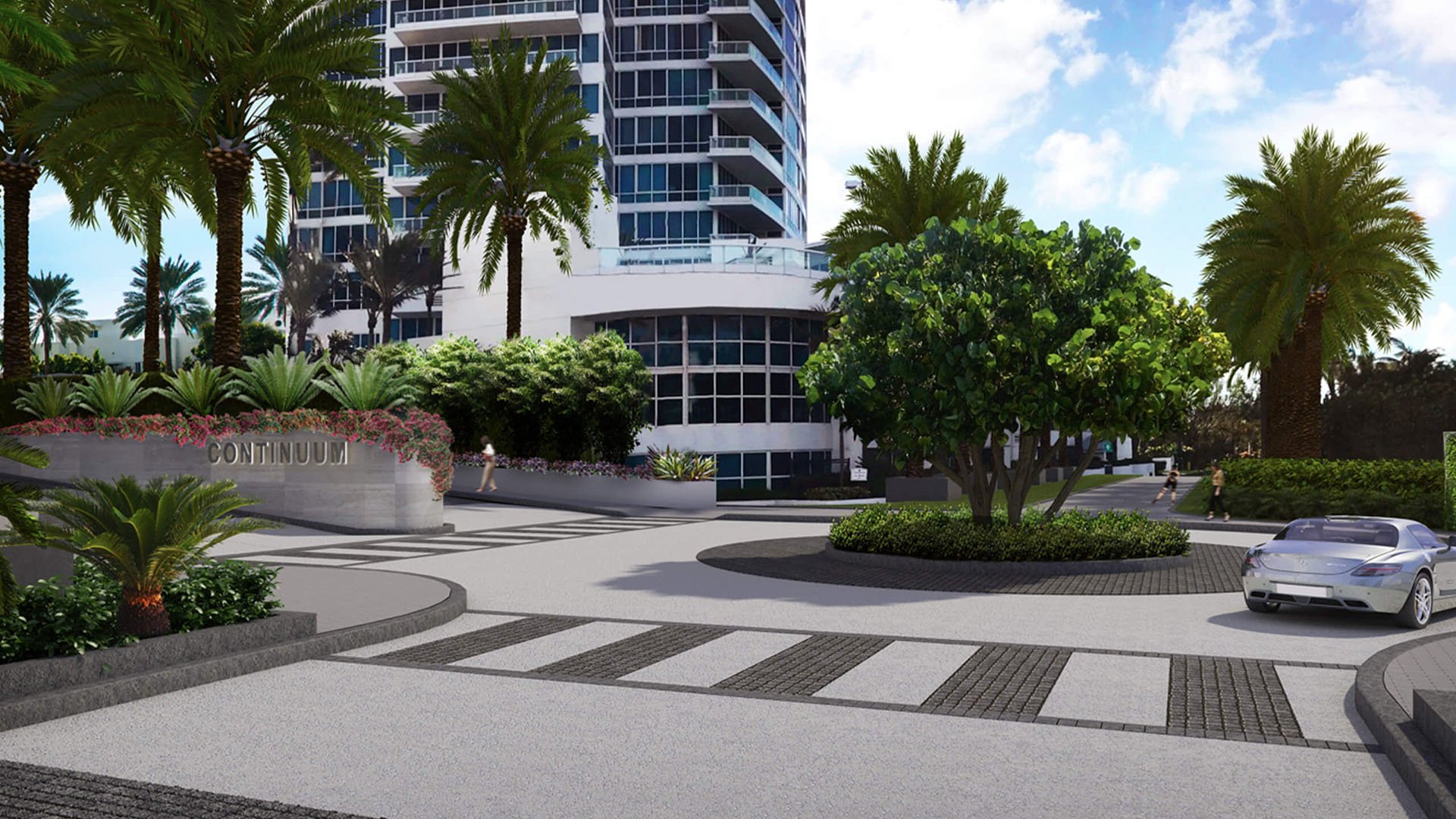
At Continuum on South Beach, South Tower features include private or semi-private elevator foyers, a vehicle-access gatehouse, 24-hour security, concierge services, and valet parking. The distinction between private and semi-private makes an apartment-level inspection essential. Confirm the configuration serving the residence under consideration.
Il Villaggio, at 1455 Ocean Drive, is described as having 11 private elevators providing direct access to residential foyers, alongside a gatehouse with 24-hour security and valet. That describes an arrival feature, not the process by which a visitor receives permission to use it.
Murano Grande, at 400 Alton Road, is marketed with private and semi-private elevator access, 24-hour security, concierge services, and valet parking. Floor-restricted permissions, remote visitor preauthorization, and a separate service-entry route remain questions to resolve directly-not features to infer from that description.
Biometric language requires particular care. A fingerprint reader at a residence door is not the same as elevator authentication, and neither explains what happens when a dinner guest arrives without the resident.
Glass, at 120 Ocean Drive, is marketed with private elevators directly to residences and fingerprint access to elevators and common areas, as well as 24-hour valet and security. Those features do not explain how guests, household staff, delivery personnel, or contractors are admitted. Request the current procedure for each category.
At Apogee South Beach, the marketed arrangement is four residences per floor, with a private elevator for each residence. Advertised features also include keyless fingerprint door entry and an AMX interactive panel connecting residents to security, valet, spa, and other services. The fingerprint feature concerns door entry; it should not be treated as verified elevator authentication.
Continuum illustrates why dates matter. In December 2020, facial recognition was described as being installed at property entry points and offered for elevator control to authenticate residents and take them to their floors. That historical description does not establish whether biometric elevator control is active today, which entrances it covers, or whether residents have an alternative.
Ask management to confirm current authentication methods in writing. For biometric systems, request an explanation of enrollment, resident opt-outs, and the alternative arrival procedure. Evaluate today’s operation, not the sophistication of an earlier installation.
A useful viewing should include a management-arranged demonstration of an ordinary guest arrival. Start at the entrance a visitor would actually use and follow the approved sequence to the residence. Do not attempt to test security independently.
Ask who verifies the visitor’s identity and who authorizes admission. Establish whether approval involves an intercom, a credential, staff escort, or another procedure. Then confirm whether permission is limited to the intended destination and expires after the visit.
The same discussion should cover an unavailable resident, a recurring household employee, and a contractor arriving for scheduled work. Request written visitor and contractor protocols, along with information on relevant camera coverage and entry-log retention. These are matters to verify, not amenities to assume at any of the properties discussed here.
Continuum’s features include an oversized service elevator accessed through a separate service corridor. This establishes a distinct service-access route. It does not prove that every delivery, vendor, or staff visit follows it.
Walk the service path with an authorized representative. Trace where personnel enter, where deliveries are received, and how the service elevator connects to the residence. Ask which activities use that route and whether exceptions apply to small deliveries, household staff, or after-hours arrivals.
Request written delivery, contractor, and moving protocols. The question is not merely whether a service elevator exists, but whether operating rules preserve the separation the household expects. Where a separate route is not specified, seek confirmation rather than assuming either its presence or its absence.
At Il Villaggio, maintenance or HOA fees for 1455 Ocean Drive, Unit 1009, MLS A11942698, are quoted at $4,456 per month. Advertised features include guard-gated entry, 24-hour security, valet, concierge services, and secured elevators, lobby, and garage.
The fee is a unit-specific figure. It is not a verified building-wide charge, a current quote for another apartment, or a comparable operating-cost benchmark for Continuum, Glass, Apogee, or Murano Grande. Nor does it isolate the cost of privacy or security services.
Before comparing ownership expenses, confirm current dues for the exact residence, what they include, reserve information, and assessments. Review finances alongside operations: the monthly charge alone cannot establish the quality of visitor authentication or service-entry separation.
If the search also includes Five Park Miami Beach, carry the same questions into that evaluation without assuming equivalent elevator controls or service protocols. A consistent checklist is more useful than treating different marketing descriptions as comparable specifications.
Before committing, reconcile three things: the apartment’s physical arrangement, management’s written procedures, and the authorized walkthrough. Any unresolved difference deserves clarification. The most persuasive expression of privacy is not a feature label, but an arrival and service routine that matches the way the owner intends to live.
For a considered approach to your South Beach residential search, connect with MILLION.
If branded residences are on your mind — as a home or as an allocation — we would be glad to share what we are seeing, privately.
Begin a quiet conversationNo. The physical elevator arrangement does not establish how visitors are authorized or whether their access is restricted to a specific destination.
Confirm which cab serves it, who else can reach the landing, and what separates the foyer from the residence. Inspect the specific apartment rather than relying on building-wide descriptions.
Continuum’s published features include an oversized service elevator accessed through a separate service corridor. Buyers should still confirm which deliveries and personnel actually use that route.
No current operating policy is established by the December 2020 description. Confirm activation, entrance coverage, visitor procedures, and resident alternatives with management.
Il Villaggio is described as having 11 private elevators providing direct access to residential foyers. The description does not establish how guests receive destination-restricted access.
Glass is marketed with fingerprint access to elevators and common areas. Its guest, household staff, delivery, and contractor admission procedures require separate confirmation.
No. Apogee’s listed fingerprint feature concerns door entry, while its private-elevator arrangement is a separate feature.
Confirm floor-restricted elevator permissions, remote visitor preauthorization, and whether a separate service-entry route exists. These details are not specified in the cited property description.
No. That figure belongs to the listing for 1455 Ocean Drive, Unit 1009, MLS A11942698, and is not a verified building-wide fee or cross-property cost benchmark.
Request current written visitor, delivery, contractor, and moving protocols, including floor permissions, authorization methods, camera coverage, and entry-log retention. Separately confirm apartment-specific dues, inclusions, reserves, and assessments.