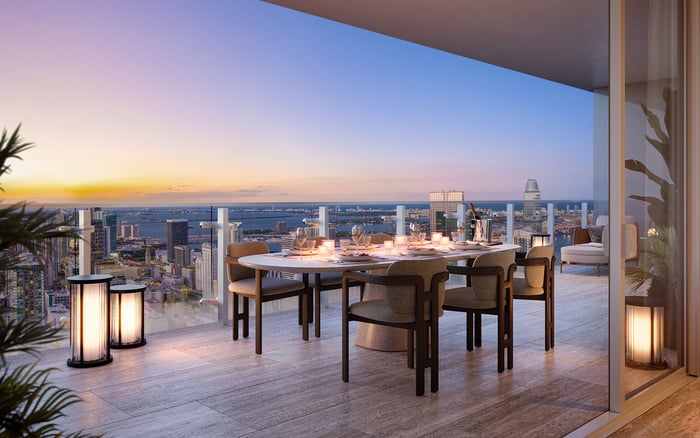
A buyer-focused review of the documents and operating details that matter when assessing private entertaining at Faena Residences Miami in Downtown Miami.

For a host, privacy is defined less by a dramatic arrival than by what happens after the first guest reaches the door. At Faena Residences Miami Downtown Miami, a residential project presented for Downtown Miami, the decisive questions center on guest access, elevator circulation, valet operations, security, and the separation of residential and public areas.
These are practical considerations. A residence may be beautifully suited to dinners, cocktails, or family celebrations, yet the experience can still feel exposed if visitors wait in a shared lobby, event staff cross paths with residents, or vehicles accumulate at the entrance. The reverse is equally true: disciplined operating protocols can make a larger gathering feel composed and discreet.
The marketed lifestyle should therefore be evaluated alongside the binding documents and management procedures. Current party rules, guest limits, quiet hours, vendor requirements, and event fees are not established in the available project details. Buyers should seek written confirmation rather than make assumptions based on the Faena name or another property.
The first request should be for the current declaration, rules and regulations, and any separate event or amenity policy. These documents should clarify whether gatherings are treated differently according to guest count, location, duration, music, catering, or vendor participation. They may also address frequency limits, notice periods, deposits, insurance, cleanup, security staffing, and penalties.
None of these specific controls is presently confirmed. It also remains unverified whether residents must preregister guests or submit an event plan to management. A serious buyer should request the operative language and confirm whether the policies are provisional, association-controlled, or subject to change after turnover.
This distinction matters across branded residences. Brand standards may shape service expectations, but condominium governance determines what an owner can do within a private home or reservable amenity. Buyers comparing Waldorf Astoria Residences Downtown Miami should make the same document request rather than infer that two branded properties follow comparable rules.
A useful privacy audit follows each guest from curb to residence. Ask where visitors are greeted, how identities are confirmed, whether access is issued digitally or at a desk, and which areas can be reached without an escort. Floor-access controls, guest elevator routing, and procedures for large groups remain unverified for Faena Residences Miami.
Private, semiprivate, or dedicated residential elevator service may be an important buyer criterion, but it should not be presumed here. Request the relevant plans and a written explanation of normal resident, guest, service, and emergency circulation. If entertaining is central to the purchase, ask management to describe the journey for five guests, then for a materially larger gathering.
The same analysis applies to event staff. Policies governing caterers, servers, florists, musicians, deliveries, equipment, and service-elevator use have not been confirmed. Buyers should establish permitted arrival windows, loading locations, elevator reservations, protective requirements, staff check-in procedures, and removal deadlines. This operational layer often determines whether hosting remains elegant without disrupting neighbors.
As another Downtown reference point, Aston Martin Residences Downtown Miami can be considered independently, with its own governing documents and circulation questions. No competing project should be treated as evidence of Faena policy.
Valet service is both hospitality and privacy infrastructure. A well-managed arrival can prevent queues, protect resident access, and keep a gathering from becoming conspicuous at the curb. For this project, guest-valet capacity, vehicle preregistration, event-related charges, and queue-management procedures are not established.
Ask whether an owner can submit a guest vehicle list, reserve arrival capacity, arrange staggered windows, or secure overflow options. Confirm how ride-share vehicles, chauffeurs, exotic cars, oversized vehicles, and departing guests are handled. The response should address peak building activity as well as ordinary evenings.
Security responsibilities also demand precision. Determine whether a private event requires additional personnel, who authorizes them, how costs are calculated, and whether building staff can deny entry to an unregistered guest. These details belong in a written event procedure or management response.
Outdoor entertaining requires a rights-based review. The available details do not verify which outdoor spaces are private to individual residences and which are shared amenities that may require reservations. Nor do they establish rules for amplified sound, operating hours, occupancy, furniture, décor, catering, or weather contingencies.
A private terrace may still be governed by provisions concerning noise, safety, furniture, lighting, and exterior appearance. A shared space may involve booking windows, fees, deposits, staffing, alcohol conditions, or limits on exclusive use. Buyers should request both the legal designation of each space and its operating policy.
When evaluating Casa Bella by B&B Italia Downtown Miami or any nearby alternative, the same discipline applies: compare written rights and procedures, not visual impressions alone. Outdoor square footage carries a different value when its use is constrained during the hours an owner expects to entertain.
The essential file includes the declaration, rules and regulations, amenity policies, valet procedures, event fee schedule, and relevant circulation plans. Counsel should review ownership rights, while management should answer operational questions in writing.
Request a sample event workflow covering guest registration, vendor access, elevator use, deliveries, valet, security, cleanup, outdoor use, and weather. Then test whether those procedures align with the envisioned scale and style of entertaining. In the ultra-premium market, privacy is not a decorative promise. It is the product of architecture, access control, staffing, and enforceable rules working together.
Are private parties currently permitted at Faena Residences Miami? The current rules governing parties and private gatherings are not established in the available details. Buyers should obtain the operative condominium rules before relying on a proposed use.
Is there a verified maximum guest count? No verified guest-count limit is presently established. The applicable rules may distinguish between in-residence gatherings and reserved amenity events.
Must party guests be preregistered? A preregistration requirement has not been confirmed. Buyers should ask how identity checks, guest lists, escorts, and access credentials are handled.
Are private residential elevators confirmed? Private, semiprivate, or dedicated residential elevator service is not confirmed in the available details. Buyers should review the relevant plans and written operating procedures.
Can caterers and musicians use a service elevator? Service-elevator policies for caterers, event staff, musicians, deliveries, and equipment remain unverified. Confirm reservations, loading access, operating hours, and fees.
Can an owner reserve valet capacity for an event? Guest-valet capacity and reservation procedures are not established. Request written confirmation of vehicle preregistration, queue planning, overflow arrangements, and charges.
Are quiet hours or music restrictions confirmed? No verified quiet hours or music limits are established in the available details. Review restrictions for both residences and shared amenities.
Can shared outdoor space be reserved privately? The distinction between private outdoor areas and reservable shared amenities is not verified. Ask for legal designations, booking rules, occupancy limits, and fee schedules.
Could the rules change after purchase? Condominium and amenity policies may change through the applicable governance process. Buyers should understand amendment rights, association authority, and turnover provisions.
What should an entertaining-focused buyer request first? Request the declaration, rules and regulations, amenity policies, valet procedures, event fee schedule, and a written guest-and-vendor workflow.
For a discreet conversation and a curated building-by-building shortlist, connect with MILLION.
If branded residences are on your mind — as a home or as an allocation — we would be glad to share what we are seeing, privately.
Begin a quiet conversation