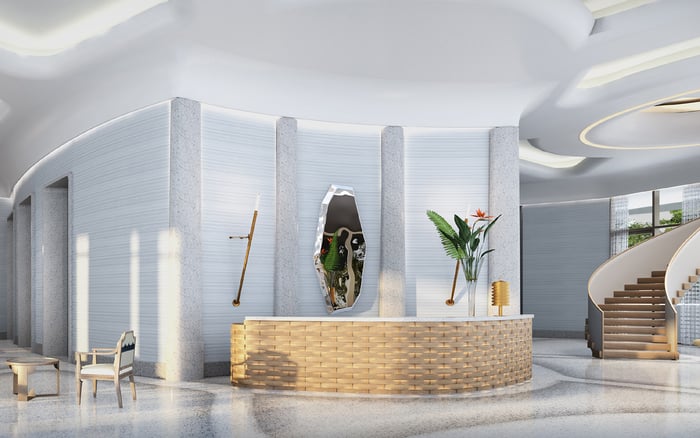
A discreet service experience depends on more than an amenity description. For Forté on Flagler buyers, this checklist identifies the written evidence to request for housekeeping, linen storage, residence access, and responsibility for personal belongings.

The most reassuring luxury is knowing precisely how a residence will be cared for while its owner is elsewhere. For buyers at Forté on Flagler West Palm Beach, housekeeping, storage, and residence access deserve the same scrutiny as the principal rooms. Each touches the boundary between effortless living and control over personal possessions.
A housekeeping amenity description does not establish inclusion in condominium assessments. Nor does it define who performs the work, how often someone visits, or what happens if an item is damaged. The buyer's objective is not to assume shortcomings, but to replace broad promises with written, residence-specific evidence.
Request current operating documents and confirm the property's address and precise unit designation in transaction documents before matching plans, storage allocations, or service commitments to a purchase. This checklist identifies evidence to request; it does not establish Forté's current service scope or policies.
Request a signed service menu identifying the provider, scope, frequency, visit duration, and price. Establish whether housekeeping is included in assessments, billed separately, or arranged through an outside vendor. These are distinct commitments, even when the finished experience may feel similar.
The menu should distinguish routine cleaning from bed-making, bathroom detailing, laundry, and replenishment. Ask who supplies cleaning products, who approves their use on delicate finishes, and whether preparing the home before arrival is a separate service. An amenity label alone does not establish these standards.
Obtain written answers covering:
Which rooms, surfaces, and tasks are included or excluded.
How recurring visits, additional hours, and cancellations are charged.
Whether supplies and replacement household essentials cost extra.
Who supervises work and resolves incomplete or unsatisfactory visits.
For buyers also considering Mr. C Residences West Palm Beach, use the same request template without assuming equivalent arrangements. Compare documented commitments, not amenity labels.
If laundry service is offered, establish whether it means pickup and delivery, dry cleaning, or in-home laundering. Ask where items go, how they are identified, and who remains responsible during transfer. Owner-supplied linens warrant explicit handling instructions; not every fabric can be assumed to follow the same routine.
Request a process for counting items at collection and return, communicating special care requirements, and addressing damage or missing pieces. Clarify whether bed linen changes are part of housekeeping or a separately scheduled task.
Storage requires a separate inquiry. Moving coordination and storage services, if offered, do not necessarily include a permanent private linen allocation. Likewise, a primary-suite walk-in closet does not establish the presence of a dedicated linen or housekeeping closet. Inspect the actual unit with its intended household inventory in mind: bedding, bath linens, guest supplies, and cleaning equipment each need a practical place.
For any private storage offered with the residence, request a measured plan and inspect the assigned space. A floor-plan label is no substitute for usable shelving depth, door clearance, or an accessible route from the residence. Confirm climate conditions rather than assuming them.
Ask for documents identifying the storage allocation, who may enter, what may be kept there, and who bears insurance responsibility. Distinguish in-residence cabinets from any separate storage area, and confirm whether an owner-lockable compartment can remain outside routine housekeeping access.
A comparison visit to Alba West Palm Beach should apply the same distinction between visible space and documented rights, without presuming either project's provisions. Record measurements and written answers side by side. The useful comparison is whether each home accommodates the buyer's actual belongings.
Verify the specific unit's elevator and foyer configuration. A private elevator foyer, where provided, does not by itself establish floor-access restrictions or entry logging.
Similarly, concierge and security services do not establish permission for personnel to enter an individual home. Request the written authorization procedure for routine housekeeping, repairs, deliveries, and emergency entry, with each category addressed separately.
Ask who controls master keys, whether temporary credentials are available, and how permissions are withdrawn. Establish whether entry is escorted, logged, or followed by a completion notice. A general smart-home description does not confirm temporary codes, entry alerts, cameras, or remote permissions. Where camera records exist, ask about retention and access to footage.
Request the current personal-belongings policy covering housekeeping access, valuables, missing items, and owner-supplied linens. Have relevant service agreements reviewed before relying on them; an amenity description is not a substitute for those terms.
Confirm the provider's identity, evidence of insurance and bonding, screening procedures, confidentiality terms, and subcontracting rules. If personnel can change between visits, ask how substitutions are approved and communicated.
Obtain the loss-and-damage terms, including limits, valuables exclusions, responsible parties, and incident-notification deadlines. Discuss insurance responsibilities with an appropriate adviser. A locked cupboard can establish a practical boundary, but it does not resolve contractual questions about custody or liability.
Lifestyle services can create additional handoffs. If guest suites, valet parking, or luggage assistance are part of the proposed arrangement, request the applicable procedures. Availability alone does not establish safeguards for luggage, keys, or items left in a vehicle.
Ask how packages and luggage are tracked, who may collect them, and how guest access to residential floors is controlled. For an owner away for extended periods, request a clear procedure for authorizing visits and receiving confirmation afterward. Keep routine service permissions separate from open-ended access wherever the applicable rules allow.
Before committing, assemble the current governing documents, budget, relevant service contracts, vendor rules, and insurance certificates. Request available incident information, subject to privacy restrictions. Review written answers with the appropriate transaction and insurance advisers; verbal assurances are no substitute for documentation.
Ensure promised storage, closet systems, appliances, and access-control features appear in the relevant transaction documents. Separate what transfers with the residence from services that require a new agreement or may change. The strongest purchase file makes daily arrangements clear: what is done, where belongings remain, who can enter, and who answers when something goes wrong.
For a discreet approach to evaluating South Florida residences, connect with MILLION.
If branded residences are on your mind — as a home or as an allocation — we would be glad to share what we are seeing, privately.
Begin a quiet conversationThis checklist does not establish whether housekeeping is included in assessments. Request the current service agreement and written pricing terms.
It should identify tasks, frequency, visit duration, supplies, fees, cancellation terms, and the provider. Bed-making, bathroom cleaning, laundry, and replenishment should be addressed explicitly.
A general description does not define that scope. Confirm whether service involves in-home laundering, pickup and delivery, dry cleaning, or another arrangement.
This checklist does not establish the storage configuration of every residence. Inspect and measure the specific unit's closets and cabinets.
Confirm dimensions, climate conditions, legal assignment, access rights, and insurance responsibility. Distinguish separate storage from cabinetry within the residence.
No, the feature alone does not establish access restrictions or entry logging. Request the procedures applicable to the specific residence.
Service availability does not establish residence-entry permissions. Obtain the written rules for routine service, vendor visits, and emergency access.
Request provider identity, insurance and bonding evidence, screening procedures, confidentiality terms, and subcontracting rules. Review loss-and-damage limits and incident-notification deadlines as well.
Confirm the property's address and precise unit designation in transaction documents. Ensure the plans, storage allocations, and service commitments apply to that residence.
Current documents help distinguish ongoing services from marketing promises. Review them alongside relevant service agreements and transaction documents.