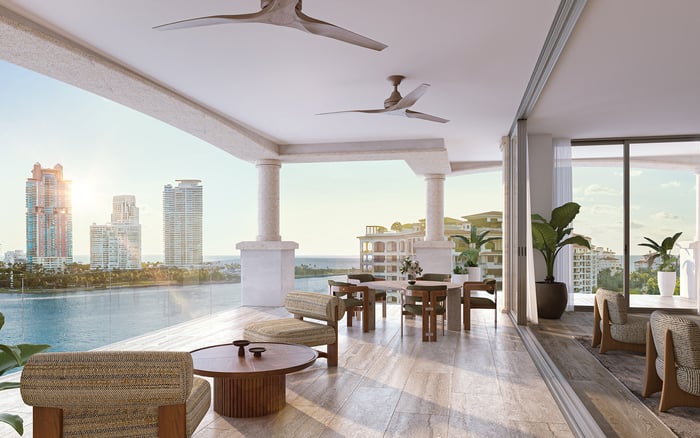
A practical framework for preparing a seasonally unoccupied Palazzo del Sol residence, with clear distinctions between association access, licensed pest-control service, owner procedures, and insurance obligations.

Preparing a residence at Palazzo del Sol Fisher Island for an extended absence is less about closing the door than maintaining continuity of care. Finishes deserve attention, but so do less visible details: moisture beneath a vanity, a change in air-conditioning performance, or a service visit without written confirmation. A well-prepared residence needs an accountable person, a defined inspection scope, and an accessible record of what happened while the owner was away.
For Fisher Island owners, the recommended framework has three parts: regular observation, properly coordinated specialist access, and documentation that tracks an issue through resolution. Treat these as owner procedures to establish, not statements of Palazzo del Sol policy. Before arranging services, confirm current building requirements with management, including vendor entry, emergency contacts, and any association-coordinated pest treatment.
Florida Statute §718.111 gives condominium associations access to units when necessary to maintain property within their responsibility or prevent damage to units or common elements. That authority serves a protective purpose; it does not independently authorize a pest-control contractor to enter an owner's residence.
A separate provision concerns statutorily abandoned units. For qualifying units, an association may enter to inspect, make repairs, address mold or deterioration, restore utilities, or otherwise protect the property. Except in an emergency, entry under that provision generally requires at least two days' notice, mailed or hand-delivered to the owner's address in association records.
The distinction matters: a seasonally unoccupied residence is not automatically abandoned. Do not treat the two-day notice provision as a universal rule for routine service appointments or every association entry. Before departure, ask management to clarify applicable access procedures and ensure owner contact details are current. Seek legal advice if a particular access dispute requires interpretation of the statute or condominium documents.
A useful home-watch visit should extend beyond a visual sweep of the principal rooms. Agree on a repeatable inspection scope and identify areas that cannot be accessed. General home-watch checks can cover leaks, HVAC problems, humidity concerns, electrical issues, pest evidence, storm damage, and signs of unauthorized entry. These checks are not a substitute for specialist diagnosis or repair.
Use a written checklist organized around the residence's systems:
Surfaces and moisture: Check ceilings, walls, and floors for water stains, discoloration, and soft spots. Record visible mold, musty odors, or condensation on windows rather than dismissing them as incidental.
Plumbing and appliances: Inspect under-sink cabinets, toilets, and water-heater areas for drips or moisture. Include drainage, water pressure, and appliance leaks within the agreed service scope.
Mechanical performance and security: Record apparent HVAC concerns, visible electrical issues, and signs of unauthorized access. Escalate concerns to the appropriate specialist.
Utility observations: Where meters are accessible, record readings consistently. Unexpected water consumption warrants investigation for a possible concealed leak, not an immediate assumption about its cause.
Request dated photographs or video alongside written observations. Images are most useful when they identify the room, the affected area, and what has changed since the previous visit. Each finding should prompt a defined next step: owner notification, management coordination, or a specialist appointment.
Florida regulates structural pest control under Chapter 482. Use an appropriately licensed pest-control business and keep its role distinct from home watch. An observer can document evidence of pests, but that inspection does not replace professional pest-control service.
As an owner procedure, provide written authorization identifying the business, the intended service, the appointment window, and the person coordinating access. Ask management which credentials or entry arrangements apply. Confirm whether any association-coordinated treatment affects the proposed appointment; do not assume a particular building schedule or scope of coverage.
Request preparation instructions and any treatment-specific re-entry guidance directly from the pest-control provider. After the visit, retain the service record, areas treated, follow-up recommendations, and any restrictions communicated by the technician. The access log should distinguish arrival from completed service and note any area the provider could not enter.
For an owner also considering Palazzo della Luna Fisher Island, the same due-diligence questions apply. What transfers is the owner's checklist-not an assumption that neighboring properties share authorization procedures, contractors, or treatment schedules.
A central, securely shared file is a practical way to manage an absent owner's residence. Organize it so the owner or designated representative can understand an issue without reconstructing weeks of messages. Keep access credentials separate from broadly circulated service records.
Begin with dated baseline photographs of interior rooms, doors, windows, and mechanical systems. Add inspection records, photographs or video, pest-control documentation, invoices, and correspondence approving work. For each concern, record the observation date, who was notified, the agreed response, and evidence of completion.
Attendance and resolution are distinct. A visit record establishes that someone entered; a repair invoice and follow-up photographs help explain what was addressed. If an area remained inaccessible or an appointment was postponed, record that detail rather than letting the file imply a complete inspection.
Before-and-after storm photographs can also support communication with insurance adjusters. Arrange this documentation only when access is safe and permitted, and retain emergency-repair invoices with the relevant images and inspection history.
Set inspection frequency by reviewing the actual policy and obtaining written clarification from the insurer or broker. Disclose occupancy patterns, review vacancy conditions, and confirm flood and wind coverage. A schedule suitable for another residence does not establish that the same interval satisfies this property's obligations.
Coordinate the resulting schedule with the home-watch provider and establish a backup if a planned visit cannot occur. These are recommended owner arrangements, not verified Palazzo del Sol requirements. After a loss, notify the insurer promptly and retain inspection logs, date-stamped photographs, and emergency-repair invoices. Documentation supports communication; it does not guarantee coverage.
Before leaving, confirm that management, the owner's representative, and each authorized provider understand their respective roles. Establish who receives urgent findings, who approves work, and how completion is documented. Before returning, review outstanding items rather than assuming a quiet inbox means the residence is ready.
Buyers evaluating The Residences at Six Fisher Island can carry this preparation framework into their own building-specific inquiries. Across residences, the objective remains consistent: attentive observation, controlled access, and records that make the home's condition clear from a distance.
For a considered perspective on South Florida residential ownership, explore MILLION.
If branded residences are on your mind — as a home or as an allocation — we would be glad to share what we are seeing, privately.
Begin a quiet conversationNo. A seasonally unoccupied residence is not automatically a statutorily abandoned unit, so the abandoned-unit entry provision should not be applied solely because the owner is away.
Florida Statute §718.111 provides access when necessary to maintain association-responsibility property or prevent damage to units or common elements. Particular circumstances may require review of the statute and condominium documents.
No. The two-day notice discussed here generally applies to entry under the abandoned-unit provision, except in emergencies; it is not a universal rule for all association access.
That right is not an independent authorization for a contractor to enter. Coordinate the service through applicable building procedures and appropriate authorization.
An agreed checklist can cover leaks, moisture, HVAC concerns, visible electrical issues, pest evidence, storm damage, and signs of unauthorized entry. Include plumbing areas and appliance leaks rather than checking only room surfaces.
No. Home watch can identify and document pest evidence, but structural pest-control service should be handled by an appropriately licensed business.
Record water stains, discoloration, soft spots, visible mold, musty odors, window condensation, and active drips. These observations warrant appropriate follow-up rather than an unsupported diagnosis.
Confirm the actual frequency and vacancy conditions directly with the residence's insurer or broker. Do not assume another property's inspection schedule satisfies your policy.
Keep dated photographs, inspection records, service documentation, work approvals, invoices, and evidence of follow-up. Note inaccessible areas and postponed appointments so the record accurately reflects the work completed.
Notify the insurer promptly and retain inspection logs, date-stamped photographs, and emergency-repair invoices. These records can support claim communication but do not guarantee coverage.