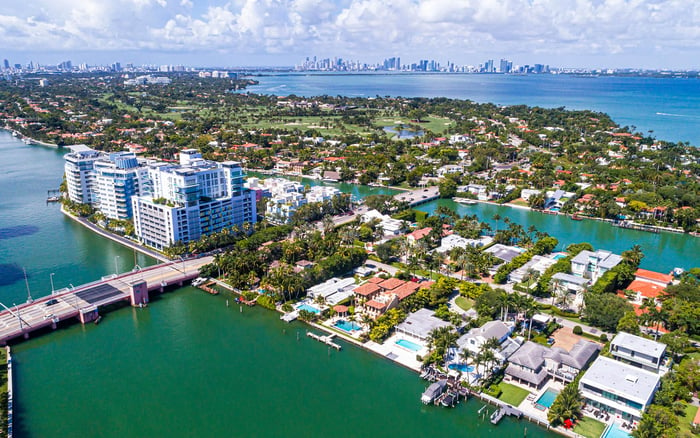
A disciplined liquidity plan for Baccarat Residences Brickell separates purchase deposits, closing funds, furnishing costs, and future association obligations while keeping payment timing anchored to the executed contract.

A high-value residence should enhance a household’s freedom, not place avoidable pressure on its investment portfolio. At Baccarat Residences Brickell, financial preparation deserves the same attention as the interiors: separate committed purchase payments from discretionary improvements, and preserve liquidity for obligations that may arise after ownership begins.
The project is marketed as a 75-story, 360-residence waterfront tower at 444 Brickell Avenue on the Miami River. The development team comprises Related Group in partnership with SH Hotels & Resorts, with architecture by Arquitectonica and interiors by Meyer Davis. That design pedigree establishes the setting-not an owner’s monthly assessment or future capital requirements.
The essential discipline is simple: capital committed to the residence should not depend on favorable markets when payment comes due. The framework below is planning guidance, not a Baccarat requirement or individualized investment advice.
Two advertised deposit schedules illustrate why buyers should not build a cash-flow model from marketing terms alone. One describes 10% at contract, 10% after 60 days, 10% at groundbreaking, and 10% at top-off, leaving 60% at closing. Another describes 20% at contract, 10% at groundbreaking, 10% upon completion of the 12th floor, and 10% at top-off, leaving 50% at closing.
These are materially different funding paths, not interchangeable summaries. The executed purchase agreement and exhibits should govern the model. Confirm each trigger, notice period, payment instruction, and relevant delay provision with counsel before committing funds.
The legal developer is 444 BRICKELL ONE, LLC, and the condominium offering is made only through the developer’s prospectus. The publicly advertised March 2028 completion estimate is not a verified contractual delivery deadline. Account for timing uncertainty rather than treating that month as a guaranteed closing date.
For buyers also considering Cipriani Residences Brickell, apply the same contract-first discipline to each purchase independently. Do not transfer Baccarat’s advertised terms to another residence.
A useful ownership plan separates capital into five categories: remaining deposits, closing, furnishing and fit-out, ordinary operations, and unexpected association assessments. Track them through separate accounts or clearly designated allocations, subject to advice on account ownership and administration.
Deposit funds should follow contractual triggers. Closing funds should cover the remaining purchase balance and verified settlement obligations. Furnishing and fit-out need their own budget so discretionary selections do not quietly consume money reserved for mandatory payments.
Operating liquidity should cover taxes, insurance, association charges, utilities, and household services. A separate contingency allocation can support unexpected assessments without forcing routine bills to compete with a major capital payment.
No verified unit-specific monthly assessment, final association budget, reserve balance, or capital-call calendar is established here. Obtain those disclosures rather than infer them from the tower’s scale or amenities. The appropriate reserve amount depends on the household’s commitments, liquidity elsewhere, and tolerance for uncertainty-not a universal percentage of the purchase price.
For obligations approaching within a 12-24-month planning horizon, consider liquid, low-volatility holdings matched to expected payment dates, subject to investment and tax advice. The purpose is payment readiness, not maximizing returns on funds already committed to a residence.
A written policy should identify minimum operating and capital-call reserves, permitted instruments, concentration limits, account ownership, and transfer authority. It should also specify who may approve a withdrawal and how quickly funds can reach the required recipient.
Stress-test the plan against an earlier closing, a delayed delivery, and furnishing payments arriving close to settlement. Each scenario should preserve a clearly defined operating reserve. Review the tax implications of raising cash before deciding which assets to sell.
Whether the household ultimately selects Baccarat or The Residences at 1428 Brickell, compare the documented payment path and ownership budget rather than assume equivalence between projects.
The advertised amenity program spans more than 75,000 square feet and includes pools, spa facilities, fitness spaces, private dining, wine storage, and entertainment areas. Advertised services also include private elevators, concierge service, storage, bicycle facilities, a business center, and 24-hour complimentary valet, with optional self-parking in assigned spaces in a covered, secured garage.
The waterfront program includes a private marina with more than 300 linear feet of dockage, along with advertised yacht-reservation services and a private water taxi. Access to a Beach Club at 1 Hotel South Beach is also advertised, but its contractual fees, transferability, and operating terms are not established here.
Translate that lifestyle offering into a cost map before closing. Ask which expenses fall within the association budget, which are separately billed, and which depend on optional use or separate agreements. An advertised complimentary service does not establish how its underlying operating cost is funded. Review any developer subsidies and their expiration terms rather than assume introductory economics will persist.
At contract, confirm deposit triggers, notice periods, delay provisions, and the latest estimated association budget. Record contractual payment events separately from the estimated completion date so changes to one do not obscure the other.
Six to twelve months before expected closing, refresh the delivery window and financial disclosures. Separate closing liquidity from furnishing funds, and reconcile the anticipated settlement balance with payments already made.
Before closing, verify settlement charges, initial contributions, separately billed amenities, insurance terms, warranties, and any subsidies that may expire. After association turnover, compare projected costs with actual contracts and staffing, then reassess reserves after the first full operating year.
If an assessment is proposed, obtain its engineering basis, scope, bids, payment deadline, and financing alternatives. Preserve liquidity for routine obligations while evaluating the proposal. This planning calendar does not establish any Baccarat-specific assessment amount or timing.
Developer purchase deposits, association special assessments, and owner-funded furnishing expenses are distinct obligations. Grouping them under a single capital-call label can obscure their different triggers and approval processes.
Florida’s milestone-inspection framework applies to qualifying condominium and cooperative buildings with three or more habitable stories. Its age-based structural requirements are a long-term ownership consideration, not a Baccarat-specific closing deadline. Structural integrity reserve studies and reserve-funding requirements also belong in ongoing association-budget review. Check applicable obligations with qualified advisers as legislation evolves.
The objective is not to predict an assessment. It is to preserve enough financial flexibility to respond intelligently when a documented obligation arises. A well-prepared owner can fund the residence, enjoy its services, and evaluate future capital needs without hurried portfolio decisions.
For a considered approach to South Florida residential ownership, explore MILLION.
If branded residences are on your mind — as a home or as an allocation — we would be glad to share what we are seeing, privately.
Begin a quiet conversationReview the executed purchase agreement and exhibits with counsel to confirm deposit triggers, notice periods, and closing obligations before building a funding calendar.
The advertised schedules conflict, so neither should replace the executed agreement. The signed purchase documents should control the buyer’s cash-flow model.
No. March 2028 is an advertised completion estimate, not a verified contractual delivery deadline.
Distinguish remaining deposits, closing funds, furnishing and fit-out, ordinary operating expenses, and unexpected association assessments. Keep discretionary spending from consuming mandatory payment reserves.
A 12–24-month planning horizon can help match liquid, low-volatility holdings to expected payments. The appropriate approach remains subject to investment and tax advice.
It should define minimum reserves, permitted instruments, concentration limits, account ownership, and transfer authority. It should also clarify withdrawal approval and payment readiness.
No verified unit-specific monthly assessment, final association budget, reserve balance, or capital-call calendar is established here. These should be obtained through due diligence.
No. Access is advertised, but contractual fees, transferability, and operating terms require verification.
Request the engineering basis, scope, bids, payment deadline, and financing alternatives. Evaluate those materials while preserving liquidity for ordinary obligations.
No. The age-based inspection framework is a long-term ownership issue, while applicable reserve-funding requirements should inform future association-budget review.