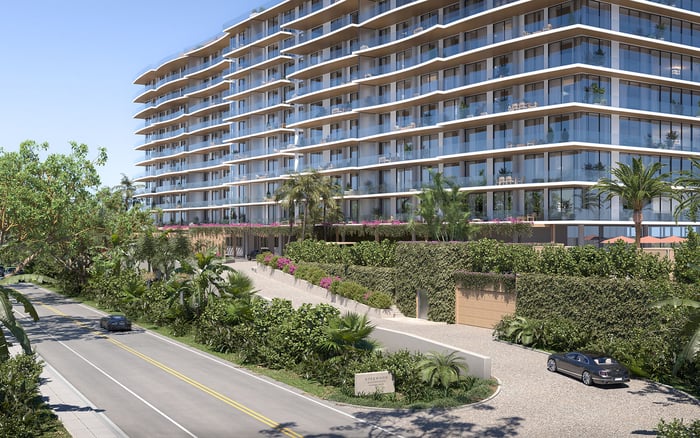
A discreet purchase at W Pompano Beach begins with separating public ownership records, entity-filing exposure, and building-level information practices. Here is what buyers should resolve before selecting a holding structure or relying on a directory preference.

For a buyer considering W Pompano Beach Hotel & Residences, discretion deserves the same attention as the floor plan. The planned condo-hotel and residential development at 20 N Ocean Boulevard, Pompano Beach, FL 33062, pairs a hospitality identity with distinct ownership considerations. Its suite offering emphasizes hotel-inspired living and ownership services, not anonymous ownership.
Privacy is not a single setting. A name visible in a property search, information held by management, and a name displayed on an intercom are separate concerns. Resolving one does not resolve the others. Start by deciding what you want to limit: casual discovery, exposure of a personal mailing address, visitor-facing identification, or unnecessary circulation of household information.
That definition gives your attorney and purchase team a practical brief. Rather than requesting “complete privacy,” identify the information, the audience, and the desired treatment. Seek written answers before treating discretion as part of the purchase proposition.
Pompano Beach ownership can be researched through the county property-appraiser search by owner name, property address, folio number, and subdivision or condominium. Property information includes the owner of record, mailing address, assessed value, and exemptions.
The practical implication is straightforward: review both the intended ownership name and the mailing address. A buyer focused exclusively on keeping a personal name out of everyday conversation may overlook the contact address associated with the property. Ask counsel and the closing team how the proposed information would be submitted and displayed.
Searchability extends beyond a name. Because search options include an address and condominium, avoiding a personal-name search is not the same as preventing someone from locating the property record.
Keep this review specific. These search functions do not establish the treatment of every closing document, entitlement to a privacy exemption, or access to other records. Have counsel evaluate those questions separately rather than extrapolating from a property-search screen.
If you are considering an LLC or another ownership vehicle, ask counsel to assess it as a legal and disclosure decision, not merely a naming exercise. An entity name on the ownership record is not proof that the individual behind it cannot be identified.
The review should address the proposed formation jurisdiction, the information required in filings, what becomes publicly searchable, and whether subsequent filings change that exposure. Ask specifically how names, addresses, and representative roles would be handled. These are diligence questions, not assumptions about any particular jurisdiction's requirements.
Request a coordinated explanation of the proposed title holder, correspondence address, entity filings, and information needed by transaction participants. Each deserves its own review. A structure selected for one purpose should not be presented as solving every privacy concern.
For buyers also considering The Ritz-Carlton Residences® Pompano Beach, apply the same questions independently. A shared location does not establish equivalent ownership arrangements or information practices.
W Pompano's condominium developer is 20 North Oceanside Owner, LLC. The condominium is marketed using the W brand of Marriott International or its affiliates. The Related Group's licensed trade names, marks, and logos are distinct from the separate developer entity.
That distinction matters when seeking commitments. A recognizable hospitality name does not, by itself, answer who controls a directory, receives owner information, or can approve a display preference. Ask which party is responsible for each answer and which document governs the practice.
Make the request precise: identify the developer's commitments, the association's intended role, and the applicable management responsibilities. Clarify who would handle a later request to change contact details or visitor-facing identification.
When comparing Four Seasons Hotel & Private Residences Fort Lauderdale, carry over the same document-based approach, not assumptions about either property's policies. Brand recognition should sharpen the diligence questions rather than replace them.
A building directory is a distinct concern from a property record. For W Pompano, treat directory, intercom, mailbox-label, pseudonym, and opt-out arrangements as questions for the developer or association, not promised features.
Ask whether an owner name must be displayed, whether a unit identifier or alternative display is permitted, and whether residents can decline inclusion. Extend the inquiry to any contemplated resident application or digital directory. Request the policy applicable to your unit, not a general assurance of discretion.
Address internal access separately. Who would need your legal identity and contact details? How would household members, authorized visitors, and service providers be identified? What information would be visible to staff, and what would be visible to other residents or visitors?
A display preference should not be mistaken for a restriction on internal access. Request written explanations of both, including how preferences would be recorded and updated. Do not assume that an informal sales conversation establishes a lasting operating rule.
The project is marketed with 296 condo-hotel suites, including studios, one-bedroom units, and two-bedroom-plus-den layouts. Separate luxury-residence counts have ranged from 74 to as high as 77; reconcile the applicable count and unit classification against current offering documents.
Condo-hotel suites are marketed as eligible for a hotel rental program when owners are away. If participation is part of your plan, request the applicable rental-program agreement alongside the management agreement and privacy policies.
Ask what owner information would be collected, who could access it, what would appear in guest-facing communications, and how owner-use arrangements would be handled. Ask whether participation affects directory choices or contact preferences. Do not assume that rental eligibility establishes confidentiality terms, or that suite practices necessarily apply to the separate residences.
Before committing, request the declaration, bylaws, privacy policies, management agreement, and any applicable rental-program agreement. Have your attorney compare those documents with the written answers supplied by the purchase team.
Organize the review into three categories: publicly searchable ownership information, entity-related disclosure, and building operations. For each, record the information involved, the responsible party, the requested treatment, and the document supporting the answer. Keep unresolved preferences clearly separate from confirmed commitments.
The goal is not an abstract promise of invisibility. It is a purchase decision informed by what can be searched, what must be evaluated with counsel, and what the building is prepared to administer. For a privacy-conscious buyer, that precision is part of the luxury.
For a discreet conversation about your South Florida purchase priorities, connect with MILLION.
If branded residences are on your mind — as a home or as an allocation — we would be glad to share what we are seeing, privately.
Begin a quiet conversationThe planned condo-hotel and residential development is at 20 N Ocean Boulevard, Pompano Beach, FL 33062.
The condominium developer is 20 North Oceanside Owner, LLC. Its legal identity is distinct from the W hospitality branding.
No anonymous-ownership commitment should be inferred from the branding. The suite marketing emphasizes hotel-inspired living and ownership services.
Property information includes the owner of record, mailing address, assessed value, and exemptions. Review the intended ownership name and correspondence address with your purchase team.
The county property-appraiser search also supports searches by property address, folio number, and subdivision or condominium.
An LLC should not be treated as an anonymity guarantee. Ask counsel to evaluate the proposed jurisdiction, filing disclosures, and searchable information separately from the title arrangement.
Treat directory opt-outs, alternative display names, intercom entries, and mailbox labels as questions for the developer or association. Obtain the applicable policy in writing before relying on a preference.
The suites are marketed as eligible to participate in a hotel rental program when owners are away. Review the applicable agreement for information-handling terms rather than assuming confidentiality.
Marketing describes 296 condo-hotel suites, with separate residence counts presented as 74 and as high as 77. Confirm the residence count and your unit's classification in current offering documents.
Request the declaration, bylaws, privacy policies, management agreement, and applicable rental-program agreement. Have counsel compare them with written answers about ownership disclosure, staff access, and directory display.