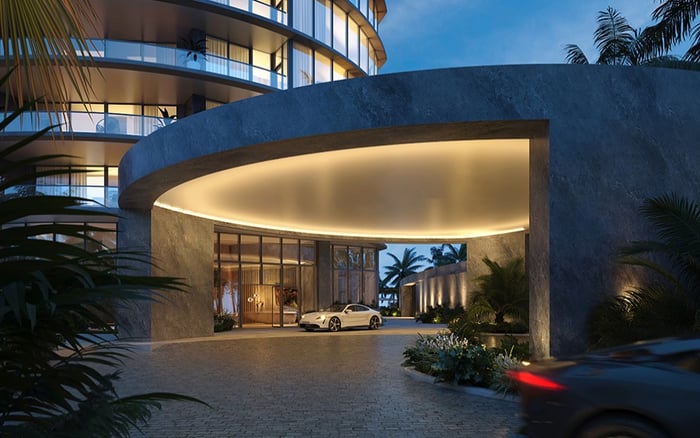
A disciplined review of Rivage Bal Harbour should look beyond the headline construction loan to its draw mechanics, sponsor obligations, contract dates, deposit exposure, and verified building specifications.
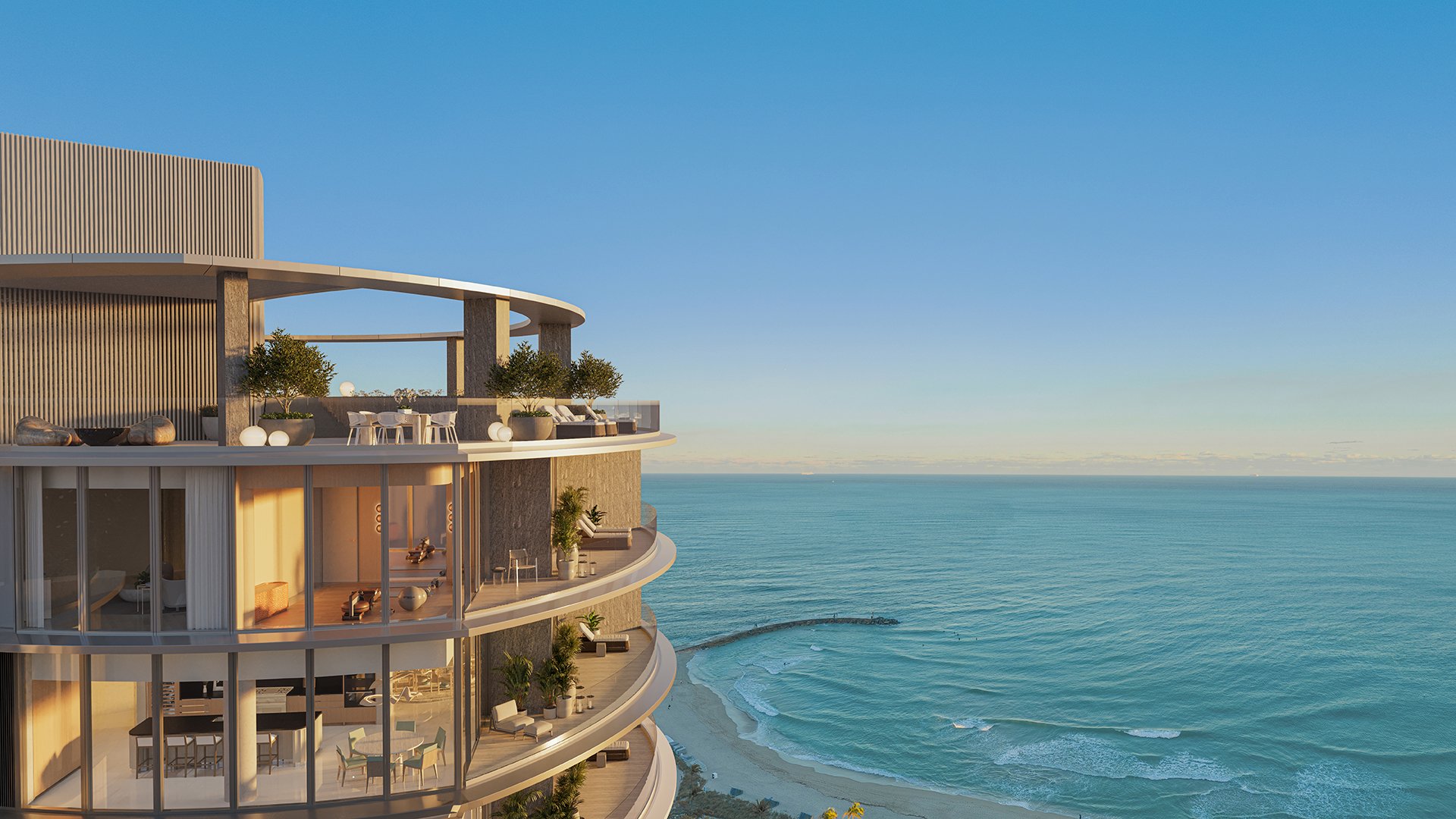
At the rarefied end of South Florida real estate, buyers naturally study exposure, layout, privacy, service and architectural intent. For a residence purchased before completion, however, the capital structure behind the building deserves equal scrutiny. It can reveal how construction is expected to be funded, which conditions may govern the release of capital and how much financial resilience may exist if timing or costs change.
Rivage Bal Harbour is an oceanfront condominium development at 10245 Collins Avenue in Bal Harbour. Its development team comprises Related Group and Two Roads Development. Related Group, Two Roads Development and Rockpoint obtained a $424 million construction loan from TYKO Capital, which is backed by Elliott Investment Management.
That is a substantial capitalization signal. It is not, by itself, a delivery guarantee. The practical question for a buyer is not merely whether a loan exists, but how that facility interacts with construction progress, sponsor equity, contractual protections and the buyer’s own deposit schedule.
A construction loan is most useful to a buyer when its mechanics are understood, not merely its size.
The $424 million facility was disclosed on November 20, 2024, following the reported start of construction in September 2024. This sequence establishes that financing was secured around the early construction period. The facility’s draw conditions, present funded balance, maturity, extension options, completion guarantees and sponsor recourse have not been disclosed.
A buyer and counsel can request current written confirmation of the lender, the loan’s standing and the requirements attached to future advances. Construction loans are generally not equivalent to a single sum delivered at closing. Funds may instead be advanced in stages, subject to conditions and verification. For Rivage, the specific mechanics should be confirmed rather than assumed.
The review should ask whether lender milestones align with the project’s schedule, whether required sponsor equity has been contributed and whether a completion or carry guarantee exists. It should also clarify what happens if costs exceed the construction budget, a maturity date arrives before completion or an extension is required. These questions do not predict trouble. They identify where responsibility and liquidity may sit if circumstances change.
This is the central pre-construction distinction: a prominent loan answers the funding question only at the facility level. It does not reveal how much has been drawn, whether all conditions remain satisfied or who must fund a shortfall.
Sponsor quality matters because delivery depends on more than borrowed capital. The review should map the parties contributing equity, the order in which that equity is required and any obligations to support overruns, interest carry or completion. Rivage’s development group brings together established participants-an encouraging point that should still be tested against the project-specific documents.
Buyers should request a clear explanation of the ownership and development structure, including which entity signs the purchase agreement and which entities, if any, provide enforceable support. Brand recognition and project-level liability are distinct concepts. Counsel can determine whether obligations belong to a special-purpose entity, a parent company, a guarantor or another party.
This discipline is equally useful when considering completed Bal Harbour inventory such as Oceana Bal Harbour or evaluating newer offerings farther south, including The Delmore Surfside. The diligence emphasis changes with construction status, but the objective remains consistent: understand precisely what is being acquired and which obligations are contractually enforceable.
Rivage is advertised as under construction, with delivery targeted for 2027. A target is a planning reference, not necessarily the date governing a buyer’s remedies. The executed purchase agreement should be reviewed for the anticipated completion date, contractual outside date, extension rights, notice procedures and force-majeure provisions.
The construction schedule should then be tested against objective milestones: current permits, inspections, visible progress, anticipated top-off and lender draw stages. A delay at one stage does not automatically determine final delivery, but the relationship among these milestones can help a buyer assess whether the remaining timetable appears internally coherent.
The same framework can inform a broader coastal search that includes St. Regis® Residences Sunny Isles. Comparisons should not rest solely on an advertised year. They should examine how each contract defines completion, extensions, default and the treatment of buyer deposits.
Rivage’s advertised payment schedule calls for 20% at contract, 10% at groundbreaking, 10% at top-off and 60% at closing. Under that structure, 40% of the purchase price would be committed before closing. The executed contract controls, so buyers should not rely on an online schedule as a substitute for legal review.
The deposit analysis should identify when each installment becomes due, where funds are held, when they may be released or used and which remedies apply if delivery extends beyond a contractual threshold. Buyers should also coordinate the 60% closing balance with their liquidity, currency, financing and estate-planning strategy well before the building approaches completion.
A lender’s construction advances and a purchaser’s deposits are separate capital streams with distinct conditions. Understanding both helps reveal whether the buyer’s payment obligations could accelerate while the project’s schedule remains subject to permitted extensions.
Descriptions of Rivage are not fully consistent. The project has been described as comprising 56 sky villas. Other listings have referenced 61 residences and 24 floors, while another current description refers to 56 residences across 25 stories. An older announcement also described a 24-story, 61-residence tower with more than 25,000 square feet of shared amenities.
These discrepancies may reflect revisions, differing counting conventions or superseded material, but the reason should not be presumed. Buyers should reconcile residence and story counts through the latest prospectus, declaration of condominium, floor plans and purchase agreement. The same applies to amenity specifications, residence dimensions, storage, parking and any feature material to the purchase decision.
The disclosed loan, institutional capital and experienced sponsors are constructive signals for Rivage Bal Harbour. They cannot eliminate contractor performance, permitting, supply-chain, cost-overrun or scheduling risk. A sophisticated review converts those broad categories into document requests, dated milestones and clearly assigned obligations.
Before signing or making a further deposit, the buyer’s advisers should align four records: the current loan status, sponsor-capital commitments, construction schedule and executed purchase agreement. Where those records agree, confidence rests on more than presentation. Where they differ, the buyer has a precise basis for additional questions, negotiated protections or a revised decision.
For confidential guidance on Rivage and South Florida’s premier residential opportunities, connect with MILLION.
If branded residences are on your mind — as a home or as an allocation — we would be glad to share what we are seeing, privately.
Begin a quiet conversationThe development group secured a publicly disclosed $424 million construction loan from TYKO Capital, which is backed by Elliott Investment Management.
No. It is a positive capitalization signal, but it does not eliminate construction, permitting, cost-overrun, supply-chain or scheduling risk.
Related Group and Two Roads Development are identified as the developers. The financing group also includes Rockpoint.
The project is advertised as under construction with delivery targeted for 2027. Buyers should compare that target with the contract's outside date and extension provisions.
Construction reportedly began in September 2024. The $424 million financing was disclosed on November 20, 2024.
Buyers should seek the current funded balance, draw status, maturity, extension options, sponsor equity requirements and any completion or carry guarantees.
One advertised schedule calls for 40% before closing and 60% at closing. The executed purchase agreement, not an online summary, controls.
Descriptions vary between 56 and 61 residences and between 24 and 25 stories. Buyers should rely on the latest offering and contract documents.
Review the anticipated completion date, outside date, extension rights, notice requirements, force-majeure language, default provisions and deposit remedies.
It clarifies who contributes equity, who covers overruns or carry costs, and which entities have enforceable obligations if the schedule or budget changes.