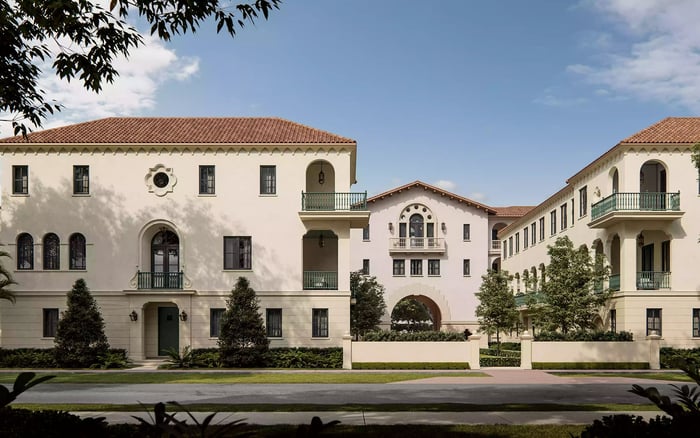
For families considering school-year occupancy at Ponce Park Coral Gables, backup power and staff coverage belong at the center of purchase due diligence. Buyers should obtain written, project-specific details about supported building systems, emergency procedures, staffing responsibilities and operating budgets before closing.

For a seasonal owner, a storm-related outage may sometimes be managed by adjusting travel plans. For a family living in Coral Gables throughout the academic year, the same disruption can affect homework, remote meetings, refrigeration, elevator access, water service, pet care and support for older guests. That difference should shape due diligence at Ponce Park Coral Gables.
The central question is operational: which systems continue to function during an outage, for how long and with what level of on-site support? Architectural quality, amenities and location do not answer that question. Buyers need project-specific engineering information, emergency procedures and governing documents before deciding whether the building can support their household’s school-year routine.
For a school-year household, resilience is part of habitability rather than an occasional amenity.
Emergency electricity for selected building systems is not necessarily the same as backup power that preserves ordinary life inside a private residence. Buyers should never assume that normal electricity, air conditioning, internet equipment, refrigerators or residential outlets will remain available merely because a property has a generator.
Request a written explanation of generator capacity, fuel arrangements, transfer sequence, expected runtime and every load the system is designed to support. Confirm elevators, domestic-water pumps, corridor lighting, access control and communications equipment separately. Then ask whether any residential receptacles, appliances or HVAC components are included.
The distinction matters because a building may preserve selected safety and access functions without making each residence conventionally comfortable. Broad phrases such as “emergency power” are not sufficiently precise for a household planning year-round occupancy. The relevant response should identify systems and limitations in clear terms.
A practical review begins with the household’s actual schedule. If children need online assignments, determine how routers, device chargers and essential lighting would operate. If parents work from home, examine both power and communications continuity. If an older relative or a person with limited mobility regularly visits, elevator and cooling arrangements may require particular attention.
Water service deserves a separate inquiry because domestic-water pumps can affect daily use even if some lighting remains available. Elevator coverage also requires precision: ask how many cabs can operate, whether service is continuous or managed, and what procedures apply during an emergency.
Buyers should also consider where the household would safely gather, charge devices and receive updates if private-residence circuits were unavailable. These questions turn a technical specification into a realistic assessment of whether the property can support school, work and caregiving during a disruption.
Luxury service language can describe ordinary availability without revealing staffing depth during a storm. Roads may be difficult, vendors may be delayed and several residents may need help at the same time. Buyers should therefore request minimum staffing by shift, overnight security arrangements, resident communication procedures and protocols for admitting visitors or vendors.
Decision-making authority matters as well. Ask who can direct building operations if senior management cannot reach the property, who communicates service changes and who coordinates with building-system contractors. The answer should distinguish hospitality responsibilities from emergency and life-safety duties.
Routine services can make a school-year residence more convenient, but they should not be confused with emergency coverage. Package handling, reservations and household assistance are different functions from managing access, monitoring critical systems or coordinating recovery. Buyers should understand which personnel perform each role and whether the operating budget supports the promised coverage.
Power and staffing should not be evaluated in isolation. A household also needs a reliable way to receive instructions about elevator availability, water service, access procedures and recovery timing. Ask which communication channels management expects to use and what alternatives exist if one channel is unavailable.
Access procedures should address residents, children, caregivers, pet-care providers and essential vendors. Families should know how entry would be managed if ordinary systems were impaired and whether temporary procedures could affect pickups, deliveries or support visits.
A written emergency plan can help reveal whether power, staffing, communications and access have been considered as one operating system. If the documents treat them separately, buyers should ask how responsibilities connect in practice.
Families evaluating newer Coral Gables residences may compare Ponce Park with Cora Merrick Park and The Village at Coral Gables. Such comparisons are most useful when every property receives the same written questions.
Use a consistent checklist covering generator-supported loads, fuel arrangements, runtime assumptions, elevator and water service, communications, overnight staffing and emergency access. This approach helps prevent a polished presentation or extensive service menu from substituting for specific operational commitments.
The goal is not to assume that different properties offer equivalent systems. It is to identify which building best matches the household’s tolerance for interrupted cooling, limited elevator service, communications delays or reduced staffing.
The strongest review compares marketing representations with the condominium documents, engineering schedules, staffing arrangements, emergency plan and proposed operating budget. These materials should provide a consistent account of which services are required, how they are funded and what discretion management retains.
Pay particular attention to whether the budget appears consistent with the described hours and staffing depth. Ask how security, lobby coverage and resident communications would be maintained during severe weather and whether key vendors have defined emergency responsibilities.
Written answers are especially important when children, remote work, pets, medical needs or older guests make temporary relocation difficult. If a system or procedure remains unsettled, buyers should identify what information will become available, when it will be delivered and whether their review can occur before they become obligated to close.
School-year occupancy raises the standard for evaluating Ponce Park Coral Gables. The relevant measure of luxury is not only design or everyday service, but also whether power, water, access, communications and personnel plans are clearly documented when ordinary routines are under pressure.
For confidential guidance on evaluating Ponce Park and comparable South Florida residences, connect with MILLION.
If branded residences are on your mind — as a home or as an allocation — we would be glad to share what we are seeing, privately.
Begin a quiet conversationA weekday household may depend on electricity, cooling, refrigeration, internet, elevators and water for school, work and caregiving. An outage can therefore interrupt essential routines.
No. Buyers should obtain written confirmation of every supported building system and residential circuit.
Request capacity, supported loads, fuel arrangements, transfer sequence and expected runtime. The response should identify specific systems rather than rely on general emergency-power language.
Confirm elevators, domestic-water pumps, corridor lighting, access control and communications equipment. Ask separately about residential outlets, appliances and HVAC components.
Domestic-water pumps may depend on electrical power. Buyers should verify how water service is expected to operate during an outage.
Verify minimum staffing by shift, overnight security, resident communications and visitor or vendor access procedures. Also ask who has operational authority if senior personnel cannot reach the building.
Routine resident services may be handled by different personnel from those responsible for access, critical systems or emergency coordination. Buyers should understand each role and its coverage.
Use the same written checklist for each property, covering power, water, elevators, communications, staffing and access. Consistent questions make operational differences easier to evaluate.
Compare marketing representations with condominium documents, engineering schedules, staffing arrangements, the emergency plan and the operating budget. The materials should align on scope, responsibility and funding.
Ask what information will be provided, when it will become available and whether it can be reviewed before closing obligations become final. Material answers should be obtained in writing.