Ponce Park’s planned residences and work-friendly amenities warrant a closer look at the infrastructure behind the home office. This private-client briefing separates established project details from unresolved questions about bandwidth, carrier diversity, backup power, and operational responsibility.

For a buyer whose residence also serves as a private office, connectivity belongs alongside layout, privacy, and finish quality in the purchase decision. A conference call should not depend on assumptions about what a luxury building provides. At Ponce Park Coral Gables, that distinction matters: the planned amenity program includes work-friendly spaces, while bandwidth, telecom redundancy, and generator-backed connectivity remain subjects for written diligence.
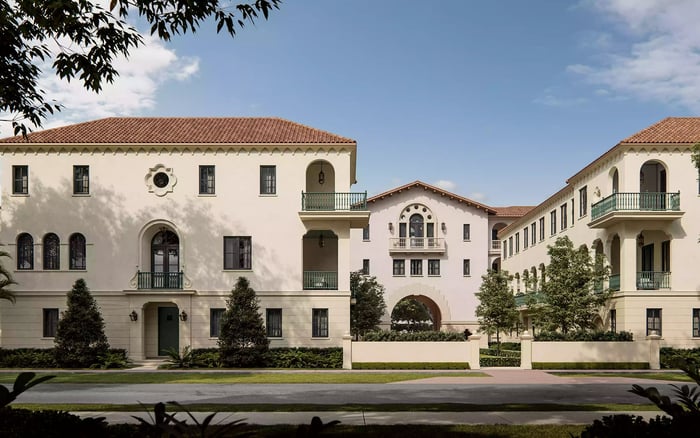
The project is located at 3000 Ponce de Leon Boulevard, at University Drive in Coral Gables. Planned as an 11-story mixed-use building with 58 condominium residences, it is being developed by Allen Morris Company and designed by Zyscovich Architects, with Kast Construction identified as the construction firm. Construction had started by December 2025, and completion is anticipated in early 2028. That timing is a projection, not a guaranteed delivery date.
The buyer’s task is to distinguish an appealing place to work from a documented system that supports reliable work.
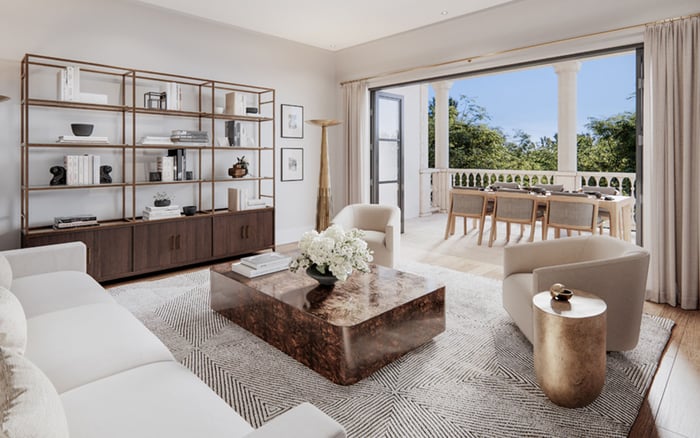
The planned private conference room and library provide a useful starting point for home-office discussions. A screening and media lounge is also planned. Rooftop plans include a pool, sky bar, and private lounge, while wellness amenities include a spa, meditation courtyard, and fitness studio.
These spaces describe lifestyle possibilities, not a dedicated coworking operation or office-grade internet service. A conference room does not establish upload capacity, support response times, or continuity during a power interruption. Nor does a media lounge establish the connection available to an individual residence.
Buyers also considering Cora Merrick Park should bring the same questions to each project discussion. The comparison should rest on documented service and infrastructure, not the assumption that an amenity label implies a particular technical standard.
Guaranteed download or upload speeds, dedicated fiber-to-unit service, and an internet service-level agreement have not been established for Ponce Park. These are unresolved specifications, not confirmed absences.
Start with the household’s actual workload. Ask the provider to address simultaneous video meetings, large file transfers, remote access, and other intended uses. Request written download and upload commitments that distinguish advertised maximums from contractual performance obligations. The relevant question is what service will be available in the selected residence-not merely somewhere in the building.
The commercial terms deserve equal scrutiny. Obtain service fees, installation timing, static-IP availability, business-class options, and outage-support terms. Establish whether service can be activated before move-in and who coordinates access when installation requires work in common areas. If an answer is provisional, ask when it will become a final specification and who will confirm it.
Resident carrier choice, independent wired access paths, and physically diverse telecom entrances have not been established for Ponce Park. Buyers should request provider names and the infrastructure details behind any redundancy proposal.
The diligence package should identify last-mile routes, building entry points, conduits, risers, and telecom-room locations. Ask the technical team whether the proposed services share any of these components. Two provider names alone are not proof of two independent routes.
For a buyer weighing Ponce Park against The Village at Coral Gables, a consistent documentation request keeps the comparison disciplined without presuming either property’s connectivity capabilities. Ask each team what remains available during a carrier outage or fiber cut, and whether switching services requires resident action.
Cellular reception belongs in this discussion as well. Request permission to test it in the intended office location, and ask what arrangements, if any, are permitted for a secondary connection.
Generator-backed building telecom equipment and emergency power for residents’ networking equipment have not been established. Neither capability should be assumed-or declared unavailable without further documentation.
Request the generator load schedule and a specific inventory of any backed-up telecom equipment. Ask whether the proposed coverage includes equipment serving the building, the selected residence’s connection, and designated residential circuits. Obtain runtime under the stated load rather than relying on a general description of emergency power.
Next, examine transfer behavior. What happens to connectivity between the loss of utility power and generator operation? Ask whether any proposed uninterrupted-power arrangements cover that interval, who maintains them, and what testing is planned.
Finally, distinguish building power from carrier availability. Diligence should address both rather than treating a generator statement as a complete connectivity guarantee. Ask the team to describe expected operation during utility loss, a carrier outage, and a combined interruption.
For a new-construction purchase, review the residence’s own provisions before finalizing furniture and millwork decisions. Ask about structured Ethernet cabling, outlet locations, and suitable space and power for networking equipment. Establish what can be changed, by whom, and at what stage.
Request permission to test wired performance before acceptance, with the provider and building team agreeing on what the test will demonstrate. Keep that assessment separate from wireless coverage inside a furnished home. Buyers extending their search to The Lincoln Coconut Grove can apply the same residence-level questions without assuming comparable infrastructure.
Nearby civic technology is no substitute for this review. Municipal Wi-Fi or fiber infrastructure does not establish residential fiber service at Ponce Park.
Pre-construction diligence should conclude with a written allocation of responsibilities. Establish who maintains building telecom equipment, who supports the in-residence connection, and who handles a problem that spans both. Obtain the escalation contacts and outage-support terms applicable to the proposed service.
Organize the final review around four scenarios: ordinary operation, utility power loss, a carrier outage, and a fiber cut. For each, ask what remains functional, what intervention is required, and which party is accountable. Keep unresolved items visible as delivery approaches.
Ponce Park’s residential and amenity plans provide the setting for a considered purchase. For the home-office buyer, confidence comes from a documented connectivity plan, with bandwidth, route independence, and backup-power scope treated as separate commitments.
For a discreet discussion of Ponce Park and your home-office purchase criteria, connect with MILLION.
If branded residences are on your mind — as a home or as an allocation — we would be glad to share what we are seeing, privately.
Begin a quiet conversationPonce Park is located at 3000 Ponce de Leon Boulevard, at the intersection with University Drive in Coral Gables.
The mixed-use development is planned as an 11-story building with 58 condominium residences.
Completion is anticipated in early 2028. This is a projected delivery date, not a guarantee.
Allen Morris Company is the developer, and Zyscovich Architects is designing the project. Kast Construction is identified as the construction firm.
The planned amenities include a private conference room and library. These do not establish a dedicated coworking operation or office-grade connectivity.
Guaranteed download or upload speeds, dedicated fiber-to-unit service, and an internet service-level agreement remain unresolved specifications. Buyers should request written service commitments.
Resident carrier choice and physically independent telecom routes remain unresolved specifications. Request provider names, entry points, and conduit and riser details.
Backup power for building telecom equipment and residents’ networking equipment remains unresolved. Request the generator load schedule, covered equipment, designated circuits, and runtime.
No, nearby municipal fiber infrastructure does not establish residential fiber service at Ponce Park. Buyers should obtain residence-specific service documentation.
Ask about structured Ethernet cabling, space and power for networking equipment, cellular reception, and permission to test wired performance before acceptance.