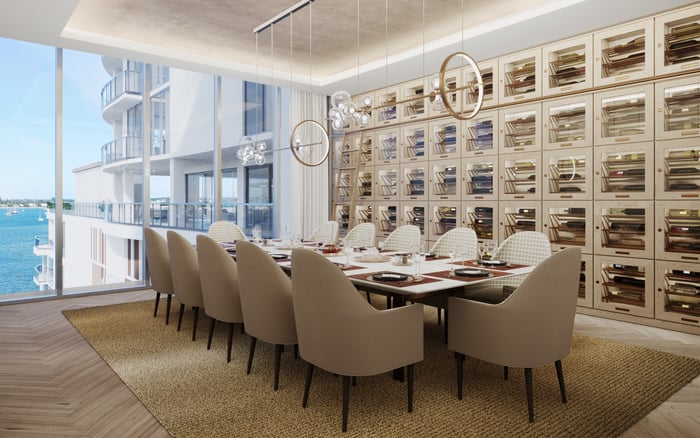
A Nora-centered lifestyle calls for two distinct budgets: the documented cost of owning a residence and the elective cost of enjoying dining, wellness, hospitality, and club services. Buyers should confirm contractual obligations, review venue disclosures, and model spending around actual use rather than assumed fee percentages.

For buyers considering Nora House West Palm Beach, one financial distinction is essential. The cost of owning a residence and the cost of enjoying the surrounding district belong in separate budgets.
Begin by confirming the property's legal identity, ownership structure, and contractual relationship, if any, with Nora District businesses or Nora Hotel. A shared neighborhood name does not establish included services, residential access, or mandatory charges. Verify any claimed benefit in the purchase documents rather than inferring it from the address.
A separate operating budget is a planning recommendation, not a statement that district spending constitutes an association assessment. Its purpose is to make lifestyle spending deliberate, allowing for convenience and entertaining without treating discretionary purchases as fixed ownership costs.
Evaluate any dining, wellness, beauty, or hospitality offering individually. Before assigning value to it in a purchase decision, confirm whether it is operating, whether residential owners are eligible to use it, and what terms apply. An announced plan should not be treated as a currently available benefit.
If hotel dining or in-room service features in your expectations, request written confirmation of residential eligibility, availability, and pricing. Do not read a hotel service description as a promise of service to a separate residence.
The distinction also matters when considering Mr. C Residences West Palm Beach alongside a Nora-centered purchase. Apply the same questions to each opportunity: what is contractually included, what requires separate payment, and what is simply nearby? Each property's own terms must supply the answers.
A useful purchase model has three layers. The first is property ownership: financing where applicable, taxes, insurance, documented association obligations, and a maintenance allowance. These belong in the base carrying-cost analysis, with amounts established for the specific residence.
The second is elective recurring spending. Dining visits, fitness services, beauty appointments, and hospitality purchases belong here only to the extent that the household expects to use them. Recurring does not mean mandatory. A weekly habit can materially affect annual cash flow without becoming a condition of ownership.
The third is separately contracted commitments, such as a club membership if pursued. These warrant their own review: a choice that is optional at enrollment can create continuing payment obligations under a signed agreement.
For every line, record the payer, billing frequency, cancellation terms, and whether the expense continues while the home is unoccupied. This separates household preferences from obligations that cannot simply be paused. It also provides a clear basis for comparing properties without letting an enthusiastic lifestyle projection distort the analysis.
A menu price is the starting point, not necessarily the final bill. Where applicable, the total may include disclosed service charges, other fees, taxes, and any voluntary gratuity the guest chooses to leave. Identify each component rather than folding them into a universal percentage uplift.
Ask whether a charge is mandatory, which amount it is calculated on, and how the venue describes its relationship to gratuity. Do not assume every service charge requires another full tip. Equally, do not assume the label resolves every question about staff compensation or guest expectations.
Review the venue's current menu, booking terms, and bill before deciding on an additional voluntary gratuity. If the wording is unclear, request an explanation rather than estimating from the charge's name alone. For budgeting purposes, record mandatory charges separately from any discretionary amount you intend to add.
The strongest estimate starts with frequency. Identify expected dining occasions, wellness visits, and other elective purchases during an occupied month. For each, combine a current price with the venue's disclosed charges, applicable taxes, and intended voluntary gratuity to estimate the all-in cost per visit.
Then multiply by anticipated use. Keep membership commitments separate, and test a quieter month against one with more guests or entertaining. This produces a household-specific range without presenting an arbitrary uplift as a Nora fee schedule.
When comparing Alba West Palm Beach with another residential option, hold the lifestyle assumptions constant first. Adjust them only where documented inclusions or genuine differences in intended use justify a change. Otherwise, the comparison risks measuring imagined habits rather than ownership economics.
Request representative bills where possible. They can show how multiple charges interact more clearly than an isolated menu price, particularly when the household expects to use the same service frequently.
A seasonal buyer should distinguish occupied-month spending from annual commitments. Dining and appointments may track visits; a signed membership or other contract may not. Build the calendar before annualizing the budget, and review any suspension or cancellation rights in writing.
If a private club is part of the intended lifestyle, do not assume that residential ownership provides membership. Obtain written initiation fees, dues, minimum spending requirements, guest rules, and renewal terms before assigning costs or benefits to a purchase.
The same discipline applies to a buyer evaluating Forté on Flagler West Palm Beach. Assess proximity and personal convenience separately from enforceable service rights.
Before committing, reconcile the ownership documents, any separate membership agreements, and the disclosures for services you realistically expect to use. The objective is not to diminish the appeal of an effortless lifestyle. It is to understand precisely which conveniences are included, which are optional, and which become obligations only after a separate agreement.
For a considered approach to your West Palm Beach purchase, connect with MILLION.
If branded residences are on your mind — as a home or as an allocation — we would be glad to share what we are seeing, privately.
Begin a quiet conversationDining, wellness, and hospitality purchases reflect personal use, while ownership obligations follow the property's documents. Keeping them separate makes the annual budget clearer.
No. Confirm the property's legal identity and any contractual relationship with district businesses or Nora Hotel before assuming access or included services.
Do not assume a district-wide percentage. Estimate each purchase using the venue's current prices and disclosed charge policy.
Confirm whether it is mandatory and how it is calculated. Record it separately from any additional voluntary gratuity you intend to leave.
No automatic rule should drive the budget. Read the disclosure and clarify the venue's policy before deciding on an additional voluntary gratuity.
Request an explanation of the charge, its calculation, and its relationship to gratuity. Use the clarified terms when estimating the all-in cost.
No. Confirm current operations, residential eligibility, and terms before relying on an announced offering in a purchase budget.
No; a hotel service description does not establish residential service rights. Confirm residential eligibility, availability, and pricing separately.
Request written initiation fees, dues, minimum spending requirements, guest policies, renewal terms, and cancellation rights. Do not infer membership from a residential address.
Model discretionary purchases around expected occupancy and usage. Account separately for contractual payments that may continue while the home is unoccupied.