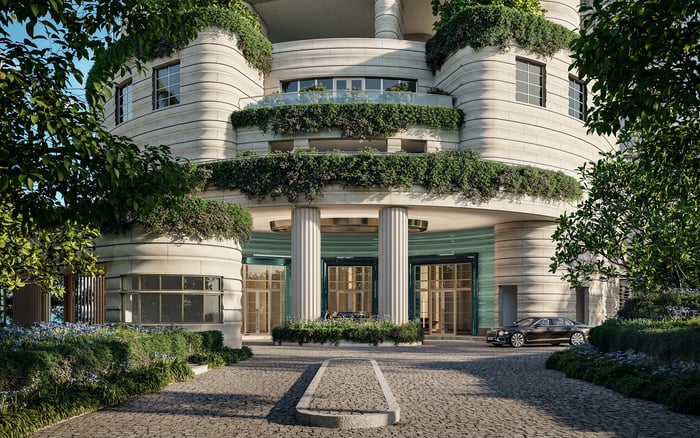
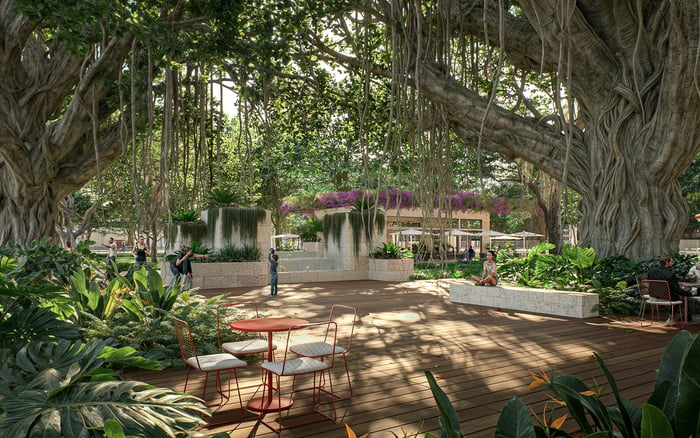
A view premium at Colette Residences Brickell should be evaluated through parcel research, zoning review, sightline modeling, contract analysis, and conservative scenario pricing. The central question is whether a selected residence remains compelling if neighboring properties are redeveloped.
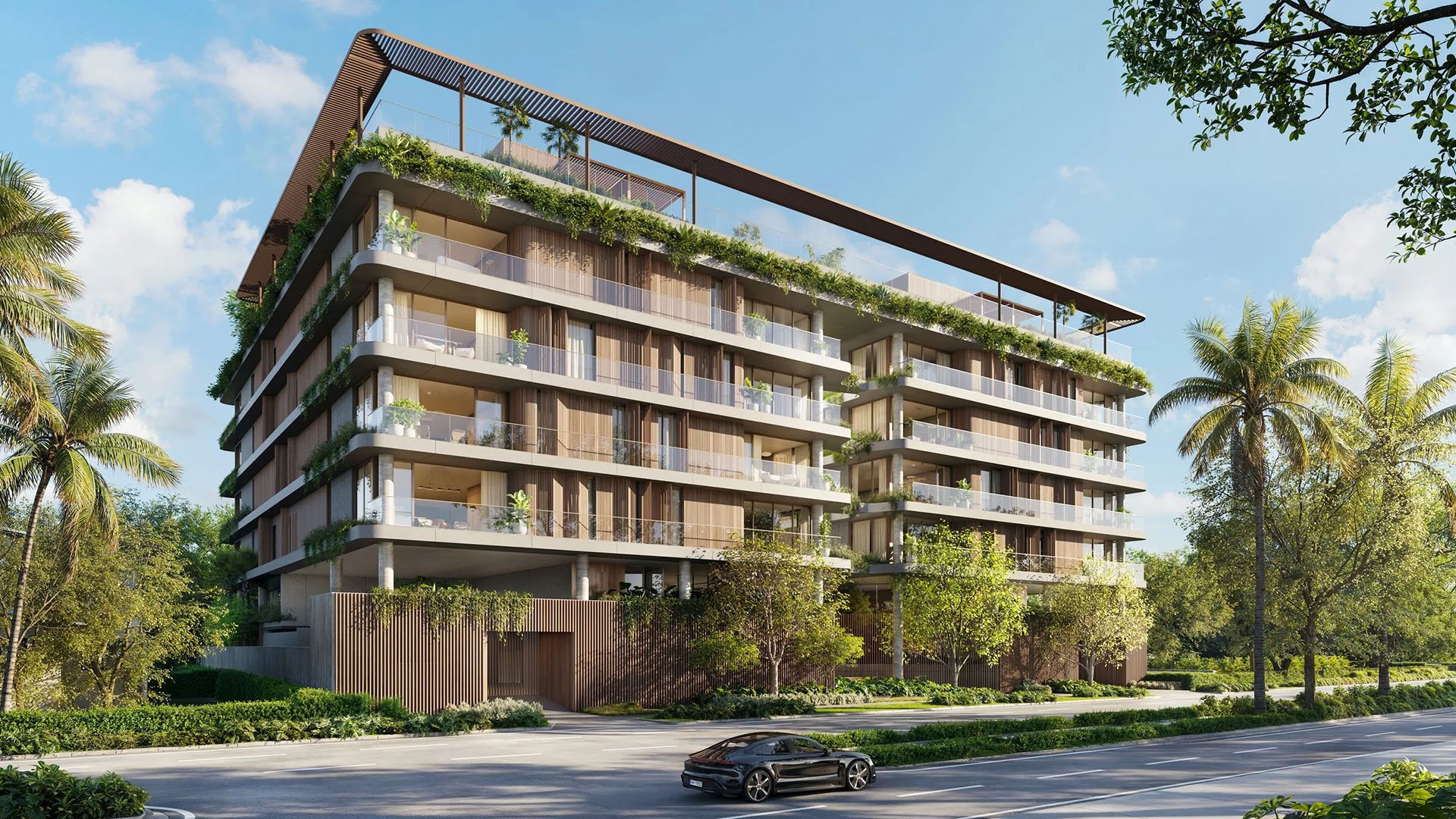
A view is rarely a single amenity. In Brickell, an outlook may include sky, tree canopy, water, skyline silhouettes, or evening light. When evaluating a residence at Colette Residences Brickell, buyers should distinguish the value of the home itself from the portion of the asking price attributable to current sightlines.
That distinction matters because qualities within the property and conditions beyond it carry different forms of risk. Layout, interior proportions, private outdoor space, and positioning within the building may remain part of the residence. An open exposure across neighboring land depends on circumstances the owner may not control.
A prudent buyer values the residence against tomorrow’s plausible skyline, not only today’s view.
Current parcel lines and existing buildings should not be treated as permanent. A neighboring property may have redevelopment potential, and separately owned lots may eventually be considered together. The absence of a major proposal today does not establish that the same physical setting will remain throughout an owner’s holding period.
Start with each parcel immediately beside the property, then continue along the actual viewing axis. A site farther away can still affect a meaningful outlook if it sits between the residence and the water, skyline, sunset, or tree canopy. The review should follow the sightline rather than stop at the nearest lot.
Buyers also considering 2200 Brickell can use the same method. Map the view as a corridor crossing multiple properties, then identify which parcels have the greatest potential to interrupt the desired exposure.
Zoning can help define what may be possible on a parcel, but it does not predict when or whether construction will occur. A qualified land-use professional should verify the current designation, allowable uses, setbacks, height and density rules, development rights, pending applications, and any other controls relevant to each property along the sightline.
The review should also examine whether nearby lots could be combined and whether recorded restrictions limit development. Ownership, financing, approvals, design decisions, and market conditions can affect timing, so legal capacity and construction probability should be assessed separately.
For a purchase involving future delivery, the analysis should extend beyond projects that have already been announced. The more durable question is what applicable rules and recorded rights may allow during the years in which the buyer expects to own the residence.
Marketing imagery cannot resolve a unit-specific sightline question. Request the current survey, site plan, floor elevation, balcony orientation, window direction, and any available view exhibits. Confirm where primary rooms and outdoor areas sit in relation to surrounding parcels, and compare those materials with the governing transaction documents.
An architect or other qualified adviser can model plausible building envelopes on relevant sites. The exercise should test views from seated and standing positions, from principal rooms, and across the usable portion of a terrace. A limited glimpse from one point should not be valued in the same way as an outlook that shapes daily living throughout the residence.
A buyer comparing Una Residences Brickell can apply the same unit-level discipline. Each residence should be assessed on its own orientation, elevation, room placement, and exposure rather than through generalized assumptions about a neighborhood or building.
Language suggesting that a view is permanent should lead to legal verification. Ask a land-use attorney or zoning consultant to review recorded easements, restrictive covenants, parcel ownership, setbacks, and development rights. The goal is to distinguish an enforceable limitation from an expectation based only on a neighbor’s current use.
Contract review should identify which plans, drawings, and representations are binding and which are illustrative. Confirm the selected residence’s orientation and elevation against the transaction documents, preserve written responses to material questions, and ask counsel to evaluate their significance.
Future construction may affect more than the finished outlook. A nearby project could temporarily change privacy, noise, traffic, or the immediate experience of a residence. Due diligence should therefore consider both a possible construction period and the condition that may exist after work is complete.
Buyers comparing Brickell with Coconut Grove may also review Four Seasons Residences Coconut Grove. The purpose is not to assume equivalent parcel conditions, but to compare how orientation, neighboring land, and the surrounding built environment influence the value assigned to an outlook.
A conservative valuation can test several outcomes, including the current exposure, a partially obstructed condition, and a plausible build-out of relevant neighboring parcels. The view premium is easier to defend when the residence remains desirable under the more cautious scenarios.
Separate characteristics intrinsic to the residence from benefits dependent on land outside the property. Then estimate how much of the proposed purchase price rests on an outlook that is neither owned nor legally protected. This turns a broad market discussion into a residence-specific decision.
The strongest choice is not necessarily the home shown with the most dramatic rendering. It is the residence whose design, orientation, and price continue to make sense after surrounding parcels have been evaluated for their legal and physical potential.
For discreet guidance on evaluating Colette and comparable South Florida residences, connect with MILLION.
If branded residences are on your mind — as a home or as an allocation — we would be glad to share what we are seeing, privately.
Begin a quiet conversationA residence’s intrinsic features may endure, while an outlook across neighboring land can change. Separating those components helps clarify how much value depends on conditions outside the property.
Review immediately adjacent properties and parcels farther along the actual viewing axis. Focus on sites between the residence and the outlook the buyer values.
No. An existing building does not by itself establish what may be permitted or developed on that parcel in the future.
A qualified adviser should verify allowable uses, setbacks, height and density rules, development rights, recorded restrictions, and pending applications relevant to the sightline.
Separately owned lots may eventually be evaluated together. A combined site can present a different redevelopment scenario than each parcel considered alone.
Useful materials may include the survey, site plan, floor elevation, balcony orientation, window direction, contractual drawings, and available view exhibits.
It can show how plausible building envelopes on nearby parcels may affect views from principal rooms, terraces, and seated or standing positions.
Ask qualified counsel to verify whether recorded easements, covenants, setbacks, or other enforceable restrictions support the claim.
Nearby work may temporarily affect privacy, noise, traffic, and the immediate residential experience before the completed condition is known.
Compare the current outlook with partial-obstruction and plausible build-out scenarios. Pay a view premium only if the residence remains compelling under conservative assumptions.