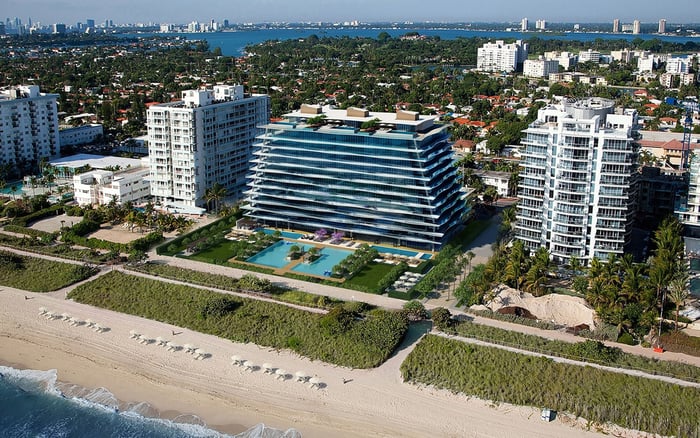
A seasonal purchase at Arte Surfside calls for more than a residence selection. Buyers should align insurance with periods of absence, establish accountable local oversight, and obtain a property-tax projection that reflects their own ownership circumstances.

At Arte Surfside, the architectural proposition is specific: 16 oceanfront residences in Surfside, designed by Antonio Citterio and Patricia Viel with Kobi Karp. For a second-home buyer, the acquisition deserves an equally considered operational brief. The residence must work not only during a stay, but throughout the months when its owner is elsewhere.
That distinction changes three parts of the purchase checklist: insurance, household oversight and property taxes. Coverage should reflect actual occupancy. Local responsibilities should be assigned rather than assumed. The tax budget should reflect the buyer's circumstances, not the seller's historical advantages.
The essential pre-purchase question is not simply what ownership costs. It is what must remain insured, supervised and funded when no one in the household is there to notice a problem.
Begin the insurance conversation with a realistic occupancy calendar. Describe anticipated stays, periods of absence and your intended arrangements for local oversight. Request quotes that reflect that pattern, then ask the insurer to explain any vacancy or occupancy conditions that could affect coverage.
A familiar policy format is not confirmation that seasonal use has been properly addressed. Ask how the proposed contract treats extended absences and whether it imposes requirements relevant to your intended use. Keep the answers alongside the quote, so the premium is considered with the conditions behind it.
For Arte, request the current association insurance documents and have your insurance adviser review them alongside the proposed unit-owner coverage. Ask for a clear explanation of coverage boundaries, applicable deductibles and unresolved exposures. These require document review, not assumptions based on the building's scale or design pedigree.
A useful deliverable is a short written coverage review identifying what is insured, under which policy and what remains to be addressed. The objective is clarity before commitment-not an attractive premium followed by unanswered questions.
Examine wind, named-storm and flood protection separately. A hurricane-related event does not make every resulting loss the same insurance question. Standard homeowners and condo-unit policies exclude flood, which requires separate coverage through the National Flood Insurance Program or a private insurer.
Financing introduces another checkpoint. Supervised lenders generally require flood insurance for properties in FEMA-designated Special Flood Hazard Areas. Have the lender and insurance adviser establish the requirements for the specific purchase; do not infer Arte's flood designation from its oceanfront setting.
A cash purchase removes the lender from that decision, not the need to consider flood exposure. Even without a financing mandate, evaluate flood coverage against the property's exposure and the protection the buyer needs. Ask the adviser to explain the proposed limits and how any association coverage relates to the residence-level plan.
If your search also includes Fendi Château Residences Surfside, carry over the questions, not the conclusions. Obtain property-specific insurance information for each candidate rather than treating a Surfside address as a uniform coverage profile.
The first staffing decision need not be a full household roster. Start by designating a local contact responsible for coordinating maintenance, vendors and deliveries while the owner is away. Define the responsibilities, then determine the appropriate person or service to carry them out.
Write a practical brief: who receives communications, who arranges vendor access, who follows up on unfinished work and who alerts the owner when a decision is needed. Establish spending authority and an escalation route within that brief. These are recommended management choices, not a description of services included at Arte.
Add household roles around actual use. A housekeeper, private chef, nanny, estate manager and personal assistant serve different needs. A broad job title is no substitute for a clear account of what happens during an occupied week and what happens during a month away.
Make vetting an explicit hiring requirement. Ask how candidates are checked, how references are evaluated and how the proposed arrangement supports confidentiality. If transportation or personal security is part of the household brief, consider it separately from housekeeping and property coordination.
For buyers weighing The Surf Club Four Seasons Surfside alongside Arte, the same distinction applies: confirm building-provided services and separately define privately arranged household responsibilities. Neither a project name nor an independent staffing offering establishes what is included in a particular purchase.
A second home that is not the owner's permanent residence generally does not qualify for Florida's homestead exemption. Non-homestead second homes also do not receive the Save Our Homes assessment limitation. Those distinctions should shape the ownership model from the outset.
The seller's current property-tax bill is therefore not a reliable forecast. It may reflect homestead status or exemptions that will not carry over to the buyer. A historical figure can describe the seller's experience without capturing the purchaser's likely obligation.
A 10% annual non-homestead assessment cap may apply, excluding school-board taxes. That limits eligible assessment increases, not the total tax bill. It is neither guaranteed protection against purchase-related reassessment nor a promise that annual taxes cannot rise beyond a particular percentage.
Before purchase, obtain a buyer-specific property-tax projection that addresses the proposed acquisition and intended residence status. Ask the adviser to distinguish assumptions about assessed value, exemptions and the eventual tax bill. Keep that projection separate from the listing's historical tax figure in your financial review.
The final review should connect the documents to the people who will act on them. An insurance plan tailored to occupancy is operationally incomplete if the designated local contact does not understand the relevant responsibilities. A staffing budget is similarly incomplete if it covers visits but leaves the off-season undefined.
Assemble three written deliverables: a coverage review, a household responsibility brief and a buyer-specific tax projection. Review the association's current operating budget as part of the broader ownership analysis, without substituting it for privately arranged insurance or staffing costs.
This is the practical foundation of a well-run second home: the pleasure of arriving should rest on decisions made before departure. At Arte, architectural distinction can frame the purchase; disciplined planning makes seasonal ownership more deliberate.
For a considered approach to your next South Florida residence, explore MILLION.
If branded residences are on your mind — as a home or as an allocation — we would be glad to share what we are seeing, privately.
Begin a quiet conversationArte Surfside is a 16-residence oceanfront condominium in Surfside, designed by Antonio Citterio and Patricia Viel with Kobi Karp.
Periods of absence can affect the conditions relevant to coverage. Buyers should obtain quotes reflecting their intended occupancy and review vacancy or occupancy provisions.
Standard condo-unit policies exclude flood. Separate flood coverage is available through the National Flood Insurance Program or a private insurer.
Supervised lenders generally require flood insurance for properties in FEMA-designated Special Flood Hazard Areas. Confirm the requirements for the specific purchase rather than assuming Arte's designation.
Yes. The decision should reflect the property's exposure and the buyer's coverage needs, even without a lender mandate.
Request current association insurance documents and review them with the proposed unit-owner coverage. Ask an insurance adviser to clarify coverage boundaries, deductibles and unresolved exposures.
Designate a local contact to coordinate maintenance, vendors and deliveries. Define responsibilities and decision-making authority before the first extended absence.
Match distinct roles to actual household needs and make candidate vetting an explicit requirement. Confirm building-provided services separately from privately arranged staffing.
A second home that is not the owner's permanent residence generally does not qualify for Florida's homestead exemption. Non-homestead second homes do not receive the Save Our Homes assessment limitation.
No. The cap may limit eligible assessment increases, excludes school-board taxes and is not guaranteed protection against purchase-related reassessment; obtain a buyer-specific tax projection.