For a move from Zurich to Bay Harbor Islands, privacy deserves its own property brief. Examine the complete arrival route, residence-specific elevator access, staff permissions and delivery procedures before treating any address as a discreet retreat.
For a buyer moving from Zurich to Bay Harbor Islands, the starting point is not whether a building feels exclusive. It is whether the residence supports the household’s preferred degree of visibility, control and independence. Zurich should remain a personal reference point, not shorthand for a universal privacy standard or a promise of equivalent security.
Translate that reference point into a property brief. Decide whether you want to park without handing over keys, receive guests without a shared waiting area, or give housekeeping access while you are away. The objective is a complete privacy sequence-from the street to the home’s interior-not a single impressive feature at the elevator door.
Trace the route in order: street, porte-cochere, valet or self-parking, lobby, elevator and private foyer. At each transition, identify who can see you, who can approach you and who controls the next door. Walk both resident and guest routes rather than limiting the inspection to the principal entrance.
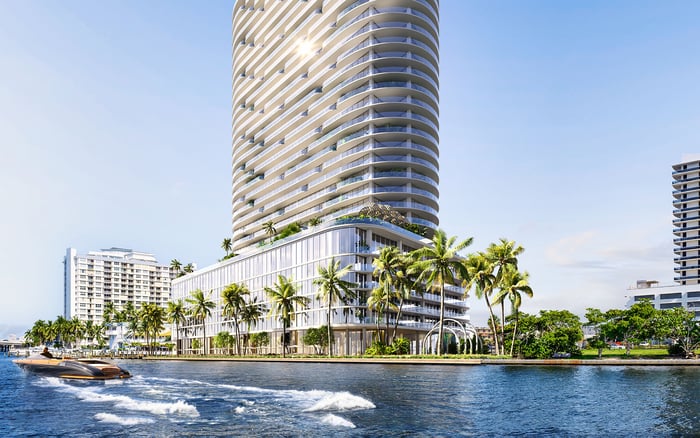
At Onda Bay Harbor, advertised arrival features include a covered valet drop-off, personal parking in an enclosed garage and 24-hour valet service. These are starting points for an inspection, not answers to every privacy question. Ask whether the intended parking-to-elevator route crosses guest circulation and whether residents can manage routine arrivals without valet involvement.
Sophie Bay Harbor presents another arrival configuration: a glass-covered porte-cochere with valet greeting residents and guests, plus advertised valet space for all guest parking and on-site security. Inspect where guests wait and whether that position overlooks resident arrivals. A sheltered entrance can be comfortable without being visually discreet.
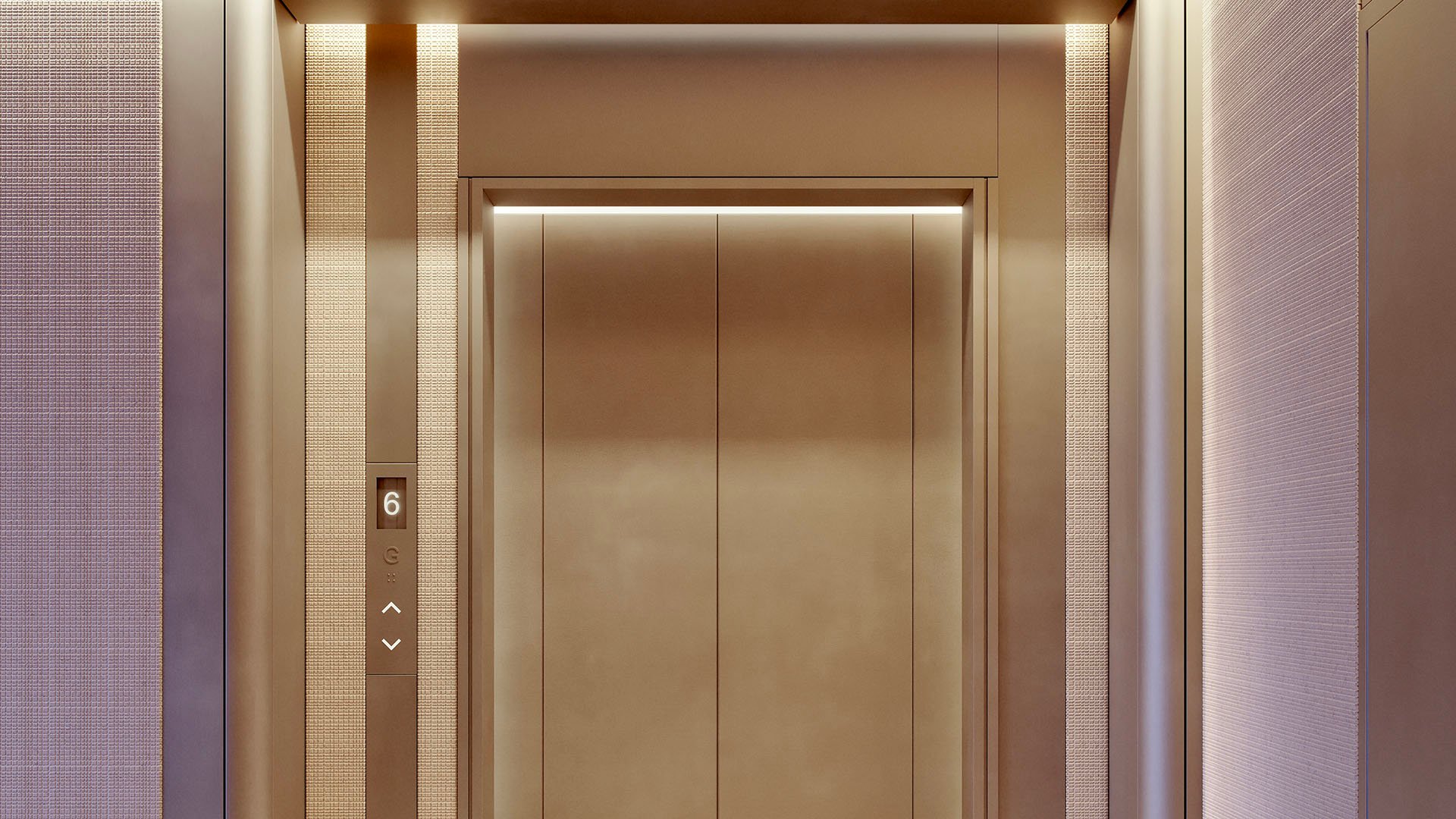
Private foyer, private elevator, semi-private elevator and fob-controlled shared elevator are not interchangeable descriptions. Request the exact residence’s floor plan, identify the elevator landings it uses and ask for a demonstration of access permissions. Establish whether another household shares the landing and what happens when a visitor is admitted.
Onda’s advertised specifications include both private and semi-private residential elevators, making residence-level verification essential. At Riva at Bay Harbor, advertised features include private-entry elevator foyers and private elevators for residences above the first floor. Neither description replaces a review of the particular home’s access arrangement.
When considering La Maré Bay Harbor Islands, keep the Regency offering’s advertised private or semi-private elevators and key-lock security tied to that offering. Do not extend those details to every residence or assume which configuration applies to a selected unit.
Advertised features at Bijou Bay Harbour include resident key-fob-operated elevators, 24-hour security and two assigned covered parking spaces per residence. A fob is an access credential; its presence does not establish floor-specific permissions. Ask management exactly what a resident, guest or contractor credential can unlock.
A concierge desk and a household staffing protocol solve different problems. Riva’s advertised 24-hour concierge and 24-hour security do not establish how housekeeping, maintenance or catering personnel are screened and admitted.
Review each category separately. Ask where regular staff enter, whether they receive individual credentials, how access is restricted by time and destination, and how permissions are withdrawn. For maintenance and catering, clarify who approves entry, whether an escort is required and which route reaches the residence. Discuss movers separately, including permitted hours and elevator reservations.
A nearby comparison is The Surf Club Four Seasons Surfside, where advertised features include dedicated service elevators for staff and deliveries, together with a separate entrance, driveway and porte-cochere for each tower. This Surfside example offers a concrete circulation feature to compare, not proof of every operating policy. Even with dedicated service elevators, ask where service and resident routes meet and how access to the home is authorized.
At La Baia North Bay Harbor Islands, advertised pre-construction plans include electronic fob-controlled access to common areas, elevators and amenities, along with a secure mailroom and package room. Those plans do not establish whether couriers are prohibited from residential floors.
The same plans identify four high-speed elevators and two elevator lobbies without specifying their allocation between residents and service use. Two lobbies should prompt a layout review, not an assumption that deliveries travel separately.
Ask management to walk through the handling of ordinary parcels, groceries, restaurant deliveries and oversized items. Identify the handoff point, who receives the goods, whether the resident must come downstairs and who may bring an item to the front door. Clarify what happens after hours or when the household is abroad. Distinguish secure storage from controlled circulation: a package room addresses the former without necessarily resolving the latter.
Staffed arrival raises another question: what information does the building collect and share? Onda’s advertised features include front-desk reception, personalized security technology and 24-hour security video surveillance. These warrant a discussion of information handling alongside physical access.
Request written policies covering valet access to vehicles, guest registration, resident information, surveillance retention and access records. Ask who can retrieve those records and how staff handle inquiries about whether a resident is home. For a household dividing time between countries, discuss how absence instructions are recorded and who receives them. The aim is clear authorization, not an assumption that attentive service means limited disclosure.
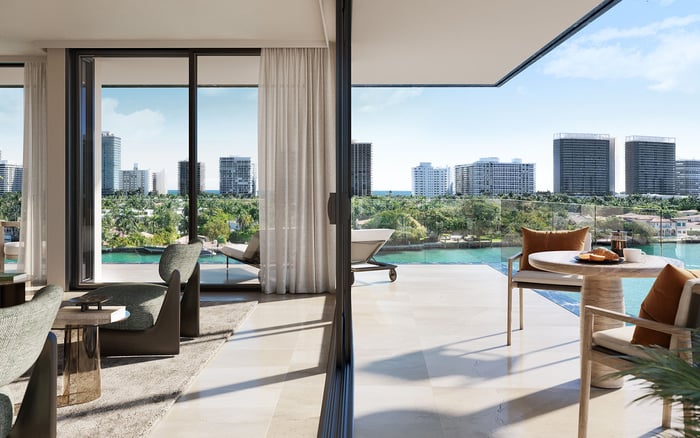
Access control cannot resolve every sightline. Inspect living rooms, bedrooms and terraces from the perspective of neighboring buildings, the street and waterfront approaches. Where practical, revisit at different times and consider the effect of illuminated interiors after dark.
A La Baia resale residence at 9221 E Bay Harbor Drive has been described as having installed motorized privacy and blackout shades. Treat these as residence-specific features, not building-wide specifications. Confirm what is installed in the home under consideration and whether it delivers the desired balance between outlook and concealment.
Before purchase, assemble the residence plan, arrival and service routes, credential permissions, and written guest and delivery procedures. Confirm current construction status, delivered specifications and management practices. Advertised amenities alone are not operating instructions.
Compare finalists against the same household scenarios: arriving privately, admitting staff while away, receiving a delivery and entertaining guests. Choose the home whose layout and procedures support those routines with the fewest unresolved compromises.
For a discreet conversation about matching your Bay Harbor Islands residence to your household’s privacy priorities, connect with MILLION.
If branded residences are on your mind — as a home or as an allocation — we would be glad to share what we are seeing, privately.
Begin a quiet conversationNo. Use your existing household routines as the reference point and verify each building’s layout and operating procedures independently.
Walk from the street through the porte-cochere, parking, lobby, elevator and private foyer. Identify shared spaces, sightlines and access controls at each transition.
Onda advertises both private and semi-private residential elevators. Confirm the arrangement for the specific residence rather than assuming a building-wide configuration.
Riva advertises private-entry elevator foyers and private elevators for residences above the first floor. Review the selected home’s plan and permissions before relying on those descriptions.
No. Ask management which destinations each credential can unlock and how guest and contractor permissions differ from resident access.
Clarify entrances, individual credentials, permitted hours, elevator permissions and authorization for entry into the home. Ask how access is withdrawn when a staffing arrangement ends.
The advertised plans do not establish courier exclusion. Confirm delivery handoff points and floor-access rules separately with management.
The Surf Club Four Seasons in Surfside advertises dedicated service elevators for staff and deliveries. It also advertises a separate entrance, driveway and porte-cochere for each tower.
Request written policies on guest registration, valet vehicle access, resident information, surveillance retention and access records. Clarify who can retrieve or disclose that information.
The described motorized privacy and blackout shades belong to a specific resale residence at 9221 E Bay Harbor Drive. Verify the installation in the actual home you are considering.