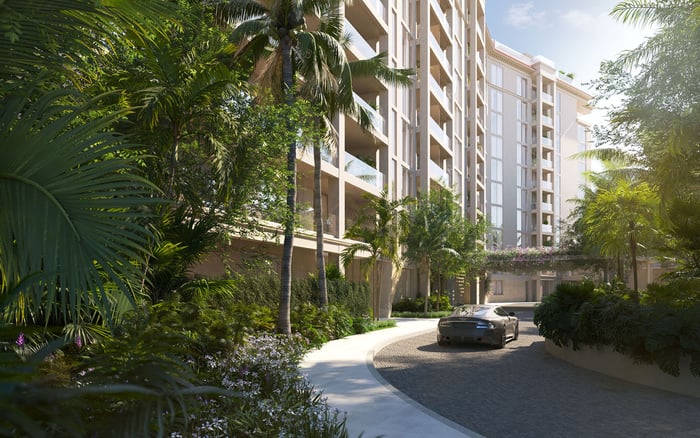
A Fisher Island purchase should be coordinated with domicile, title, trust, and succession decisions before contract and closing. For a buyer relocating from Singapore, the central question is whether the residence will become a genuine Florida permanent home or remain a seasonal property.

For a buyer moving from Singapore, a Fisher Island acquisition is more than a choice of view, scale, and interior finish. It can become the point at which Florida domicile, U.S. property ownership, family succession, and an existing Singapore estate plan converge. These issues should be resolved as a single planning exercise, not addressed sequentially after a contract is signed.
The first question is deceptively simple: Will the island residence become the buyer’s genuine permanent home, or remain a second home used seasonally? Florida’s homestead tax exemption depends on good-faith use as a permanent residence. A Singapore-domiciled owner who occupies the property only seasonally ordinarily will not meet that standard.
That distinction should shape the property search itself. Fisher Island comprises 21 condominium associations and two homeowners associations, Valencia Estates and Links Estates, together with the Fisher Island Club and the community association. Most purchasers considering homestead will therefore be assessing a condominium or villa-style residence rather than a conventional detached house. Options range from established trophy condominiums such as Palazzo del Sol to newer residential concepts such as The Residences at Six Fisher Island.
The intended use of the residence should determine the ownership structure, not follow it.
The island’s values make assessment treatment material, even when the exemption amount itself appears modest. In 2026, the market included 38 active condos and villas, with asking prices ranging from approximately $3.75 million in Bayside Village to $39.95 million in the Palazzo collection. In 2025, median pricing reached nearly $2,369 per square foot after roughly 15% annual appreciation. One five-bedroom Palazzo Del Sol residence of approximately 7,600 square feet was listed at $36.25 million, illustrating the level at which title and tax assumptions can influence long-term ownership costs.
For qualifying property, the standard exemption includes an initial $25,000 and an additional exemption of up to $25,000 for assessed value above $50,000. The second portion generally does not apply to school-district taxes. More consequential over time may be the 3% Save Our Homes annual assessment cap for qualifying homestead property. Non-homestead residential property is generally subject to a 10% annual assessment cap and reassessment following a transfer.
Timing matters. To qualify for a tax year, an applicant generally must hold legal title or beneficial title in equity and occupy the property as a permanent residence on January 1. A buyer who closes or establishes permanent residence after that date generally cannot claim the exemption for that tax year. The closing calendar, physical move, immigration status, and location of dependents should therefore be considered together, rather than treated as separate administrative details.
Direct ownership, revocable trust ownership, and entity ownership can produce different homestead, estate, gift, and transfer-tax consequences. The appropriate structure cannot be selected from a generic chart. It depends on the buyer’s intended domicile, citizenship and immigration status, family composition, existing trusts, and objectives for the property at death.
A properly drafted revocable living trust can hold a Florida homestead without necessarily sacrificing constitutional creditor protection. The drafting should preserve the settlor’s possessory interest and right to occupy the residence as a primary home. By contrast, an inadequately drafted discretionary or investment trust that treats the unit solely as an asset may jeopardize homestead tax treatment or creditor protection.
Corporate or other entity ownership may also conflict with homestead qualification. An entity selected for transfer-tax, privacy, or asset-protection objectives must be tested independently against the intended Florida treatment. This analysis should occur before signing or closing; retitling later should not be assumed to be neutral.
Association requirements belong in the same review. Whether the preferred residence is Palazzo della Luna or a villa at The Links Estates at Fisher Island, counsel should confirm before closing that the proposed owner and trust or entity documentation are acceptable to the relevant association.
A move can expose contradictions among a Singapore will, offshore trusts, a new Florida revocable trust, beneficiary designations, and the deed. The residence should have one coherent succession path, supported by sufficient liquidity for taxes, expenses, and family obligations. Coordination does not necessarily require every asset to sit within one structure, but the documents should not prescribe incompatible outcomes.
Florida law treats homestead held in a revocable trust as owned by the settlor during life for purposes that include devise, descent, creditors’ claims, and trust administration. Yet trust language alone does not override Florida’s protections for a surviving spouse or minor child. A provision attempting to devise homestead contrary to those protections can be invalid. In that event, title passes under Florida’s statutory homestead succession rules rather than solely through the trust’s distribution language.
Accordingly, the planning team should identify marital status, minor children, intended occupants, and desired beneficiaries before drafting dispositive provisions. Singapore and Florida advisers should then reconcile the deed, wills, trusts, and liquidity plan. Foreign-buyer planning must also weigh homestead compatibility against U.S. estate- and gift-tax considerations associated with U.S. real estate.
The practical lesson is that sequencing protects optionality. First, document whether the property is intended as a permanent Florida residence or a seasonal home. Second, review immigration status, dependents, anticipated occupancy, and the January 1 threshold. Limited, fact-specific circumstances may allow some non-citizens to qualify, but eligibility should never be assumed.
Third, compare direct, revocable trust, and entity title through both Florida and Singapore lenses. Fourth, test the preferred structure against constitutional homestead protections, U.S. estate- and gift-tax exposure, and association rules. Fifth, revise the Singapore will, offshore planning, Florida documents, beneficiary designations, and liquidity arrangements so the residence receives consistent treatment.
Finally, make the property selection answer the family plan. Privacy and scale may point toward Palazzo del Sol Fisher Island, while a villa format may focus attention on The Links Estates at Fisher Island. The architecture can be chosen with confidence once the ownership architecture is equally deliberate.
For discreet guidance on evaluating Fisher Island residences within a coordinated acquisition strategy, connect with MILLION.
If branded residences are on your mind — as a home or as an allocation — we would be glad to share what we are seeing, privately.
Begin a quiet conversationYes. An owner-occupied condominium parcel can qualify when it is held through an eligible interest and used in good faith as the owner’s permanent residence.
Ordinarily not. Seasonal use generally does not satisfy Florida’s permanent-residence requirement.
The applicant generally must hold legal or beneficial title in equity and make the property a permanent residence as of January 1 for that tax year.
It includes an initial $25,000 and up to another $25,000 for assessed value above $50,000, with the second portion generally excluded from school-district taxes.
Qualifying homestead property receives the 3% Save Our Homes assessment cap. Non-homestead residential property is generally subject to a 10% annual cap.
A properly drafted revocable living trust can hold homestead without necessarily forfeiting constitutional creditor protection.
The trust should preserve the settlor’s possessory interest and right to occupy the property as a primary residence rather than treating it solely as an investment.
Entity ownership may conflict with homestead qualification. Any proposed entity must be tested separately before contract and closing.
A trust devise that conflicts with Florida protections for a surviving spouse or minor child can be invalid, causing title to pass under statutory homestead rules.
Ideally, the deed, Singapore will, Florida trust, offshore trusts, beneficiary designations, and liquidity plan should be coordinated before title is finalized.