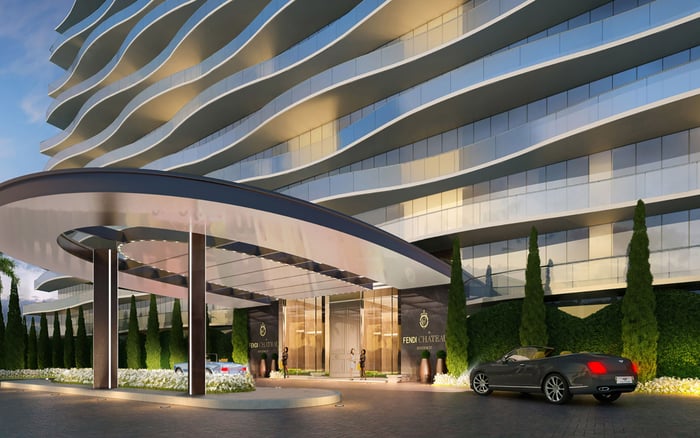
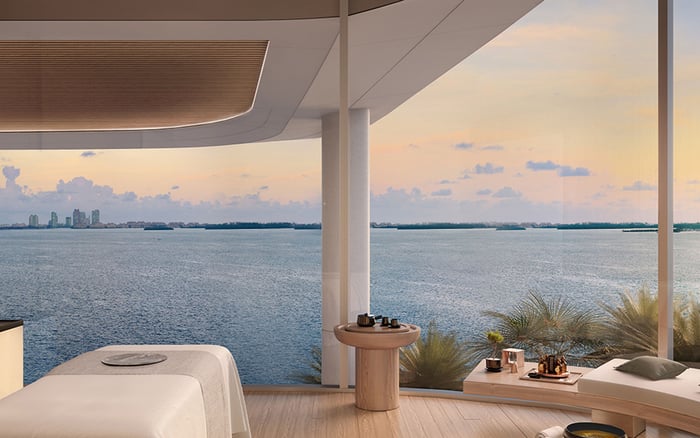
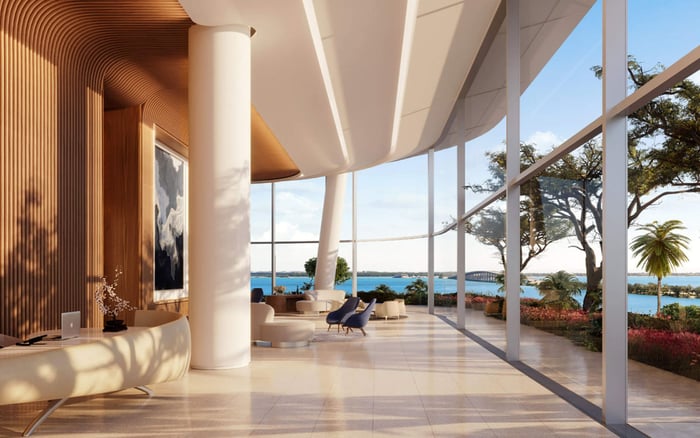
For an Oslo buyer considering Brickell, the decisive questions extend below the residence itself. Parcel-level flood classification, building elevations, vulnerable common systems, association insurance, and owner-specific coverage should be reconciled before closing.
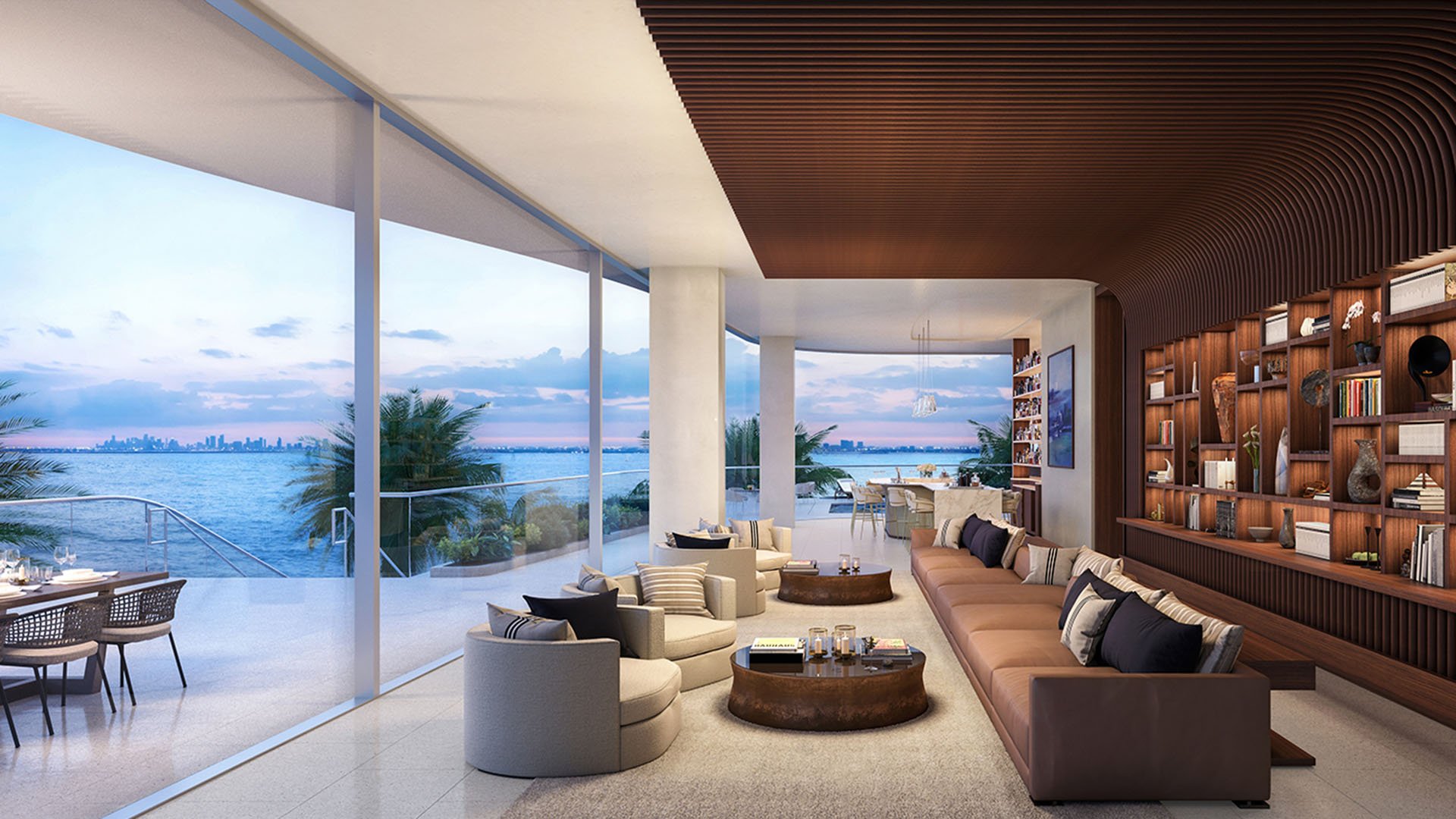
Moving from Oslo to Brickell replaces one set of environmental and ownership assumptions with another. The visual appeal of a high-floor residence may be immediate, but the underlying property decision is more technical. Flood classification, physical elevation, infrastructure placement, and insurance allocation must be assessed tower by tower.
Brickell cannot be treated as a single, uniform flood-risk category. Federal flood maps distinguish among AE, VE, and other zones, each with different construction and insurance implications. AE and VE are Special Flood Hazard Areas associated with the 1%-annual-chance flood and established base flood elevations. VE also identifies coastal exposure to storm-wave hazards. When qualifying property in such an area is financed through a federally regulated or insured lender, flood insurance is generally mandatory.
The practical conclusion is straightforward: a neighborhood reputation, waterfront view, or sales presentation cannot replace an address-level review. Even when comparing residences at Una Residences Brickell and Cipriani Residences Brickell, the buyer should structure diligence around the specific parcel, tower design, policy documents, and unit contract under consideration.
In Brickell, elevation is not merely the height of the residence but the resilience of the entire building.
Begin with the current regulatory flood designation for the exact parcel or address. Record the zone, the applicable base flood elevation, and any distinctions affecting the site. A separate projected climate-risk view may provide useful context beyond the current regulatory map, but it should supplement-not replace-official mapping and building documentation.
Next, request an elevation certificate or equivalent engineering evidence where available. The objective is not simply to confirm that the residential floor sits high above grade. Compare the mapped base flood elevation with the elevations of the lobby, garage entrance, lowest occupied floor, loading and service areas, and critical equipment.
This exercise also sharpens an investment decision. Two similarly priced residences can present materially different continuity risks if one tower places essential systems higher, protects garage openings more effectively, or has a stronger plan for restoring vertical access. A polished amenity deck does not answer those questions.
A high-floor residence may face less risk of direct water intrusion, but its owner remains dependent on the building systems below. Flooding can interrupt elevators, electrical distribution, parking access, pumps, domestic water, emergency power, or communications. A dry apartment can therefore become temporarily difficult or impossible to use.
Physical diligence should document flood barriers, garage drainage, pumps, waterproofing, generators, switchgear, and emergency-power arrangements. Ask where each component is located, what it serves, and how the building expects to restore elevators and utilities after flooding. The useful question is not simply whether equipment exists, but whether it is elevated, protected, maintained, and supported by a realistic recovery sequence.
For a waterfront shortlist that might also include St. Regis® Residences Brickell or The Residences at 1428 Brickell, use the same evidence request for every candidate. A consistent approach makes comparisons more revealing and prevents architecture or branding from obscuring infrastructure questions.
A condominium master policy generally addresses the building structure, shared systems, common areas, and association liability. It should not be presumed to insure personal belongings or every finish within the residence. Florida's typical coverage split places the structure as originally installed under the association policy while excluding personal property and many interior elements.
Potential exclusions can include floor, wall, and ceiling coverings, appliances, cabinetry, countertops, window treatments, and personal contents. The declaration may also allocate windows and sliding doors to individual owners. Balconies, limited common elements, unit-serving HVAC equipment, doors, and other components require document-specific review rather than assumptions based on a policy label.
Before closing, obtain complete declarations and schedules for the association's property, wind or hurricane, and flood policies. Review insured values, replacement-cost provisions, exclusions, deductibles, and the named insured. Confirm how hurricane deductibles and uninsured losses may be assessed to owners. A certificate or summary page alone cannot establish the actual division of responsibility.
An HO-6 policy is designed to address exposures outside the master policy, including interior property, contents, improvements, personal liability, and potentially loss assessment, subject to its terms. Standard condominium and unit-owner property coverage does not cover flood, so separate flood protection through the NFIP or a private insurer is required when the buyer wants that exposure insured.
An association's Residential Condominium Building Association Policy can insure the condominium building and common areas up to the federal maximum of $250,000 multiplied by the number of units. Buyers should verify whether association flood coverage meets the applicable requirement of 80% of replacement cost or the federal maximum, whichever is less. That calculation should be confirmed rather than inferred from the existence of an RCBAP.
An individual NFIP policy may provide a condominium owner with up to $100,000 in contents coverage, subject to policy terms and exclusions. Personal contents remain the owner's responsibility even when an association policy covers permanently installed interior building items on an all-in basis. For an extensively renovated or furnished residence, federal limits may be insufficient, making a comparison with private flood options especially relevant.
Loss-assessment coverage also warrants close attention. Confirm its limit, deductible, triggers, and exclusions against the association's deductibles and potential uninsured losses. Coverage should be modeled around the actual unit finishes, improvements, furnishings, and governing documents-not a generic Brickell estimate.
A disciplined review should produce one coordinated picture: parcel flood zone, applicable base flood elevation, building elevation evidence, protection of critical systems, governing-document responsibilities, master-policy scope, association flood limits, proposed HO-6 terms, separate flood coverage, and potential assessments.
Ask a Florida condominium attorney and a local insurance adviser to reconcile these materials before the contingency period expires. The attorney can interpret the declaration and allocation of responsibility, while the insurance adviser can test whether limits and exclusions correspond with the residence's replacement exposure. Neither review replaces an engineering assessment of physical resilience.
For a buyer arriving from Oslo, this process is not a reason to retreat from Brickell. It is a way to distinguish a compelling residence from a well-protected ownership position. The most considered acquisition pairs altitude and outlook with evidence of access, recovery, and financial responsibility.
For discreet guidance on a Brickell acquisition, consult MILLION.
If branded residences are on your mind — as a home or as an allocation — we would be glad to share what we are seeing, privately.
Begin a quiet conversationBrickell parcels can fall within different flood zones with distinct insurance and construction implications. Review the exact address rather than relying on a neighborhood-wide assumption.
Both are Special Flood Hazard Areas associated with the 1%-annual-chance flood and established base flood elevations. VE also reflects added coastal storm-wave hazards.
No. Elevators, electricity, parking, pumps, and other shared infrastructure can fail even if water never reaches the residence.
Compare the base flood elevation with the lobby, garage entrance, lowest occupied floor, service areas, and critical-equipment elevations.
Review barriers, garage drainage, pumps, waterproofing, generators, switchgear, emergency power, and anticipated restoration procedures for elevators and utilities.
It generally covers the structure, shared systems, common areas, and association liability. It should not be assumed to cover personal belongings or every interior finish.
They reveal responsibility for items such as windows, doors, balconies, HVAC equipment, deductibles, exclusions, insured values, and replacement-cost terms.
No. Standard unit-owner property coverage does not insure flood, so separate NFIP or private flood protection is needed.
An individual NFIP policy may provide up to $100,000 in contents coverage, subject to policy terms and exclusions.
A Florida condominium attorney and local insurance adviser should reconcile governing documents, master policies, HO-6 terms, flood coverage, and elevation evidence.