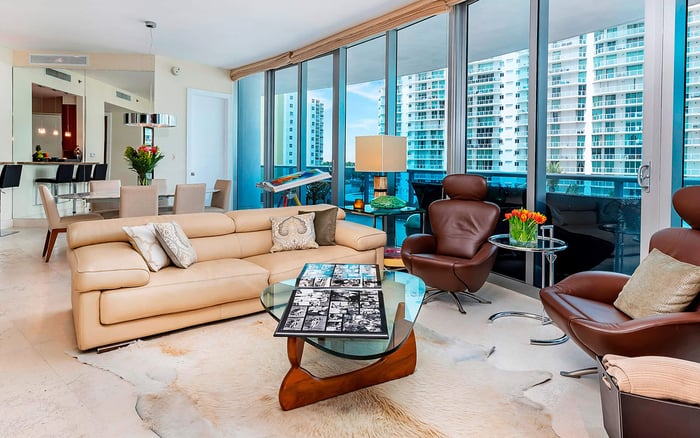
For a multigenerational move from Doha to Key Biscayne, the right residence must do more than accommodate everyone. Its layout, occupancy rules and daily logistics should protect family privacy, welcome guests and support a workable caregiver arrangement.

A move from Doha to Key Biscayne is an opportunity to design a household for several generations without asking everyone to share the same rhythm. The most consequential property questions are who needs quiet, who entertains, how long relatives will visit and where a caregiver can genuinely rest. An ocean outlook is a pleasure; a home that preserves independence is a more enduring luxury.
Prepare a room-by-room brief before arranging viewings. Identify permanent residents, expected overnight guests and whether care will involve daytime visits, occasional overnight shifts or a live-in arrangement. Do not assume that a familiar household arrangement in Doha will transfer unchanged to the United States.
Measure privacy by the routines a floor plan allows, not merely the square footage it contains.
For each candidate residence, trace three routes: a guest arriving while someone sleeps, an older relative reaching the kitchen and a caregiver responding at night. Note where those routes cross private bedrooms or interrupt family sitting areas. A large reception room cannot compensate for a bedroom corridor everyone must use.
Ask whether different generations can withdraw without retreating to bed. A separate sitting space, sensible bathroom access and separation from entertaining areas belong in the purchase brief, but each must be verified in the individual residence. Consider proximity as well as distance: a caregiver's room should support the intended care arrangement without sacrificing either person's privacy.
At Oceana Key Biscayne, advertised floor plans range from approximately 1,800 to more than 7,500 square feet. The community includes 142 luxury residences and 12 luxury villas. That range is a starting point for comparison, not proof of separate family wings, suitable caregiver quarters or current availability.
Walk the actual residence with the proposed furniture arrangement in mind. Have an architect assess any contemplated changes rather than treating a study, den or oversized corridor as a guaranteed additional bedroom. Confirm applicable approvals before making alterations central to the purchase decision.
Key Biscayne offers oceanfront condominiums and single-family homes. Compare both against the same household brief; neither category automatically delivers privacy. For a house, assess the actual bedroom arrangement, arrival sequence and household-service needs. For a condominium, evaluate the residence alongside its governing documents and access procedures.
The Ocean Club is a gated, resort-style beachfront community spanning 52 acres, with 11 towers, a members-only clubhouse and private cabanas. Those amenities define the community setting. They do not establish overnight accommodation for visiting relatives or substitute for a dedicated guest bedroom.
Key Colony is a secured, gated beachfront complex with four independently operated condominium towers. That distinction makes tower-specific diligence essential. Request the documents applicable to the exact residence, including provisions affecting guests, caregiver occupancy, parking and access. Do not assume that an answer about one tower applies across the complex.
For every candidate, distinguish an attractive community feature from an enforceable permission. Ask counsel to review the applicable documents and obtain written clarification wherever the proposed household arrangement is unclear.
Build the guest plan around the busiest plausible visit, not an ordinary week. Record who might arrive together, how long they may stay and which rooms remain permanently assigned. A caregiver's sleeping quarters should not become overflow accommodation whenever relatives visit.
Test whether guests can reach a bathroom without entering another person's private space, and whether late conversation or early departures will disturb older residents. If hospitality depends on converting a study, verify its suitability for sleeping rather than assuming it counts as a bedroom.
Ask specifically about guest registration, length-of-stay restrictions, visitor parking and access credentials. These are questions to resolve, not permissions to presume. If the residence cannot comfortably accommodate peak visits, establish a separate lodging plan before committing to the purchase. Hosting well need not mean placing every visitor under one roof.
A live-in domestic worker resides in the employer's home permanently or for extended periods. Occasional overnight work is not, by itself, the same arrangement. Decide which model the household needs before assigning a room or estimating employment costs.
Under the federal baseline, minimum-wage requirements still apply even when a live-in overtime exemption is available. The exemption depends on the employment arrangement: direct household employment is treated differently from third-party agency employment. Do not assume that providing accommodation removes overtime obligations.
Adequate private sleeping quarters and uninterrupted sleep are relevant to whether sleep time may be excluded from compensable hours. A bedroom alone does not settle that question. Have employment counsel review duties, hours, overnight interruptions, recordkeeping and the proposed arrangement, including applicable Florida requirements.
Separately, confirm building procedures for caregiver registration, arrival, parking, deliveries and any service-elevator use. A housing-program live-in aide agreement does not establish occupancy rights in a privately purchased luxury condominium.
For a caregiver currently based in Doha, obtain immigration advice about relocation and work authorization before relying on that person's availability. Purchasing a residence does not resolve the caregiver's employment or immigration position. Keep a contingency staffing plan separate from the property search.
If Key Biscayne candidates do not satisfy the household brief, widen the geography deliberately. A comparison with Park Grove Coconut Grove should begin with the same questions about bedroom separation, guest capacity and documented occupancy permissions-not an assumption that a different address resolves them.
Similarly, if Four Seasons Residences Coconut Grove enters the shortlist, request residence-specific plans and applicable rules before drawing conclusions about caregiver suitability. A project name is not evidence of staff accommodation or guest permissions. Keep the comparison focused on how the household would actually live.
Before committing, require each finalist to pass three tests: an ordinary family week, a full guest visit and a night when care is needed. Review the floor plan, proposed occupancy and access arrangements under each scenario. Record which requirements are satisfied, which need approval and which depend on an alteration.
The strongest choice supports family closeness without compulsory togetherness. Make privacy, hospitality and caregiver arrangements purchase criteria from the outset, not problems to solve after closing.
For a discreet property conversation shaped around your household's priorities, connect with MILLION.
If branded residences are on your mind — as a home or as an allocation — we would be glad to share what we are seeing, privately.
Begin a quiet conversationBegin with permanent residents, guest patterns and the intended care arrangement. Evaluate bedroom separation and daily circulation before prioritizing views or total floor area.
No property type guarantees privacy. Compare the actual layout and household logistics of a house with those of a condominium, including applicable rules.
No. Advertised floor plans range approximately from 1,800 to more than 7,500 square feet, but bedroom separation and caregiver suitability require residence-specific assessment.
The community's cabanas and clubhouse should not be treated as overnight guest accommodation. Make a separate, verified plan for visiting relatives.
Key Colony has four independently operated condominium towers. Review the documents and procedures applicable to the particular tower and residence under consideration.
Confirm guest registration and stay limits, caregiver occupancy, parking, access credentials and delivery procedures. Do not presume that a proposed arrangement is permitted.
Not by itself. The federal live-in framework concerns workers residing in the employer's home permanently or for extended periods.
No. The federal exemption depends on the employment arrangement, and minimum-wage requirements still apply even when an overtime exemption is available.
Private quarters support rest and household privacy. Adequate sleeping quarters and uninterrupted sleep are also relevant to whether sleep time may be excluded from compensable hours.
Do not assume that relocation or U.S. employment is authorized. Obtain immigration advice about the individual's circumstances before making the property plan dependent on that caregiver.