A disciplined framework for evaluating Villa Miami penthouse terraces, roof interfaces, wind exposure, mechanical adjacencies, ownership obligations, warranties, and long-term costs.

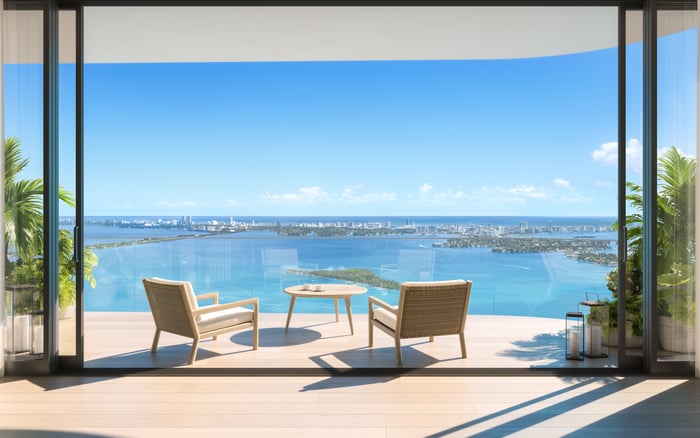
At Villa Miami, a waterfront luxury condominium in Edgewater, the penthouse proposition naturally begins with elevation, privacy, and expansive outdoor living. Serious due diligence, however, begins behind the finishes. A buyer must understand how the residence interfaces with the roof, terraces, exterior envelope, and adjacent building systems.
This is particularly important for a penthouse, where architectural distinction can coincide with greater exposure. Roof penetrations, terrace drains, railings, glazing, sliding doors, canopies, and mechanical equipment all warrant coordinated review. The objective is not simply to identify defects, but to establish who owns each component, who must maintain it, how it can be accessed, which warranty applies, and what happens when repairs become necessary.
The central principle is straightforward: premium finishes should be evaluated alongside drawings, technical records, condominium documents, and financial obligations.
Obtain architectural drawings identifying every condition adjoining the residence. The plans should show whether roofs, amenity areas, elevator overruns, mechanical spaces, or service routes sit above or beside interior rooms and outdoor areas. They should also reveal where maintenance teams may require access and whether that route crosses private space.
Read the drawings as an operational map, not a presentation plan. Ask which rooms border equipment, which terrace areas cover occupied space, and where roof or envelope work could affect privacy. Mechanical equipment near the residence should be evaluated for noise, vibration, exhaust, odors, nighttime operation, and service access.
This approach applies across high-rise Edgewater offerings, including Aria Reserve Miami and EDITION Edgewater. Each property requires its own documents and independent technical review. Proximity within the same neighborhood does not make construction details or ownership allocations interchangeable.
A terrace is not merely a finished outdoor room. It is a layered assembly that must shed water, accommodate movement, resist exposure, and remain serviceable. Review the waterproofing assembly, surface slopes, drainage routes, overflow provisions, thresholds, penetrations, and access required for future investigation or repair.
Request clear answers about what happens when a drain is obstructed or rainfall exceeds the primary drainage route. Determine where overflow water travels and whether planters, pools, pergolas, outdoor kitchens, or permanent attachments complicate drainage and waterproofing. Confirm whether finished surfaces can be removed without damaging the underlying membrane-and who pays to restore them after common-element work.
The condominium documents should classify terrace slabs, finishes, drains, railings, pools, pergolas, and outdoor kitchens as unit property, limited common elements, or association responsibility. Those distinctions can separate routine upkeep from substantial future expense. Buyers comparing outdoor living at The Cove Residences Edgewater should apply the same questions while relying exclusively on that property's governing and construction documents.
Request the wind-design criteria and applicable product approvals for glazing, sliding doors, railings, canopies, and other exposed exterior components. Compliance is essential, but it does not answer every lifestyle question. A technically compliant terrace may still experience localized gusts, difficult door operation, wind noise, or restrictions on furnishings.
Visit-or commission observations-under representative conditions when practical. Consider whether doors operate comfortably, conversations remain pleasant, and furniture can stay in place under the governing rules. Ask about restrictions covering planters, shading devices, grills, outdoor kitchens, pools, and attachments. High floors can deliver exceptional outlooks, yet usable outdoor space depends on more than elevation and dimensions.
Waterfront exposure also heightens the importance of corrosion protection. Railings, fasteners, equipment, and other exterior metals should be examined for their specified protection and maintenance requirements. The relevant question is not whether salt and moisture exist, but how the building's maintenance program addresses their effects over time.
A roof review should identify membrane type, insulation, drainage, penetrations, installation date, warranty coverage, inspection procedures, and repair history. Buyers should understand whether separate roof zones serve the penthouse and whether pools, equipment, screens, or other installations create additional penetrations or access requirements.
Read warranty language alongside maintenance procedures. Coverage can depend on inspections, approved contractors, prompt reporting, or restrictions on alterations. Determine whether consequential interior damage is excluded and whether work on a terrace feature could affect coverage. An independent building-envelope consultant can connect the drawings, field conditions, warranty terms, and planned maintenance into a coherent assessment.
Legal classification and physical location do not always produce an intuitive allocation of cost. Condominium counsel should review the declaration, exhibits, rules, budgets, insurance provisions, and warranty documents. The analysis should establish responsibility for routine cleaning, preventive maintenance, component replacement, access, removal of improvements, and restoration after repairs.
The financial review should include projected penthouse-specific upkeep, association reserves, insurance deductibles, warranty exclusions, and potential assessments for roof or envelope work. Ask how deductibles are allocated and whether owner-installed improvements receive different treatment. The goal is a realistic ownership model that recognizes both private luxury and shared infrastructure.
A coordinated team may include condominium counsel, a building-envelope consultant, and, where conditions warrant, structural, mechanical, or acoustic specialists. Their work should converge in a written matrix listing each material component, its owner, maintenance party, replacement party, warranty, access route, and anticipated decision point.
What drawings should a Villa Miami penthouse buyer request? Request architectural drawings showing roofs, amenity areas, elevator overruns, mechanical spaces, terraces, penetrations, and maintenance routes adjoining the residence.
Why does terrace slope matter? Surface slope directs water toward the intended drains and should be reviewed alongside waterproofing, thresholds, and overflow provisions.
Who may be responsible for terrace repairs? Responsibility depends on whether slabs, finishes, drains, railings, and improvements are classified as unit property, limited common elements, or association property.
What should be reviewed for high-floor wind exposure? Review design criteria, product approvals, door operation, wind noise, localized terrace conditions, furniture rules, and usability in typical weather.
Which exterior components need product approvals? Buyers should request applicable approvals for glazing, sliding doors, railings, canopies, and other exposed exterior components.
What belongs in a roof due-diligence review? Identify membrane type, insulation, drainage, penetrations, installation date, warranty coverage, inspection procedures, and repair history.
How should nearby mechanical equipment be assessed? Evaluate noise, vibration, exhaust, odors, nighttime operation, and the access required for servicing or replacement.
Why is corrosion protection important? Waterfront exposure makes the protection and maintenance of railings, fasteners, equipment, and other exterior metals an important ownership consideration.
Which terrace rules deserve close attention? Check restrictions on furniture, planters, shading devices, grills, outdoor kitchens, pools, and permanent attachments before planning improvements.
Which financial issues should a buyer model? Include penthouse-specific upkeep, reserves, insurance deductibles, warranty exclusions, and possible assessments for roof or envelope work.
If you'd like a private walkthrough and a curated shortlist, connect with MILLION.
If branded residences are on your mind — as a home or as an allocation — we would be glad to share what we are seeing, privately.
Begin a quiet conversation