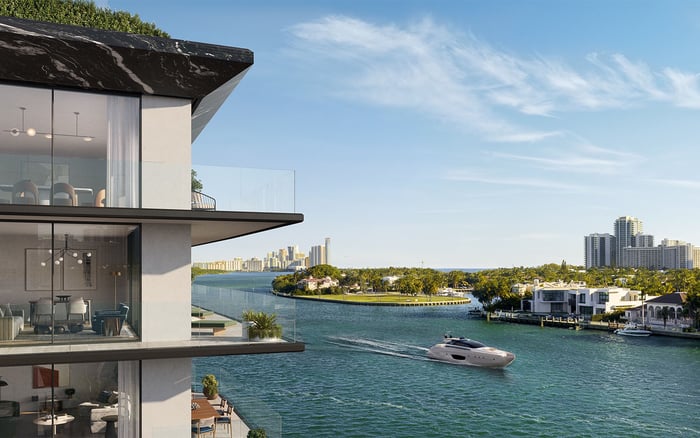
A due-diligence guide for multi-car households evaluating parking and valet logistics at Bay Harbor Towers, with questions about vehicle allowances, fees, retrieval, EV charging, guests and specialty cars.

For a household with several vehicles, parking can shape the daily experience as much as the residence itself. Buyers evaluating Bay Harbor Towers should request written answers about vehicle capacity, access, valet procedures and costs rather than relying on general amenity language.
Start with the specific residence under consideration. Ask how many vehicles may be accommodated, whether any spaces or parking rights are tied to the residence and whether additional vehicles depend on availability. The written response should identify every recurring, one-time or usage-based charge that could apply.
A valet arrangement should be evaluated as an operating system. Ask how residents request vehicles, whether advance notice is expected and how simultaneous departures are coordinated. Households with school, work or travel schedules should also ask what procedures apply during busy periods.
Key custody and vehicle release deserve equal attention. Request the rules for authorized drivers, guest access, identification, after-hours requests and incident reporting. If household staff or family members may collect a vehicle, confirm how authorization is documented and updated.
Do not treat a general parking description as confirmation that every household vehicle can be accommodated. Ask separately about daily drivers, guest vehicles, overnight parking, oversized SUVs, low-clearance sports cars, motorcycles and vehicles kept for extended periods.
Buyers comparing Onda Bay Harbor and Alana Bay Harbor Islands can apply the same checklist. The objective is to compare written rights, restrictions, costs and procedures rather than amenity labels alone.
EV owners should ask whether charging is available for the residence and, if so, how access is allocated. Relevant questions include connector compatibility, charging speed, billing, reservations, waitlists and whether more than one household vehicle can use the system.
Valet involvement should also be clarified. Ask who connects and disconnects a vehicle, whether staff may move it after charging and how charging requests are recorded. A household with multiple EVs should test the process against its usual departure schedule.
Collector and specialty vehicles require a detailed written discussion. Ask about garage clearance, ramp conditions, key storage, authorized staff, movement logs, incident procedures and any restrictions that could affect low-profile, oversized or infrequently driven cars.
Insurance and responsibility should be reviewed through the applicable documents and professional advisers. Owners may also wish to ask whether instructions concerning vehicle movement, battery maintenance or long-term positioning can be accommodated.
If the household’s vehicle count may exceed the residence-specific allowance, identify potential alternatives before contractual deadlines. Ask the appropriate parking operator directly about current availability, time limits, renewal terms, access hours, vehicle restrictions and pricing.
Do not assume that a nearby option will remain available or function as long-term storage. Any overflow plan should be evaluated independently, with a backup if continuous access is important.
Parking should be considered alongside the household’s broader routine, including commuting, school schedules, airport trips, guests and service appointments. Buyers considering La Maré Bay Harbor Islands can use the same exercise: map a typical week and identify every point at which a vehicle must be retrieved, returned, charged or transferred to another driver.
Before closing, compare written responses with the governing documents and the terms applicable to the selected residence. If an answer remains informal or conditional, ask who has authority to confirm it and whether it can change.
How many vehicles can a residence keep on site? Request the allowance for the specific residence in writing, including any conditions based on availability.
Should buyers assume an extra vehicle can be accommodated? No assumption should replace written confirmation of capacity, eligibility and cost.
What valet retrieval questions matter most? Ask how requests are submitted, whether advance notice is needed and how simultaneous or busy-period departures are handled.
How should additional-car fees be verified? Request an itemized explanation of recurring, one-time and usage-based charges in the applicable documents or written terms.
What should EV owners confirm? Ask about availability, connector compatibility, charging speed, billing, scheduling and valet handling procedures.
What should a household with two EVs ask? Confirm whether both vehicles can use the charging system and how access fits the household’s normal departure schedule.
What questions apply to collector cars? Ask about clearance, key custody, staff authorization, movement records, incident procedures and long-term vehicle instructions.
How should guest and overnight parking be evaluated? Request the rules, duration limits, authorization process, availability and applicable charges in writing.
Can nearby overflow parking be treated as guaranteed storage? Buyers should verify availability and terms directly and maintain a backup rather than relying on an assumption.
What should be completed before closing? Match written parking and valet answers to the selected residence, governing documents and the household’s actual vehicle routine.
For a discreet conversation and a curated building-by-building shortlist, connect with MILLION.
If branded residences are on your mind — as a home or as an allocation — we would be glad to share what we are seeing, privately.
Begin a quiet conversation