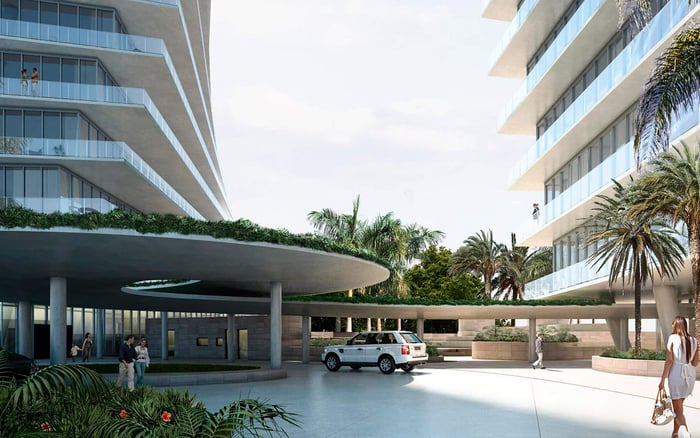
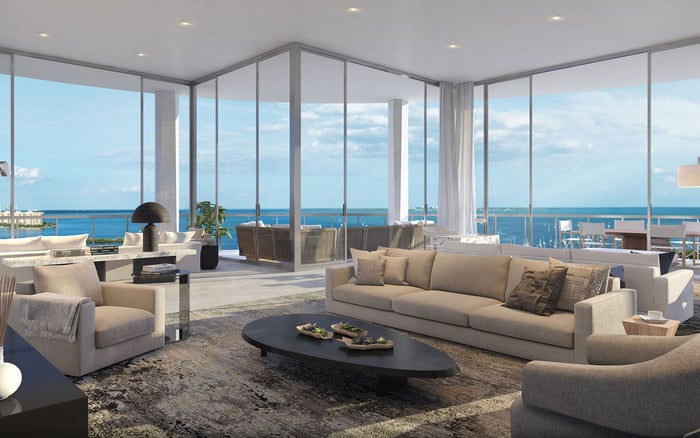
A buyer-focused editorial guide to choosing between Coconut Grove residences by how they support private dining, entertaining flow, wellness, and quiet after guests leave.
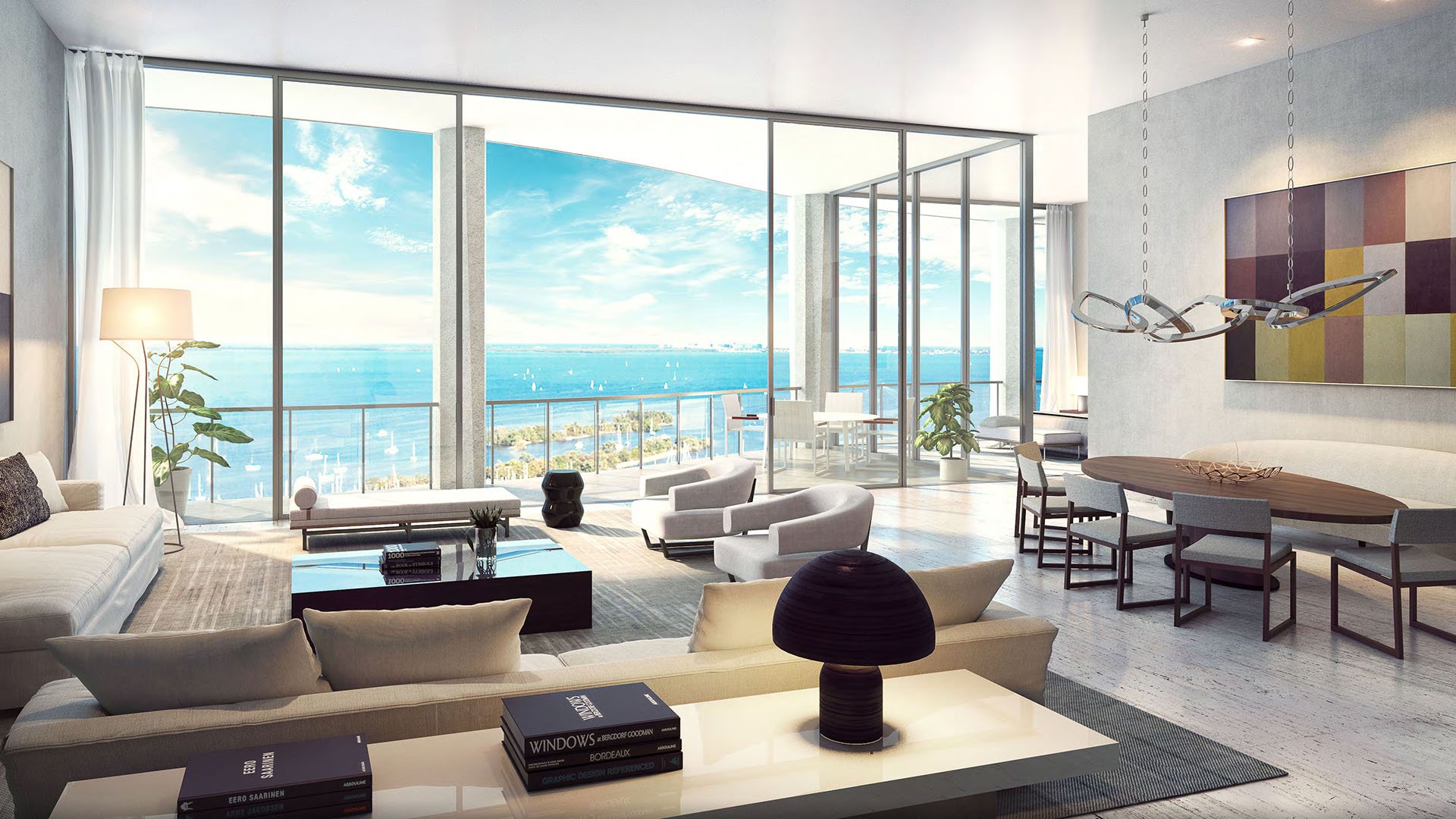
For many Coconut Grove buyers, the question is no longer whether a residence feels luxurious in isolation. The sharper test is how it lives on a Friday evening, a Sunday recovery morning, or during a dinner that begins indoors and ends outside. Park Grove Coconut Grove, The Well Coconut Grove, and Vita at Grove Isle all belong to a buyer conversation shaped by private dining, entertaining flow, and the need for quiet once the evening is over.
That lens is especially relevant in Coconut Grove, where the luxury rhythm is inherently social. Waterfront routines, restaurants, clubs, and marinas influence how residents gather. For a Coconut Grove buyer, the comparison is shaped by marina habits, terrace living, restaurant proximity, and the desire to return home to a controlled private environment.
The best choice depends less on a generic hierarchy than on the buyer’s pattern of living. A frequent host, a wellness-first owner, a private-dining user, and a buyer highly sensitive to sound may reach different conclusions from the same shortlist.
Park Grove Coconut Grove belongs in the conversation for buyers who want a residence to function as both a social setting and a private retreat. The important question is not simply whether a home can accommodate guests, but whether arrival, dining, living, outdoor, and retreat zones feel intuitive. A strong hosting residence gives guests a natural path without exposing the private portions of the home.
For formal hosts, that means studying how entertaining spaces relate to service areas, how dining connects to lounging, and whether outdoor space feels like an extension of the main room rather than an afterthought. In Coconut Grove, indoor-outdoor entertaining is not a decorative feature. It is part of the neighborhood’s hospitality culture.
The post-entertaining experience matters just as much. A residence may impress during the event, yet disappoint if the primary suite, study, or secondary bedrooms feel too connected to the social core after guests leave. Park Grove should be judged on how successfully its layouts and amenities support both the evening and the reset.
Private dining in a luxury condominium is not limited to the residence itself. Buyers increasingly evaluate chef-oriented spaces, private dining amenities, and amenity decks as extensions of the home. The ideal arrangement allows an owner to host with polish without turning the entire residence into a back-of-house operation.
The Well Coconut Grove is especially relevant for buyers who want dining, hospitality, and wellness-oriented living to coexist. The appeal is not only the ability to entertain, but the ability to move from entertaining into restoration without the two modes competing. That distinction matters for owners who view home as a place for conversation, nourishment, and recovery.
When comparing private dining environments, focus on sequence. Where do guests gather first? Where does food service occur? Can a dinner expand naturally into a lounge or outdoor setting? Is there a graceful way to end the evening without disrupting the quieter rooms? These questions often reveal more than surface finishes.
Wellness-first buyers often host, but they host differently. The priority is balance. They may want a residence that supports dinner with close friends, a calm morning routine, and a sense of retreat from neighborhood energy. The Well Coconut Grove should be considered through that lens, where wellness-oriented luxury intersects with dining, entertaining, and controlled private space.
This buyer is less likely to choose solely by spectacle. Instead, the key issues are sensory control, circulation, and the ability to compartmentalize. A home that lets one person entertain while another rests, works, or recovers offers a different value proposition than a purely open social plan.
In Coconut Grove, that separation can feel especially important because the neighborhood itself is active. Restaurants, clubs, waterfront movement, and social routines create an appealing lifestyle, but they also make residential quiet more valuable.
Acoustic separation is one of the most practical luxury questions in this comparison. Entertaining, music, cooking, guest movement, and neighborhood activity can conflict with expectations for privacy. A beautiful room that carries sound into bedrooms, work areas, or adjacent residences may not serve a buyer who wants discretion.
The evaluation should begin inside the floor plan. Look at the distance between entertaining areas and sleeping areas. Consider whether kitchens, dining rooms, and terraces sit near quiet rooms. Study door placement, corridor depth, ceiling conditions, and the way sound may travel between open spaces.
The same logic applies to amenities. A private dining room or amenity deck can be a significant advantage if it lets owners entertain outside the residence while preserving the home as a retreat. For some buyers, the right amenity is not about showing more, but about protecting the private apartment from the noise and logistics of hosting.
Vita at Grove Isle remains a natural part of this Grove-facing conversation because buyers often compare it with Park Grove Coconut Grove and The Well Coconut Grove when considering lifestyle, dining, and privacy. The prudent approach is to evaluate Vita through confirmed residence plans, current disclosures, and direct experience of the spaces rather than assumptions.
That does not make Vita less relevant. It means the questions should be precise. How are dining and living spaces arranged? How does the residence transition from social to private? What separates guest areas from bedrooms or work rooms? How do amenity spaces support entertaining without compromising quiet?
For a buyer considering Vita at Grove Isle, the comparison should be residence-specific. In luxury real estate, the best building on paper is not always the best fit for the owner’s daily rituals.
Frequent hosts should begin with entertaining flow. If the home must support cocktails, dinner, outdoor conversation, and a graceful close to the evening, Park Grove Coconut Grove deserves close study for how it handles formal hosting and privacy after guests depart.
Private-dining users should focus on the relationship between the residence and the amenity program. The strongest choice is the one that lets hosting feel elevated without making daily life feel operational.
Wellness-first buyers should look closely at The Well Coconut Grove, especially if the goal is a home that supports social life while preserving calm, rhythm, and controlled private space.
Acoustic-separation buyers should treat sound as a primary due-diligence item. The right answer may depend on a specific floor plan, exposure, terrace relationship, and distance between active and quiet zones.
Which buyer is best suited to Park Grove Coconut Grove? Park Grove Coconut Grove is best evaluated by buyers who prioritize formal hosting, entertaining flow, and privacy after guests leave.
How should buyers evaluate The Well Coconut Grove? The Well Coconut Grove should be viewed through the intersection of wellness, dining, entertaining, and controlled private space.
Can Vita at Grove Isle be compared directly with the other two? Yes, but buyers should make the comparison through verified residence plans, current details, and direct evaluation of layout and acoustics.
Why is private dining such an important issue in Coconut Grove? Coconut Grove’s restaurants, clubs, marinas, and waterfront lifestyle make hospitality a natural extension of residential life.
What matters most for frequent entertainers? The key issues are arrival sequence, dining-to-living flow, outdoor connection, service convenience, and separation from private rooms.
Is acoustic separation more important than finishes? For many luxury buyers, yes. Finishes impress immediately, while acoustic comfort determines how well the residence lives over time.
Should amenities influence the decision? Yes. Private dining rooms, chef-oriented areas, and amenity decks can reduce pressure on the residence itself during events.
What should wellness-first buyers prioritize? They should prioritize sensory control, quiet zones, and a smooth transition from social activity to rest and recovery.
Does indoor-outdoor living change the comparison? Yes. In Coconut Grove, outdoor entertaining is central, so terraces and amenity decks should be judged as part of the hosting plan.
What is the simplest way to choose between the three? Start with your dominant lifestyle pattern: frequent hosting, private dining, wellness-first living, or acoustic privacy.
If you'd like a private walkthrough and a curated shortlist, connect with MILLION.
If branded residences are on your mind — as a home or as an allocation — we would be glad to share what we are seeing, privately.
Begin a quiet conversation