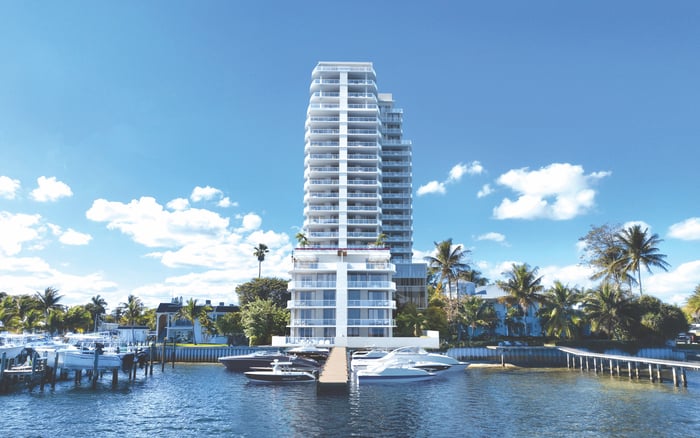
A buyer-focused guide to evaluating beach access, controlled circulation, resident privacy, and operating rules at three South Florida residential projects.

For South Florida luxury buyers, “beach access” can sound deceptively simple. In practice, it is one of the most consequential details in a coastal purchase. The central question is not merely whether the beach is nearby, but how a resident reaches it, who else uses the same route, what rules govern the experience, and where privacy begins or ends.
That distinction matters when comparing Palm Beach Residences, The Berkeley Palm Beach, and Waldorf Astoria Residences Pompano Beach. Each name carries coastal appeal, but the buyer diligence is highly specific. A private residential environment does not automatically create private beach access, and an elegant beach program is not the same as a resident-exclusive shoreline.
For an ultra-premium buyer, privacy should be studied as a sequence: arrival, lobby, elevator access, amenity circulation, pool deck exposure, beach approach, and sightlines from the residence itself. The most refined buildings are judged not only by finishes, but by how quietly residents move through them.
Palm Beach Residences is the Palm Beach project in this comparison, which means buyers may arrive with strong assumptions about exclusivity. Those assumptions should be tested against the actual site plan and condominium documents. The Palm Beach name has value, but privacy is created by physical design, legal rights, and daily operating controls.
At Palm Beach Residences, the critical question is whether beach access is direct from the building, routed through controlled resident areas, or dependent on any shared or public path. Buyers should ask to see drawings that identify resident-only circulation, beach-access points, service routes, and public-facing edges. If a pathway is shared, the next question is not only who may use it, but when and under whose rules.
Privacy should also be evaluated vertically. A residence may feel secluded inside, while balconies, amenity decks, or beach approaches remain visible from neighboring buildings, public paths, or active coastal areas. The strongest due diligence follows the experience from the front door to the sand, not just the view from the living room window.
The Berkeley Palm Beach is listed under West Palm Beach, and that geographic distinction deserves attention. Buyers should clarify how the location affects actual beach proximity, the route to the beach, and the character of privacy compared with an oceanfront Palm Beach address. West Palm Beach convenience can be compelling, but it should not be confused with automatic beach control.
The key distinction is between in-building residential privacy and beach-access privacy. A building may offer a discreet lobby, controlled elevators, private amenities, and polished service, while the beach experience may be walkable, shuttle-based, club-based, deeded, membership-based, or governed by a separate agreement. Each structure carries different implications for daily use and long-term value.
Buyers at The Berkeley Palm Beach should also ask how resident amenities are separated from guests, commercial components, service staff, and any public-facing circulation. The most important questions are operational: where guests arrive, where deliveries move, how staff routes are handled, and whether residents can move from home to amenity spaces without unnecessary exposure.
For second-home owners, those details matter even more. A residence used seasonally should feel effortless on arrival, and the beach experience should be understood before closing. The promise of privacy is strongest when it is visible in plans and enforceable in documents.
Waldorf Astoria Residences Pompano Beach should be evaluated in the context of a more active coastal city environment. Pompano Beach living may appeal to buyers who want waterfront energy, branded service, and a broader coastal rhythm, but that energy makes circulation and separation especially important.
At Waldorf Astoria Residences Pompano Beach, buyers should ask how the building separates residents from hotel-style service, visitors, valet activity, beach-service teams, and public waterfront movement. In branded residences, the service proposition can be a major attraction, yet the mechanics behind that service deserve careful review. A beautifully managed arrival is only as private as the routes behind it.
Beach service also requires precision. Buyers should verify whether loungers, cabanas, storage, beach access points, or other beach-related privileges are resident-exclusive or shared under operating rules. If a beach program is subject to scheduling, staffing, guest policies, or association budgets, those details should be understood as part of the ownership experience.
Privacy should be tested beyond the residence interior. Balconies, pool decks, beach approaches, valet zones, and amenity terraces may carry different exposure profiles. The best evaluation occurs during the times a buyer expects to use the property: morning beach walks, weekend afternoons, evening arrivals, and peak-season guest periods.
Luxury real estate often uses graceful language: secluded, private, reserved, exclusive, effortless. Those words can be meaningful, but buyers should translate them into documents. The strongest review includes condominium declarations, site plans, rules and regulations, guest policies, beach-access rules, service diagrams, and operating budgets.
Pre-construction and new-construction buyers should be especially careful because the lived experience is still forming. Renderings may show an elegant sequence to the beach, but the binding answer is found in access rights, easements, association rules, and final operating protocols. If beach use depends on a club, membership, deeded right, license, or third-party arrangement, the buyer should understand whether that benefit transfers, renews, expires, or can be modified.
Waterview value also deserves a separate review from beach access. A residence may deliver a beautiful coastal outlook without direct or private beach movement. Conversely, a controlled beach route may matter more to some buyers than the widest possible water view. Oceanfront expectations, beach-access logistics, and residential privacy are related, but they are not interchangeable.
The most useful comparison is not which name sounds most private. It is which ownership structure best matches how the buyer plans to live.
For Palm Beach Residences, the focus is site-specific verification. Does the building provide a controlled path to the beach, and do the documents support the experience the buyer expects? For The Berkeley Palm Beach, the focus is the distinction between a private residential setting and whatever beach arrangement applies. For Waldorf Astoria Residences Pompano Beach, the focus is separation within a more active coastal environment, especially where branded service, visitors, valet, beach service, and public waterfront circulation may intersect.
A buyer who values maximum seclusion should study every threshold where private life meets shared life. A buyer who values service should examine whether staff movement enhances privacy or complicates it. A buyer who entertains frequently should ask how guest access affects residents who do not. The best purchase is the one where the rules, architecture, and daily rhythm all support the same expectation.
Does beach access mean the beach is private? No. Buyers should not assume a private beach unless governing documents or official rules clearly support that right.
What should Palm Beach Residences buyers verify first? They should confirm whether access is direct, controlled through resident areas, or dependent on a shared or public path.
Why does The Berkeley Palm Beach require location diligence? It is listed under West Palm Beach, so buyers should clarify beach proximity, access route, and privacy expectations.
Can a private building still have non-private beach access? Yes. In-building privacy and beach-access privacy are separate issues with different legal and operational controls.
What matters most at Waldorf Astoria Residences Pompano Beach? Buyers should study how residents are separated from visitors, branded-service activity, valet, and beach-service circulation.
Should buyers review beach service rules? Yes. Loungers, cabanas, storage, and access points may be resident-exclusive or shared under operating rules.
Are balcony and pool deck sightlines part of privacy? Yes. Privacy should be assessed from residences, terraces, amenity decks, beach approaches, and arrival areas.
What documents should buyers request? Condominium documents, site plans, access rules, guest policies, service routes, and operating budgets are central.
Is oceanfront always better for privacy? Not necessarily. The quality of access control and circulation may matter more than the label alone.
How should a buyer compare these three projects? Compare the lived sequence from arrival to beach, then confirm every promise in the governing documents.
For a discreet conversation and a curated building-by-building shortlist, connect with MILLION.
If branded residences are on your mind — as a home or as an allocation — we would be glad to share what we are seeing, privately.
Begin a quiet conversation