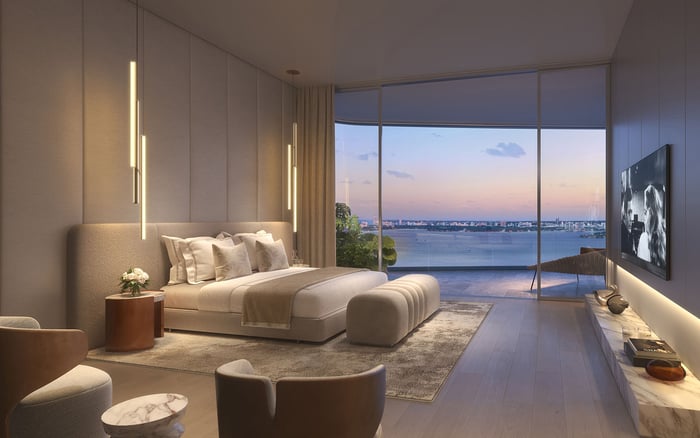
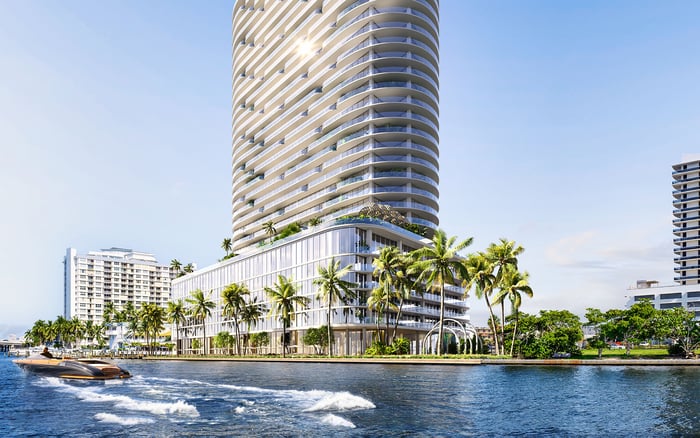
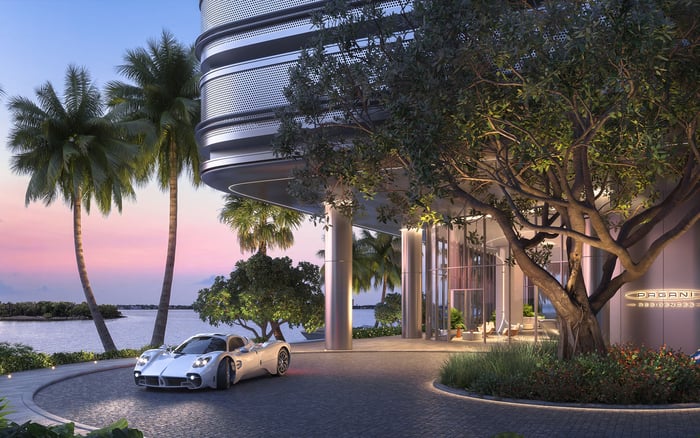
A buyer-focused comparison of Pagani North Bay Village and EDITION Edgewater, contrasting marina utility, branded hospitality, and the distinct waterfront lifestyles each project is designed to serve.
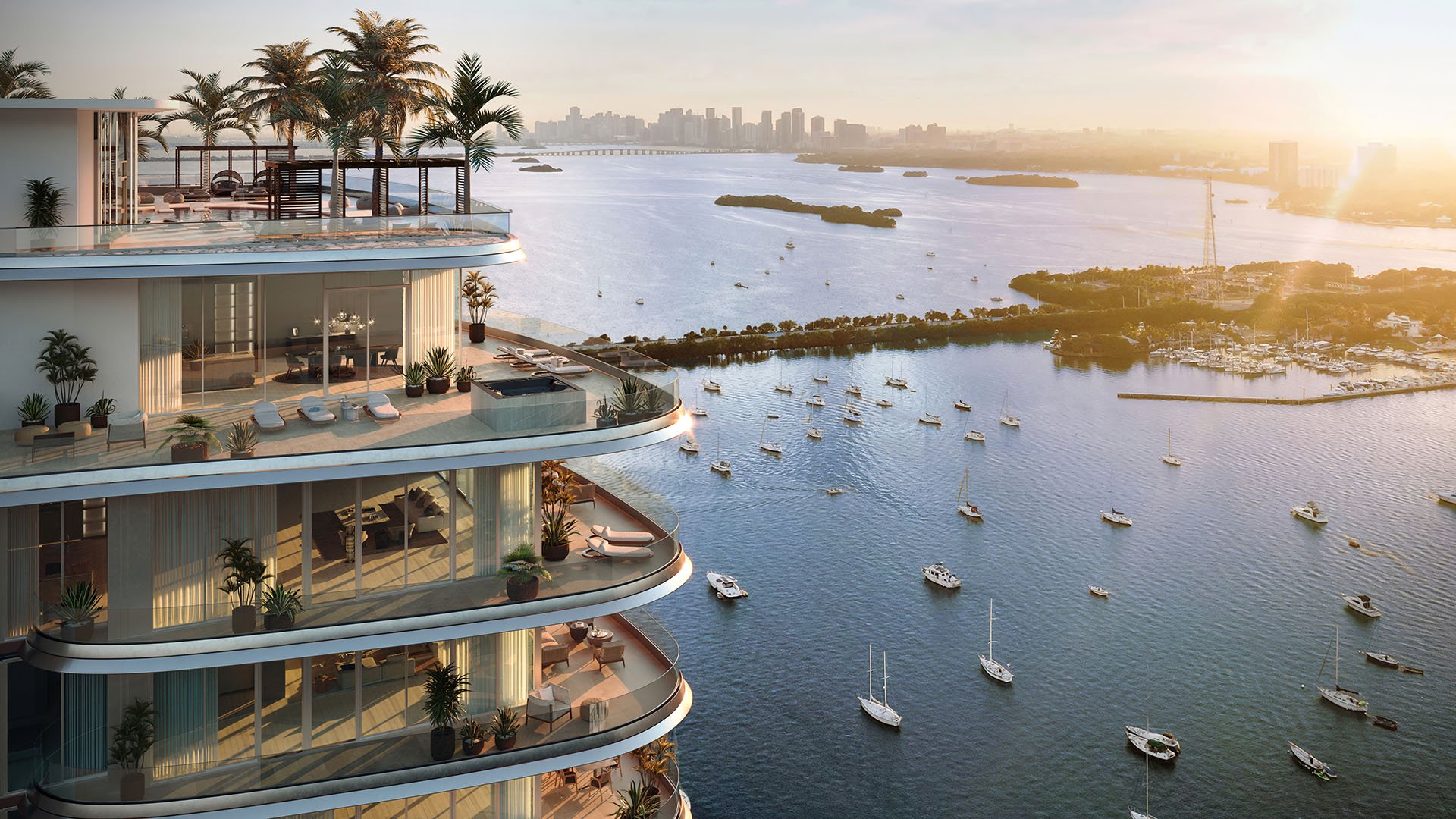
For South Florida buyers shopping the top tier of new waterfront product, Pagani North Bay Village and EDITION Edgewater represent two distinct definitions of luxury. Both sit within Miami’s broader bayfront ecosystem. Both appeal to affluent buyers who expect design, privacy, and a polished residential experience. But the similarities largely end there.
At Pagani, the core proposition is functional access to the water. The project is conceived around a marina-centric lifestyle, with deep-water slips that make the residence part of a larger boating routine. At EDITION Edgewater, the emphasis shifts to branded hospitality: lounges, service, spa-oriented amenities, dining, rooftop pool experiences, and a more social expression of waterfront ownership.
This is less a debate over which address feels more elevated and more a question of what kind of daily life each property is designed to support. One offers home-to-yacht convenience in North Bay Village. The other offers a bayfront hospitality environment in Edgewater.
The defining feature at Pagani North Bay Village is its collection of 84 deep-water yacht slips designed for vessels up to 120 feet. In Miami, where quality slip inventory for larger boats remains limited, that is not a decorative feature. It is a meaningful lifestyle asset.
That distinction matters because many waterfront condominiums trade on views rather than true marine functionality. Pagani reverses that equation. The project’s strongest appeal is to buyers who do not simply want to look at Biscayne Bay, but to use it spontaneously and often. Direct bay access makes the boating experience part of the home itself, not a separate membership or logistical detour.
Within marina-oriented real estate, this creates a different value structure. A residence with immediate slip access can hold appeal beyond architecture and interiors because the marine component is tangible, scarce, and closely tied to owner behavior. For the buyer with a serious vessel, convenience carries measurable emotional and practical value. Early departure windows, crew access, provisioning, and boat-to-residence transitions all become easier when the dock is integrated into the project.
That is why Pagani belongs in the same broader conversation as other water-minded offerings such as Continuum Club & Residences North Bay Village and The Ritz-Carlton Residences® North Bay Village, where waterfront orientation is central to identity, even if the amenity logic differs.
EDITION Edgewater is aimed at a buyer who values bayfront living through a hospitality lens. Instead of slips and vessel accommodation, the proposition centers on refined shared spaces, service-driven daily life, and the pull of a globally recognized luxury brand.
That means lounge environments matter here. Spa access matters. Dining matters. Concierge-style support matters. The rooftop pool and social programming matter. The project is less about operational boating utility and more about how seamlessly hotel-grade service can be translated into a private residential setting.
For many owners, that distinction is the entire point of branded living. In the EDITION Edgewater universe, luxury is not anchored to a dock. It is expressed through ease, atmosphere, and the assurance that the residential experience has been shaped by hospitality thinking. The buyer is paying for curation as much as for square footage.
This places the project in conversation with the evolving Edgewater corridor, where projects such as Aria Reserve Miami and Villa Miami reinforce the area’s position as a serious waterfront luxury address. Yet EDITION’s branded identity gives it a distinctly different posture: less purely residential, more service-intensive and socially expressive.
Geography is part of the comparison, but not in the conventional sense of commute times and neighborhood checklists. North Bay Village and Edgewater both address the same broad class of luxury waterfront demand while serving different rituals.
North Bay Village, as an island municipality set in Biscayne Bay, naturally reinforces a boating narrative. The setting supports the sense that life is organized around water access, movement, and privacy. A buyer choosing Pagani is often selecting a mode of living in which marine convenience is among the first filters, not a secondary preference.
Edgewater, by contrast, has evolved into one of Miami’s most visible bayfront residential corridors. Its appeal is distinctly urban, with a stronger emphasis on skyline adjacency, social energy, and proximity to the cultural and commercial pulse of the city. A branded project there benefits from this context because service-rich living feels aligned with the neighborhood’s rhythm.
In simple terms, Pagani asks: do you want your yacht integrated into your residence? EDITION asks: do you want your residence to feel like an exceptional hotel that happens to be yours?
The clearest way to separate these properties is by owner profile.
Pagani suits the buyer for whom boat-slip access is not aspirational language but an actual requirement. This owner may already keep a vessel or plans to do so. They understand the friction that comes with off-site docking, waitlists, or inconsistent marine access. For them, the slip is part of the residence’s usefulness, and usefulness at this level is a luxury in itself.
EDITION Edgewater suits the buyer who wants immersive service and a polished social environment embedded into daily life. This could be a primary resident who values convenience and hospitality, or a second-home owner who wants arrival to feel effortless from the moment they enter the lobby. The branded ecosystem becomes a form of reassurance.
There is also a valuation nuance here. Marina-centric projects can command attention because the slip functions as a scarce lifestyle asset. Branded residences, meanwhile, often derive value from service standards, programming, and international name recognition. Both can be compelling. They simply monetize different desires.
From an investment perspective, these are not interchangeable products. Pagani is tied to the scarcity logic of marine infrastructure, especially for larger vessels and direct bay access. That kind of practical rarity can create enduring appeal among a narrower but highly motivated buyer set.
EDITION Edgewater draws from a broader luxury audience, particularly buyers who place a premium on hospitality, brand affiliation, and a resort-like cadence of use. The address may resonate strongly with purchasers who are less concerned with nautical function and more focused on consistency of service and social cachet.
For that reason, the smarter purchase depends on whether the owner values exclusivity as function or exclusivity as experience. Pagani leans toward the first. EDITION Edgewater leans toward the second.
If boating is central to how you live, Pagani North Bay Village is the more coherent proposition. Its deep-water slip program is not a side amenity. It is the project’s organizing idea, and for the right buyer that is immensely compelling.
If, however, your version of waterfront luxury is defined by lounges, concierge culture, spa time, rooftop rituals, and a globally legible hospitality brand, EDITION Edgewater offers the stronger fit. It transforms bayfront ownership into a service experience.
Neither project is trying to win on the other’s terms. That is precisely what makes the comparison useful. In Miami’s upper residential tier, the best choice is often not the one with more amenities, but the one with the amenities you will actually use.
Is Pagani North Bay Village primarily a boating-focused project? Yes. Its defining differentiator is a marina-centered concept built around deep-water slips and direct Biscayne Bay access.
How many yacht slips are planned at Pagani North Bay Village? Publicly presented plans highlight 84 deep-water slips designed for vessels up to 120 feet.
What makes Pagani different from other waterfront condos? Its strongest distinction is functional marine utility, not just water views or general wellness amenities.
Is EDITION Edgewater more hospitality-driven than marina-driven? Yes. Its identity is rooted in lounges, spa and dining experiences, service, and branded residential living rather than boat infrastructure.
Who is the ideal buyer for EDITION Edgewater? A buyer who values branded service, curated shared spaces, and resort-style daily living over direct yacht storage.
Why does North Bay Village matter in this comparison? As an island setting in Biscayne Bay, it naturally supports owners who prioritize immediate water access and boating convenience.
Why does Edgewater appeal to luxury buyers? It is one of Miami’s most important bayfront residential corridors, with a more urban and socially connected luxury profile.
Can a boat slip add to a residence’s appeal? Yes. In a supply-constrained market, a deep-water slip can function as a scarce lifestyle asset alongside the home itself.
Do branded residences create value differently from marina projects? Typically, yes. Branded residences tend to derive their appeal from service, programming, and brand recognition rather than marine functionality.
Which project is better for a second-home owner? It depends on the owner’s habits: Pagani fits a boating-led routine, while EDITION Edgewater suits a hospitality-led one.
For a tailored shortlist and next-step guidance, connect with MILLION Luxury.
If branded residences are on your mind — as a home or as an allocation — we would be glad to share what we are seeing, privately.
Begin a quiet conversation