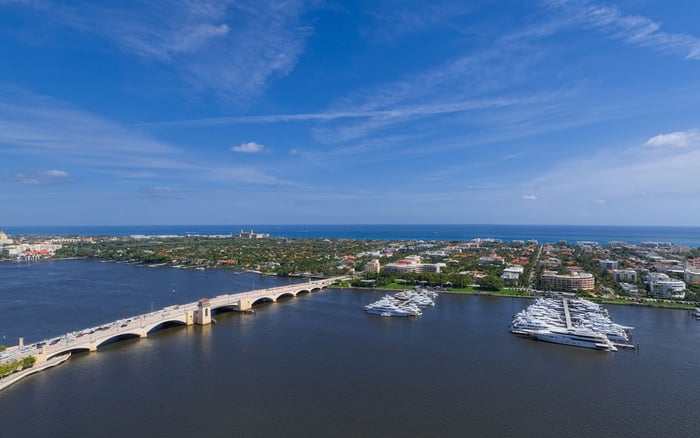
A refined residence deserves equally refined diligence. At The Bristol Palm Beach, buyers should examine municipal interests, permit history, parcel identity, seller disclosures, and condominium records as one coordinated pre-closing review.

At The Bristol Palm Beach, architectural presence and waterfront perspective naturally command attention. Yet the quality of a luxury acquisition is measured not only by what can be seen during a showing, but also by what the ownership record, municipal ledger, permit history, and condominium documents reveal before funds are released.
For a resale purchaser, a conventional title examination is essential, but it may not provide the entire municipal picture. A dedicated municipal lien search can help identify property-related balances, violations, receivables, or other interests requiring review. The buyer's attorney and title professional should determine which searches are appropriate for the residence and transaction.
The most valuable closing surprise is the one identified while the contract still provides time to address it.
A municipal lien search should be treated as a distinct diligence item rather than an assumed substitute for the title commitment. The practical objective is to identify potential issues early enough for the buyer's counsel and closing team to determine responsibility, request supporting documentation, and pursue an appropriate resolution before closing.
The purchaser should first confirm the precise condominium parcel and Property Control Number, commonly called the PCN. The legal description and property address should also be checked against the contract and title materials before a request is submitted. Precision matters because a search associated with the wrong identifier may not answer the questions relevant to the residence being acquired.
Buyers should also ask whether separate research is appropriate for an association or common-element parcel. In a vertical condominium, a condition may relate to an individual residence, a shared building component, or association-managed work. The answer should be coordinated among the buyer's attorney, title professional, inspector, and condominium-review team rather than assumed from the unit address alone.
A municipal balance and an open permit are distinct issues. Permit research may reveal work that remains administratively incomplete, including a permit awaiting final inspection or closure. The relevant records should be reviewed in the context of the correct property, jurisdiction, and scope of work.
That review should be matched against visible alterations and seller disclosures. If a residence features customized interior work, the buyer's professionals can compare the observed condition with available permit records and ask focused questions. The goal is not to infer a violation from sophisticated finishes. It is to determine whether work requiring municipal approval appears properly documented and whether an incomplete item warrants attention before ownership transfers.
This discipline applies throughout the local luxury market. A purchaser evaluating Forté on Flagler West Palm Beach and The Ritz-Carlton Residences® West Palm Beach should likewise align the correct parcel, jurisdiction, permit history, and association materials. The development profile may change, but the need for document-level accuracy does not.
Municipal and county records may address different categories of information, and the availability or applicability of a particular search should not be assumed. Before ordering a report, the closing team should confirm which governmental body has authority over the property and which record system is relevant to the question being asked.
A county inquiry, when applicable, should not automatically be treated as a replacement for a municipal search. The buyer's professionals should identify the appropriate search type, verify the required property identifiers, and allow enough contractual time to receive and evaluate the results.
Timing deserves equal care. A report may lead to requests for clarification, payment records, inspection evidence, or documentary closure. Ordering near the end of a review period can leave too little time to evaluate a finding and determine how it should be addressed under the contract.
A lien or permit entry should not be viewed in isolation. Compare it with the seller's disclosures, condominium questionnaire, association records, meeting minutes, budgets, reserves, pending assessments, insurance information, and physical-inspection findings. This broader review can help the buyer's team determine whether a matter concerns the residence, common elements, or work overseen by the association.
For waterfront condominium ownership, that distinction can influence the questions asked before closing. An entry tied to the unit may call for seller documentation or corrective action. A matter associated with common property may require association confirmation, board records, or analysis of potential financial exposure. Neither should be characterized without current, property-specific documentation.
The same framework can inform comparisons with Shorecrest Flagler Drive West Palm Beach and other Palm Beach-area opportunities. It is not a judgment on any building; it is a consistent discipline for assessing title, municipal, physical, and association information together.
The review should begin promptly after contract execution. Start by verifying the legal description, property address, parcel, and PCN. Then order the municipal lien report and appropriate permit research, confirming whether any additional jurisdictional search applies before committing time or fees. Finally, compare the results with title materials, seller disclosures, inspection observations, and association records.
If a balance, code matter, open permit, or incomplete inspection appears, the closing team should identify the responsible party and the documentation required for resolution. Depending on the issue and the contract, counsel may consider payment, correction, permit closure, written confirmation, or another negotiated arrangement. Legal interpretation and contractual remedies belong with the buyer's Florida attorney.
This article does not identify a lien, violation, or open-permit issue affecting a particular Bristol residence. Current property-specific searches are necessary to evaluate the precise property under consideration, and they should be obtained early enough to allow meaningful follow-up.
For discreet guidance on acquiring at The Bristol and across South Florida, connect with MILLION.
If branded residences are on your mind — as a home or as an allocation — we would be glad to share what we are seeing, privately.
Begin a quiet conversationIt can identify property-related municipal interests or balances that may require review before closing.
Not necessarily. The buyer's attorney and title professional should determine which searches are appropriate for the transaction.
Confirm the property address, legal description, condominium parcel, and Property Control Number before submitting a request.
Permit research may identify work that remains open, awaits final inspection, or requires administrative closure.
Municipal and county systems may cover different records. The closing team should confirm which authority and search type apply to the property.
The buyer's team should determine whether separate research is appropriate for an association or common-element parcel connected to the transaction.
The buyer's professionals should compare available records with visible alterations, seller disclosures, and inspection findings.
Review it alongside title materials, seller disclosures, association records, budgets, meeting minutes, insurance information, and inspection findings.
The closing team should identify responsibility and determine what documentation or action is required under the contract.
No. Current property-specific searches are needed to evaluate the particular residence under consideration.