Palm Beach’s winter activity turns entertaining capacity from a floor-plan concept into an operational question. Buyers should examine service circulation, acoustic privacy, parking, public-space exposure, and property-specific restrictions before treating a residence as event-ready.

Palm Beach’s winter activity can change how a buyer evaluates a residence. A gracious dining room or expansive terrace may create an appealing first impression, but practical hospitality depends on how guests, staff, deliveries, vehicles, sound, and equipment move through the property.
A useful inspection follows an event from arrival through departure. Where will guests enter? Can caterers reach preparation and dining areas without crossing the principal reception route? Is there a discreet place for deliveries, rentals, refuse, coats, and staff belongings? What happens if an outdoor gathering must move inside?
In season, entertaining capacity is measured by operations, not invitations.
Winter also provides a stronger setting for judging privacy, street activity, neighboring occupancy, and the relationship between indoor and outdoor spaces. For buyers considering Palm Beach estates, condominiums, or residences in West Palm Beach, those conditions can reveal constraints that are less obvious during a quiet showing.
Room dimensions alone do not determine how many people a home can host comfortably. Practical capacity is shaped by circulation, staging, parking, restroom access, sound control, and the ability to keep production separate from the guest experience.
Trace at least two routes through the property. The guest route should feel clear and composed, from arrival to reception areas and onward to dining or outdoor spaces. The service route should connect loading, preparation, staging, and cleanup areas without unnecessary movement through formal rooms. Larger gatherings may also require a separate plan for florals, furniture rentals, equipment, or breakdown.
Inspect gates, side yards, corridors, elevators, loading areas, service entrances, and transitions between the kitchen and entertaining spaces. A visually striking terrace may be less useful if every chair, tray, and linen must pass through the primary living room. Likewise, generous grounds do not automatically resolve parking, delivery, or neighborhood-impact concerns.
This operational approach applies across property types. A buyer considering Palm Beach Residences can use the same core framework as someone comparing condominiums in West Palm Beach, while adapting the review to the residence, management structure, and applicable governing documents. The goal is not to presume particular services or permissions, but to test whether the property supports the buyer’s preferred style of hospitality.
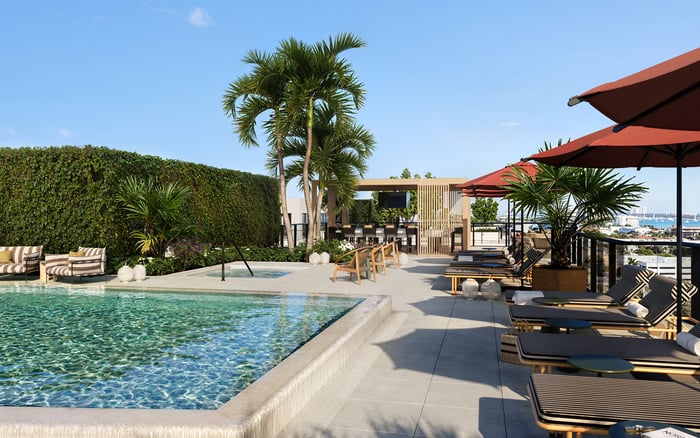
Outdoor living is an important part of Palm Beach entertaining, but acoustic privacy can determine how comfortably an evening progresses. Buyers should consider the relationship between terraces, pools, neighboring homes, shared spaces, streets, and indoor rooms rather than evaluating each area in isolation.
Listen as carefully as you look. Mechanical systems, catering equipment, generators, music, guest conversation, and nearby activity can alter the atmosphere. Landscaping, walls, setbacks, glazing, doors, and room placement may influence how sound travels, but their effectiveness should be assessed at the individual property.
An adaptable plan allows a gathering to transition indoors without disrupting its flow. Enclosed entertaining rooms, convenient circulation, and separation from private bedroom areas can make a residence more versatile. Buyers should also confirm any applicable municipal, county, association, or building requirements instead of assuming that one standard applies throughout Palm Beach County.
Successful entertaining often depends on production remaining largely out of sight. Buyers should evaluate preparation surfaces, refrigeration, power access, refuse holding, restrooms, protected staging areas, and the route between food preparation and service zones. The relevant question is not simply whether a kitchen is attractive, but whether the full service sequence can operate efficiently.
Parking and loading deserve equal attention. Determine where vendors can stop, how equipment enters, where staff may park, and whether setup would obstruct residents, neighbors, or public areas. In a condominium, buyers should ask about vendor entry, elevator use, delivery procedures, scheduling, management approval, and documentation requirements. Answers should come from current property records and authorized representatives.
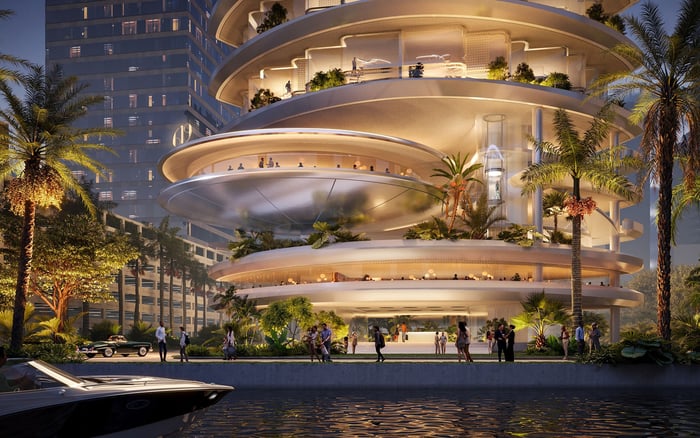
Potential comparisons may include Forté on Flagler West Palm Beach, The Ritz-Carlton Residences® West Palm Beach, and Mandarin Oriental Residences, West Palm Beach. Each should be evaluated through its residence layouts, current building policies, service procedures, and the buyer’s anticipated guest profile. Entertaining imagery is not a substitute for operational diligence.
A private residence may be affected by municipal rules, county requirements, association documents, building policies, deed restrictions, or other property-specific controls. The applicable framework can depend on the exact location, property type, event format, proposed setup, use of amplified sound, parking plan, and whether any activity extends beyond private property.
Buyers should not assume that an adjacent street, right-of-way, beach, lobby, elevator, or common area can support event operations. Any plan involving spaces outside the residence requires careful review with the appropriate authority or property representative. The same applies to tents, stages, generators, valet operations, vendor loading, and temporary equipment.
Because requirements can differ across the Town of Palm Beach, West Palm Beach, and other Palm Beach County municipalities, the correct jurisdiction should be identified before relying on general guidance. Current rules, approvals, fees, and procedures should be confirmed directly during planning.
During an appropriate diligence period, buyers can request available records related to prior event approvals, complaints, violations, or recurring disputes. They should also review surveys, association documents, building rules, and written restrictions affecting vendors, deliveries, parking, music, temporary installations, common areas, and outdoor use.
A paper rehearsal can expose weak points before they become ownership problems. Map guest arrival, vehicle flow, vendor loading, kitchen access, staging, outdoor gathering areas, indoor alternatives, restroom access, refuse handling, and departure. Mark every point where activity could affect a street, public area, common element, or neighboring property.
The resulting guest count may differ from what the floor plan appears to accommodate. That is useful information: realistic capacity is the scale at which the property can preserve comfort, discretion, and orderly service while remaining consistent with applicable rules.
Not every occasion needs to test a residence’s maximum capacity. A home may perform best for controlled dinners, cocktails, and receptions, while events involving heavier traffic, extensive production, or amplified entertainment may be better considered in a professionally managed setting.
This approach allows buyers to prioritize the gatherings they expect to host most often. Rather than pursuing the largest theoretical capacity, they can focus on a residence that performs elegantly at a comfortable scale and offers a clear operational plan for arrivals, service, sound, and cleanup.
For confidential guidance on selecting a South Florida residence aligned with your entertaining priorities, connect with MILLION.
If branded residences are on your mind — as a home or as an allocation — we would be glad to share what we are seeing, privately.
Begin a quiet conversationWinter conditions can provide a clearer view of privacy, traffic, neighboring occupancy, outdoor use, and service access. Buyers can then assess how the property performs when the surrounding area is active.
No. Circulation, parking, sound, staging, restrooms, and property restrictions may reduce the number of guests a residence can host comfortably.
They should trace routes from loading and staging areas to kitchens and entertaining spaces. Staff movement should remain as separate as possible from primary guest paths.
Sound from guests, music, equipment, and mechanical systems can affect neighbors and private areas of the home. Buyers should assess indoor and outdoor sound conditions at the specific property.
They should ask about vendor entry, elevator use, delivery procedures, scheduling, management approval, documentation, common areas, and current building rules.
No. Any proposed use of streets, rights-of-way, beaches, lobbies, elevators, or other shared areas should be verified with the appropriate authority or property representative.
No. Requirements may vary by municipality, property type, association, building, event format, and proposed use of private or public space.
Review on-site capacity, vehicle flow, valet staging, vendor loading, delivery access, and the possibility of activity affecting neighboring or public areas.
Buyers can request available event approvals, complaints, violations, association documents, building rules, surveys, and written use restrictions.
Use the residence for gatherings that fit its circulation and privacy limits. Consider a professionally managed setting when an event requires heavier traffic, extensive production, or amplified entertainment.