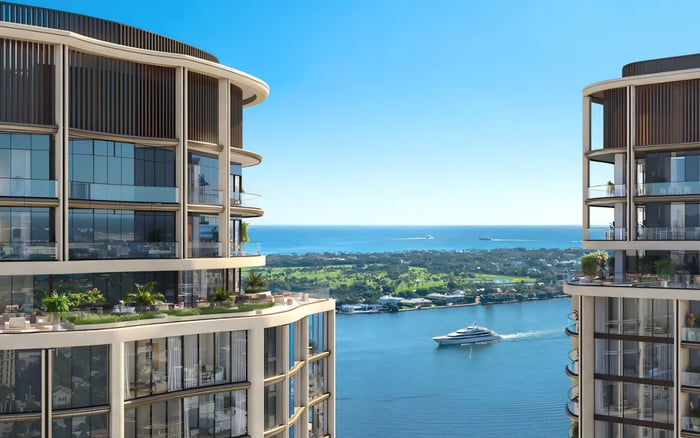
Buyers considering Nora House should examine the domestic-water infrastructure behind the residence, including pressure zoning, booster capacity, controls, commissioning records and backup-power coverage before closing.

At Nora House West Palm Beach, ownership due diligence should extend beyond visible finishes. Domestic-water infrastructure is one of the building systems worth examining because the experience inside a residence can depend on how water is delivered, regulated and maintained.
A buyer does not need to redesign the system or become a mechanical engineer. The practical objective is to understand which equipment serves the selected home, what records document performance and how the building is expected to respond during maintenance or a power interruption.
In a luxury tower, water pressure is both an engineering question and a daily comfort issue.
The same framework can help buyers compare Nora House with Alba West Palm Beach and other West Palm Beach residences. Every property requires a separate review, and a link to another project is not a statement about its mechanical design.
A general description of building water pressure does not answer the most important ownership question: how is the selected residence served? Buyers should ask the project team to identify the applicable pressure zone, the equipment assigned to it and the expected operating range at the home.
The review should also account for the residence’s fixtures. Rather than relying on a broad pressure figure, ask whether the design criteria address the fixtures specified for the home and whether testing was completed at representative outlets. This connects the central system to the actual ownership experience.
Floor level can also be part of the inquiry. Buyers should request an explanation of how the system manages pressure across the building and where pressure-regulating equipment is located. The answer should be supported by current project documents rather than a verbal summary alone.
A focused request can begin with the domestic-water riser diagram, pressure-zone diagram, booster-pump schedule and locations of pressure-regulating and isolation valves. Together, these materials can show the path from the building supply to the selected residence and identify the equipment involved.
The buyer’s team should compare design documents with final installed-condition records when those records are available. If documents differ, the project team should explain which version reflects the completed system and how any changes were reviewed.
Equipment schedules deserve close attention. Ask for the operating sequence, control narrative and available maintenance information for pumps, tanks, valves and related components. The purpose is to understand how the equipment is intended to work as a coordinated system rather than viewing each component in isolation.
Isolation is another practical concern. A buyer can ask which valves permit service to a pump, regulator or section of piping and what portion of the building may be affected during planned work. The answer can help distinguish routine maintenance from a broader interruption.
A statement that a building has multiple pumps does not, by itself, explain what happens when one unit is unavailable. Buyers should ask the project team to describe the intended operating condition during maintenance or equipment failure and identify the documents or test records supporting that response.
Controls are part of the analysis. Relevant questions include whether pumps alternate, how a fault is detected, where alarms are reported and who is responsible for responding. The answers should address the full sequence from detection through corrective action.
Buyers comparing Nora House with Forté on Flagler West Palm Beach can use the same checklist while keeping each review project-specific. Mechanical redundancy should be evaluated through the applicable documents and measured results for the property under consideration.
Design drawings describe an intended system. Commissioning and functional-test records can help a buyer understand how the installed equipment performed when tested. Request the available results for pressure, flow, pump sequencing, alarms and relevant failure scenarios.
The buyer’s inspector or qualified engineer can review whether the test conditions are meaningful for the selected residence. Useful questions include where measurements were taken, which equipment was operating and whether open items were resolved after testing.
A simple pass designation may not provide enough context. Ask for the underlying record when available, including the observed result and any corrective work. If final testing has not occurred, the buyer’s advisers can identify what remains outstanding and how it should be addressed within the transaction process.
Mechanical redundancy and electrical resilience are separate issues. Buyers should request a clear description of which domestic-water pumps, controls, alarms and pressure zones are covered by backup power. The response should be specific to the residence rather than framed only as a building-wide assurance.
The operating sequence during loss of normal power is equally important. Ask what starts automatically, whether service changes under backup operation and how the system has been tested in that mode. If restrictions are anticipated, they should be explained before closing.
For a second home or investment residence, remote alarm reporting and response procedures can matter while the owner is away. Buyers can ask where alerts are sent, who receives them and how qualified service personnel gain access when intervention is required.
Even a carefully designed system depends on continuing inspection and service. Available maintenance materials can help buyers understand recommended pump rotation, valve checks, alarm testing and other recurring tasks. The review should also identify who is responsible for maintaining shared equipment.
Records can be particularly useful when they show whether identified issues were closed. A buyer’s adviser can compare maintenance entries with commissioning items, warranty information and current observations without assuming that one record tells the entire story.
The purpose is not to predict every interruption. It is to determine whether there is a documented process for monitoring the system, isolating equipment and responding when performance departs from expectations.
The final analysis should bring together the selected residence, its pressure zone, the serving equipment and the available evidence of installed performance. Counsel, the buyer’s inspector and a qualified engineer can coordinate requests and flag inconsistencies that require clarification.
The same discipline applies when considering The Ritz-Carlton Residences® West Palm Beach or another Palm Beach County project. Each property should be evaluated on its own approved documents, installed systems and available testing records.
At Nora House, a careful buyer can use this process to move beyond broad assurances. Identifying the relevant pressure zone, reviewing redundancy, examining commissioning evidence and clarifying backup-power coverage can produce a more informed ownership decision.
For discreet guidance on South Florida residences and buyer due diligence, connect with MILLION.
If branded residences are on your mind — as a home or as an allocation — we would be glad to share what we are seeing, privately.
Begin a quiet conversationThe review can clarify how the selected residence is served and what records support expected performance. It also helps buyers identify questions requiring technical follow-up before closing.
Request the domestic-water riser, pressure-zone diagram, booster-pump schedule and valve locations. Available control narratives and installed-condition records can add context.
The pressure zone identifies the part of the system serving the selected home. Buyers should confirm it through current project documentation.
Ask which pumps serve the residence, how they are controlled and what happens when one is unavailable. Supporting schedules and test records should be reviewed when available.
Not by itself. The operating sequence, equipment capacity, controls and documented performance should be considered together.
They can connect design intent with observations from testing of the installed system. Buyers should review the test conditions, results and resolution of open items.
They should identify which pumps, controls, alarms and pressure zones receive backup power. They should also request the applicable operating sequence and test information.
Their locations can help explain how equipment or piping may be serviced. Buyers should ask what areas could be affected during planned maintenance.
A buyer can coordinate the review with counsel, an inspector and a qualified engineer. The appropriate team depends on the documents and issues involved.
Yes, as a general framework. Each property still requires a separate review of its own documents, systems and available testing records.