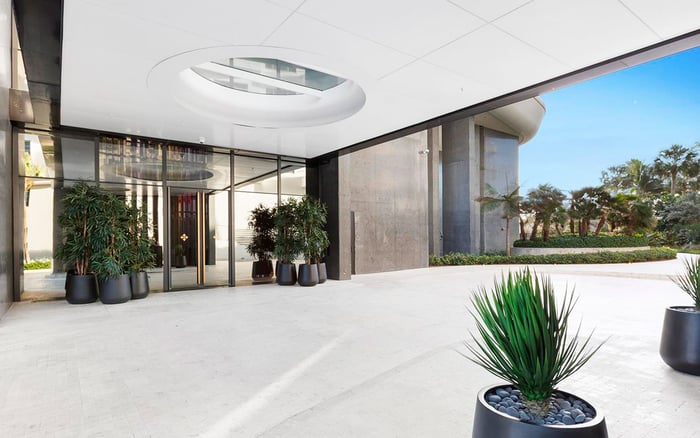
At Continuum, a Government Cut outlook does not itself confer dockage or tender-landing rights. Yacht owners should verify the complete shore-side operating chain in writing, from the off-site marina and recurring crew access to parking, loading, freight elevators, insurance, and event arrivals.
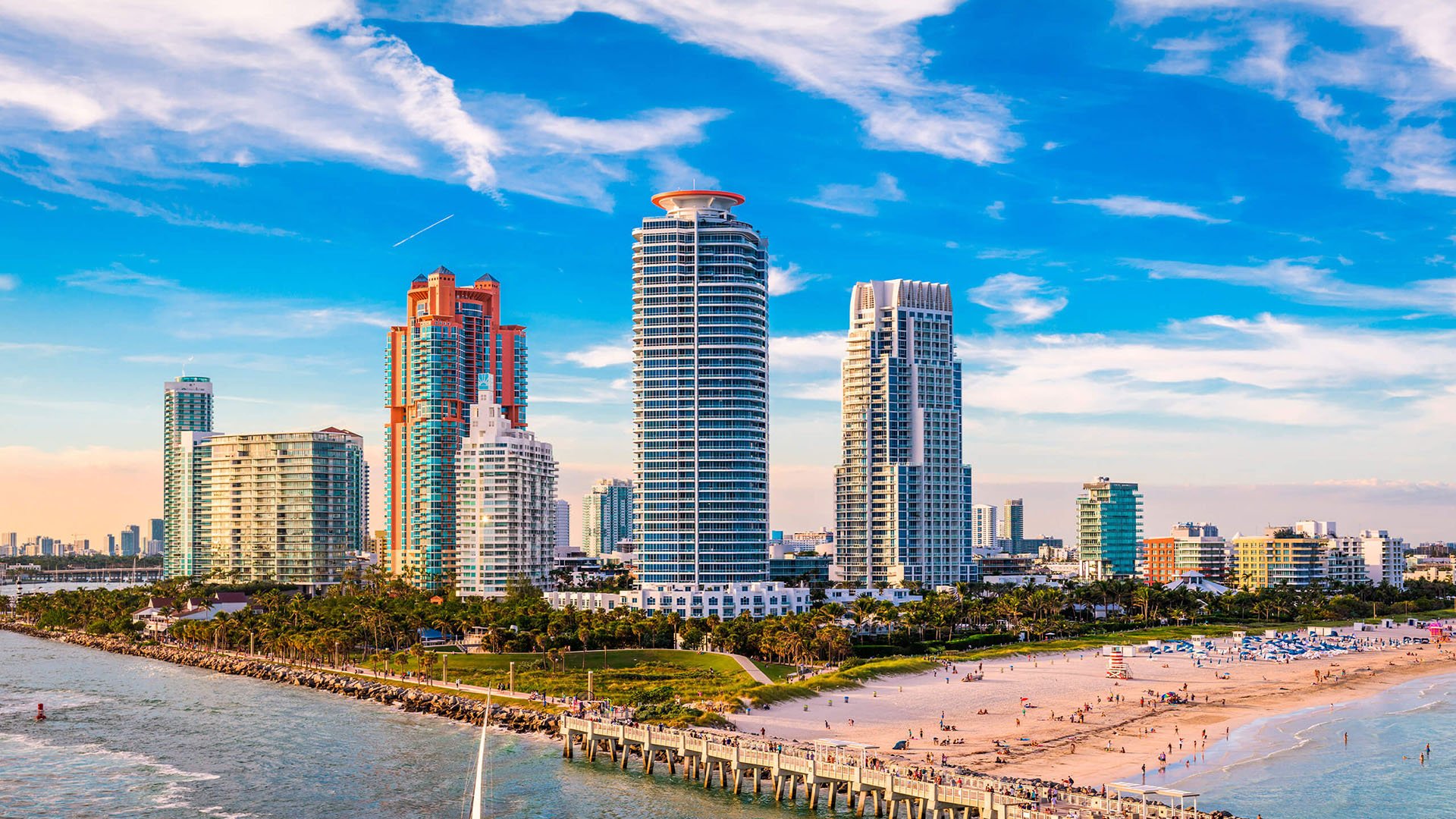
At Continuum on South Beach, the appeal to a yacht owner is immediately clear. The two-tower condominium occupies the southern tip of Miami Beach, with the North Tower at 50 South Pointe Drive and the South Tower at 100 South Pointe Drive. The community overlooks Government Cut, the channel between South Beach and Fisher Island used by PortMiami traffic.
Yet waterfront visibility is not physical access. The property’s 12-acre oceanfront setting includes private grounds, pools, fountains, and more than 1,000 linear feet of direct beach access. None of those features clearly establishes an on-site marina, resident slips, a private tender dock, or the right to land a tender on the sand.
For a buyer, the central question is operational: Can an off-site yacht arrangement integrate smoothly with the condominium’s security, parking, guest-entry, and delivery procedures?
Treat every reference to a marina, harbor frontage, or beach access as descriptive until the governing documents and management provide written confirmation. A label such as “marina” should never be interpreted as proof of a deeded boat slip, transient dockage, or tender-landing privilege.
Ask the relevant tower management and the Master Association whether any landing or docking rights exist. Separately confirm with the City of Miami Beach where tenders may land, the permitted operating hours, and whether routine beaching is prohibited. Direct access to the beach and boardwalk does not, by itself, authorize tender operations.
This distinction matters across the local luxury market. Buyers comparing Apogee South Beach or The Ritz-Carlton Residences® South Beach should apply the same rule: Waterfront context is no substitute for documented marine rights.
A practical ownership model is to keep the yacht at Miami Beach Marina and use the residence as the owner’s shore base. The arrangement can be elegant, but it requires separate diligence. Confirm slip availability, vessel-length and draft limits, utilities, fueling, waste handling, security, and crew-parking terms directly with the marina operator.
Then test the connection between the marina and residence. Request written valet and garage rules covering repeated marina runs, guest vehicles, crew cars, contractors, curbside unloading, and oversized or refrigerated delivery vehicles. The North Tower has assigned, covered, secured parking and a garage designed to accommodate two cars per unit, but those details do not establish rights for crew or vendors.
Lifestyle convenience depends on the least flexible link in this chain. A beautiful residence can still be an inefficient yacht base if drivers cannot stage, crew cannot enter predictably, or provisions cannot move through service areas on schedule.
Captains, chefs, engineers, and other crew should expect controlled visitor or vendor procedures. Before closing, determine whether recurring crew members can be pre-registered, what identification is required, whether vendor credentials or background checks apply, and which entrance they must use.
The answer may differ by tower or by the purpose of the visit. Separate contacts serve the North Tower, South Tower, and Master Association, so direct questions to every relevant party and reconcile any inconsistent responses in writing.
Owners planning yacht events should also confirm guest-list procedures and front-desk capacity for groups arriving from the marina within a short period. South Pointe Park may make pedestrian movement near the South Tower convenient, but public routes do not necessarily authorize commercial crew circulation or provisioning.
Provisioning diligence should follow every handoff. Obtain written rules identifying the designated service entrance, loading hours, freight-elevator reservation process, cart limits, pallet-handling procedures, refrigeration constraints, and delivery surcharges.
Professional provisioners may need pre-clearance, specified insurance limits, and certificates of insurance before moving food, beverages, linens, spares, or equipment through the property. Clarify whether refrigerated vehicles can wait at the curb, whether deliveries must be divided into smaller loads, and how conflicts with household moves or other reserved elevator periods are handled.
Buyers exploring other Miami Beach residences, including Five Park Miami Beach and Setai Residences Miami Beach, can apply the same curb-to-residence test. The relevant luxury is not simply arrival; it is repeatable, discreet execution.
Request current condominium declarations, rules, parking policies, service-access procedures, insurance requirements, and any forms required for recurring guests or vendors. Ask management to address a realistic operating schedule rather than answer a general question about whether crew are “allowed.”
If the residence will support charter activity, review use restrictions, commercial-activity rules, noise limits, and policies governing frequent crew and vendor circulation. Informal assurances from a broker, concierge, or resident should never replace written confirmation from the parties empowered to administer the property.
The strongest due-diligence file documents the complete sequence: yacht to marina, marina to tower, crew through security, provisions through loading, and guests through reception. That is the standard by which Continuum should be assessed as a shore base.
Does Continuum have confirmed resident yacht slips? Resident slips are not clearly established. Obtain written confirmation from tower management and the Master Association before relying on dockage.
Can an owner routinely land a tender on the beach? Beach access does not establish tender-landing rights. Confirm permitted locations, hours, and beaching restrictions with the city and condominium association.
Is a marina amenity label proof of dockage? No. The label may refer to nearby access or waterfront context rather than deeded slips or transient facilities.
Can Miami Beach Marina serve as the yacht’s base? It may support that operating model, subject to separately verified availability, vessel limits, utilities, security, and crew terms.
Does residential parking include crew vehicles? Not necessarily. Confirm crew, vendor, contractor, guest, and delivery-vehicle rights under the current valet and garage rules.
Can recurring crew be pre-registered? Buyers should ask whether pre-registration is available and document all identification, credential, background-check, and entrance requirements.
What should provisioning rules cover? They should address loading hours, service entrances, freight elevators, carts, pallets, refrigeration, insurance, and surcharges.
Which Continuum office should answer yacht-related questions? Contact the relevant tower management and the Master Association, then obtain aligned written responses before closing.
Can the residence function as a charter shore base? Only after reviewing commercial-use restrictions, noise rules, and policies for frequent crew, guests, and vendors.
What is the decisive ownership test? Determine whether the off-site marina, transportation, security, parking, crew-entry, and delivery systems work together reliably.
When you're ready to tour or underwrite the options, connect with MILLION.
If branded residences are on your mind — as a home or as an allocation — we would be glad to share what we are seeing, privately.
Begin a quiet conversation