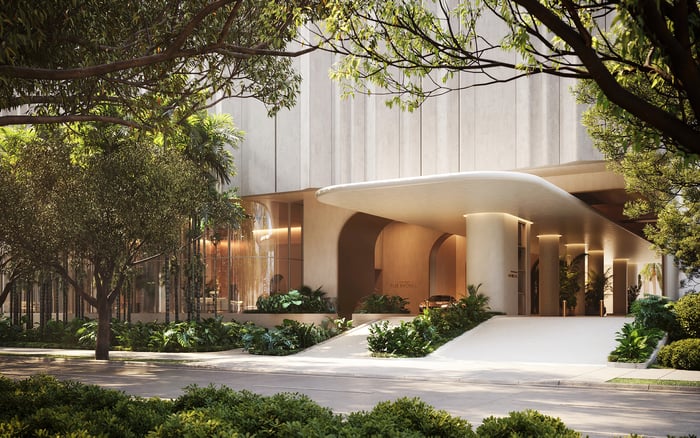
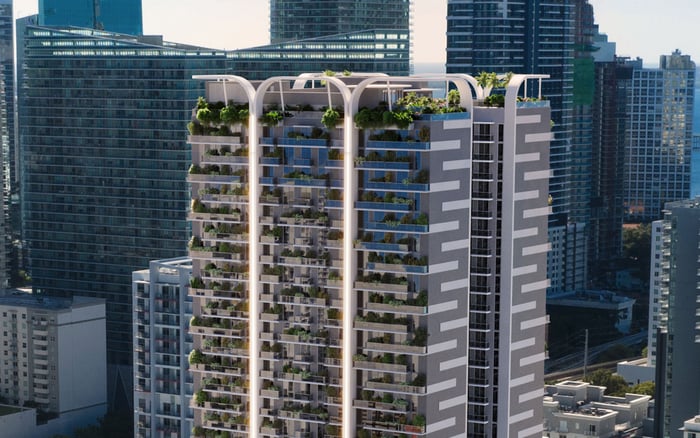
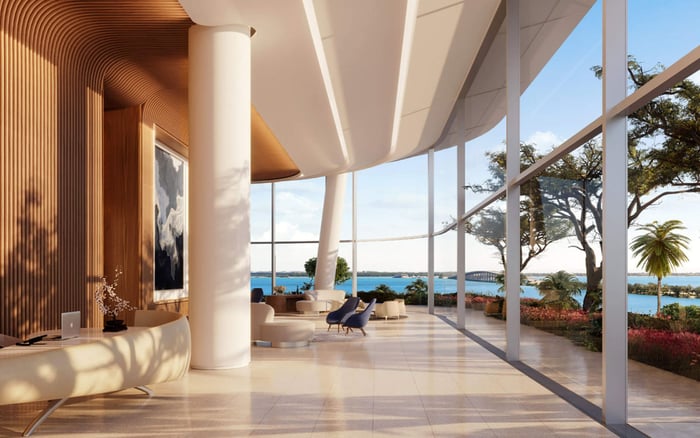
Colette pairs a boutique 38-residence plan with an extensive wellness and social program. For buyers, the essential next step is to test the amenity promise against binding capacity, reservation, fee, and guest-access rules.
At Colette Residences Brickell, the appeal is deliberately intimate: a boutique five-story project planned for 1880 Brickell Avenue in South Brickell, with 38 residences and more than 15,000 square feet of advertised amenities. That ratio is compelling. Yet ownership due diligence should focus less on amenity square footage in isolation and more on how each space will be shared in practice.
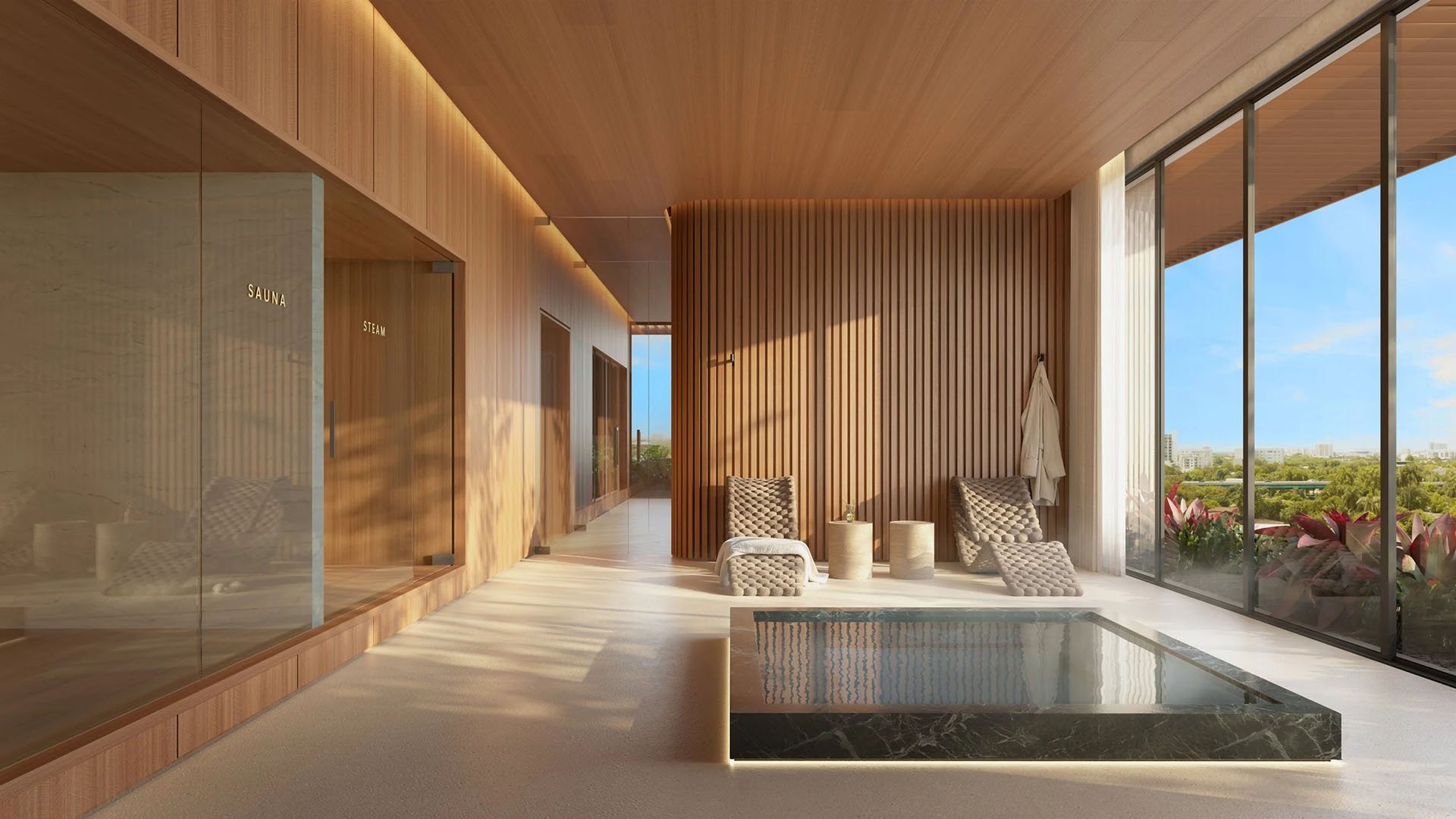
The rooftop program centers on a 50-foot swimming pool beside a 5,200-square-foot sun deck with private cabanas. The spa includes a jacuzzi, sauna, and massage room, while a TECHNOGYM fitness center extends onto an outdoor wellness deck intended for yoga, stretching, and relaxation. These are meaningful lifestyle components, but their practical value will depend on capacity limits, reservation priority, session duration, guest permissions, and the rules governing competing requests.
Amenity value is determined not only by design, but by reliable access.
This distinction is especially important in pre-construction and new-construction purchases. Marketing presents the vision; the condominium documents, budget, management structure, and adopted rules define the ownership experience.
A 38-home building has a limited potential resident population, which may support a quieter atmosphere than a much larger tower. Still, a low residence count does not guarantee immediate access. Demand can converge at the same hours, particularly around the pool, cabanas, sauna, massage room, and outdoor wellness deck.
A buyer should ask for the intended occupancy of each amenity and whether that limit includes children, visitors, service providers, or staff. The next questions concern allocation: Will the cabanas be first-come, first-served or reservable? Can one residence hold multiple cabanas? Is the massage room available for personal use, outside practitioners, or building-arranged services? Are sauna and jacuzzi sessions timed during busy periods?
Pool and spa occupancy limits, booking windows, time limits, cancellation policies, and peak-period restrictions remain to be confirmed. That uncertainty does not establish that the rules will be either restrictive or permissive. It simply leaves crucial operating details unresolved before a buyer assigns value to availability.
For context within the broader Brickell consideration set, buyers may also review 2200 Brickell and House of Wellness Brickell. The useful comparison is not a checklist of amenity names, but the degree to which access, costs, and daily use are documented.
Reservation policy can determine whether a desirable room feels like a private extension of the residence or an occasional privilege. At Colette, that question extends beyond wellness. Indoor and outdoor lounges, a catering kitchen, screening room, children’s playroom, and meeting room all create potential scheduling conflicts.
Buyers should request the booking window for every reservable space, along with resident priority, session limits, cancellation penalties, no-show consequences, and holiday restrictions. They should also determine whether reservations attach to a person, a residence, or an ownership interest-and whether simultaneous bookings are permitted across different spaces.
The catering kitchen and lounges merit particular attention. Ask whether a private dinner displaces general resident access, whether event setup and cleanup consume part of the reservation period, and whether deposits, staffing, cleaning, security, or other separate charges apply. The same questions apply to the screening and meeting rooms, especially if recurring reservations are possible.
A boutique environment may make informal accommodation seem plausible, but predictable rules protect all owners. Clear procedures reduce the likelihood that access depends on personal relationships, staff discretion, or uneven enforcement.
Colette describes amenity access as exclusive to residents and their guests, but guest caps, advance registration, independent entry, and resident-accompaniment requirements remain to be clarified. This matters because the building also advertises advanced access control, continuous surveillance, four password-protected private elevators, a separate service elevator, and 24/7 concierge and front-desk service.
The buyer’s task is to understand how those systems connect. Can a guest receive a temporary credential? Does that credential permit access only to the lobby, a residence, or selected amenities? Must the resident meet the guest at the front desk and remain present? Can instructors, massage practitioners, caterers, and event staff use the same process, or must they follow service-entry rules?
Parking adds another layer. Each residence is marketed with two to three dedicated spaces in a covered self-parking garage, while on-demand or 24/7 valet is presented as an alternative. Buyers should confirm where visitors park, whether guest parking carries a fee, and whether event attendance can be accommodated without affecting resident service. Level 2 electric-vehicle charging, private residential storage, and bicycle storage are also part of the advertised program, so their allocation and access procedures should be reviewed alongside the wellness rules.
Buyers considering another South Brickell option can include St. Regis® Residences Brickell in their review. Again, the disciplined comparison is how written policies coordinate hospitality, privacy, and controlled circulation.
The essential file should include the condominium declaration, proposed rules and regulations, association budget, management agreement, and any draft amenity policies. These materials should be read together. A reservation right may appear generous, for example, while the budget identifies separate staffing assumptions or user charges that alter its practical value.
The association budget deserves close attention because an extensive program requires operation and upkeep. Rather than predicting unspecified costs, buyers should identify which services are included in common expenses and which may be charged directly. Spa treatments, private events, cleaning, staffing, valet use, guest parking, and third-party instruction all warrant explicit questions.
Management authority matters as well. Determine who may amend booking windows, impose capacity restrictions, establish fees, suspend privileges, or close a space. Ask what notice owners receive and whether certain policies require board action. If draft rules are not final, the buyer should understand which provisions may change before occupancy.
For readers who use buyer’s guides to evaluate luxury condominiums, the central principle is simple: do not convert marketing language into an assumption of guaranteed use. A large amenity allocation and a small collection of residences are encouraging inputs, not substitutes for binding operating standards.
Before committing, buyers should seek written answers to a focused set of questions. What is the maximum occupancy of each wellness and social space? Which amenities require reservations? How far ahead may an owner book, and are daily or weekly limits imposed? What happens after a late cancellation or no-show? Do weekends and holidays follow different rules?
Guest policy should be equally specific. Confirm the number of permitted guests, registration timing, accompaniment requirements, elevator credentials, amenity permissions, and parking arrangements. For private events, establish whether vendors require insurance, security coordination, service-elevator scheduling, deposits, or cleanup charges. These questions belong in the governing and operating materials, not among the assumptions carried into closing.
Colette’s scale and program create an appealing proposition: substantial shared space distributed across a limited number of homes. The most sophisticated buyers will preserve that appeal by confirming how access works when demand is highest. In luxury ownership, privacy is not merely a matter of having fewer neighbors. It is a well-defined system that makes desired spaces reliably usable while protecting every resident’s security and quiet enjoyment.
For discreet guidance on evaluating South Florida luxury residences, connect with MILLION.
If branded residences are on your mind — as a home or as an allocation — we would be glad to share what we are seeing, privately.
Begin a quiet conversationThe boutique, five-story project is marketed as containing 38 residences.
Colette advertises more than 15,000 square feet of amenities reserved for its 38 homes.
The rooftop program includes a 50-foot swimming pool beside a 5,200-square-foot sun deck with private cabanas.
The program includes a jacuzzi, sauna, massage room, TECHNOGYM fitness center, and outdoor wellness deck.
Public descriptions do not specify occupancy limits, reservation windows, time limits, cancellation policies, or peak-period restrictions.
No. Public marketing does not explain guest caps, advance registration, independent entry, or accompaniment requirements.
Request the condominium declaration, proposed rules and regulations, association budget, management agreement, and draft amenity policies.
The budget can help clarify which amenity services are included in common expenses and which may involve separate charges.
Each residence is marketed with two to three covered self-parking spaces, with valet service presented as an alternative.
No. A smaller user pool may help, but actual availability depends on documented capacity, booking, and guest-access rules.