An owner-focused review of Origin Bay Harbor Islands, separating documented construction milestones from the parcel-level questions that govern views, neighboring development and move-in planning.
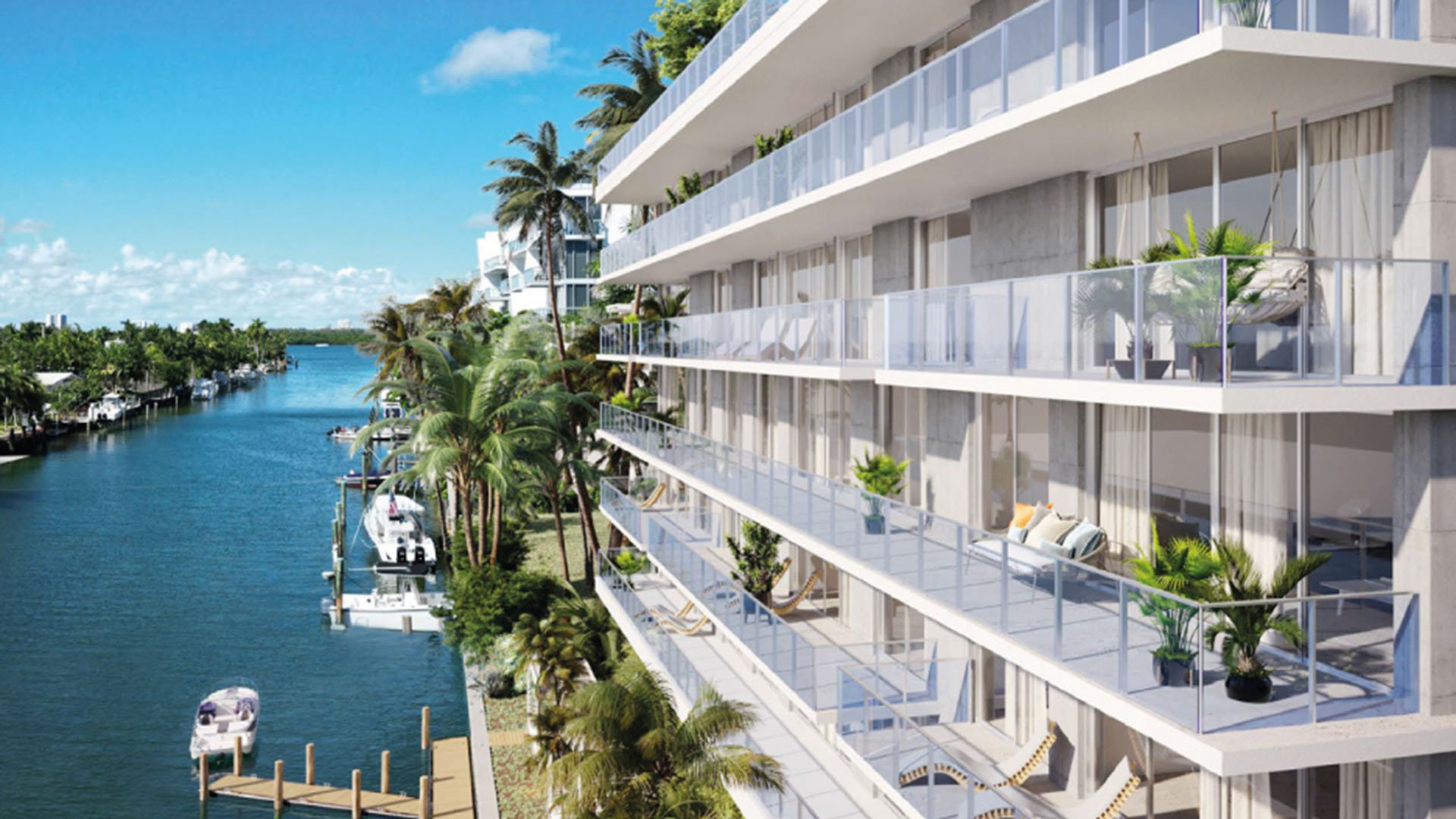
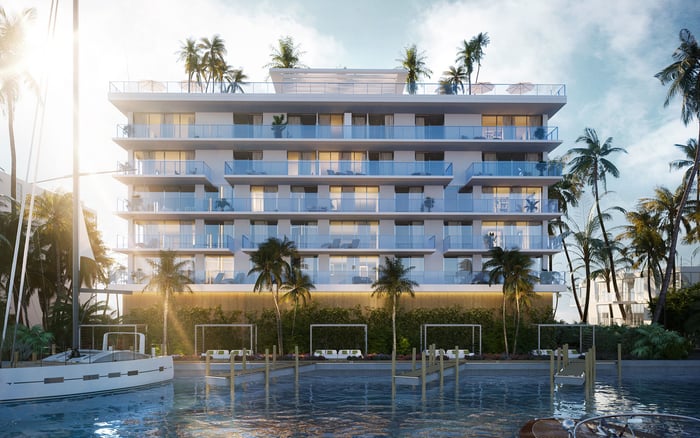
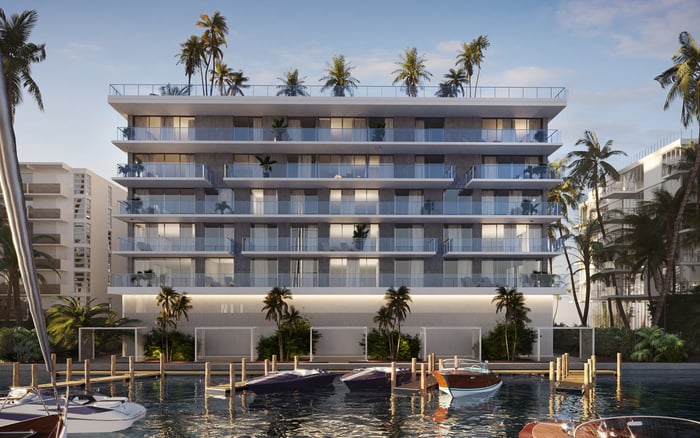
At Origin Bay Harbor Islands, the ownership review should extend beyond finishes and floor plans. Origin Residences by Artefacto occupies 9760 West Bay Harbor Drive and is marketed as a waterfront condominium with 27 residences across seven floors. That scale defines the setting, but it does not resolve the questions that matter most to an owner planning daily life around a particular outlook.
Three distinct reviews deserve attention: what a residence can see, what surrounding parcels may eventually accommodate, and how construction could affect the intended occupancy period. A waterfront address alone is not evidence of a protected view. Nor does a construction milestone promise that crane operations, exterior work and move-in preparations will conclude together.
For buyers also considering Bal Harbour, the same discipline applies: evaluate the residence and its surroundings separately. The objective is not to eliminate every uncertainty, but to identify the assumptions underpinning the purchase and determine which require documentary support.
Origin broke ground in April 2025, and foundation work had commenced by June 23, 2025. A $30.5 million construction loan from S3 Capital was publicly disclosed in June 2025. These are meaningful historical milestones, not evidence of the project’s current construction stage or remaining duration.
The completion target announced on July 9, 2025, was late 2026. Treat it as a dated forecast, not a confirmed current delivery schedule. It should not be the sole basis for ending another residence’s lease, scheduling furnishings or committing to a first season of occupancy.
Before making those arrangements, request a dated construction update that separates completed work from forthcoming milestones. Ask individually about anticipated occupancy authorization, purchaser inspections, closings and owner access. These are diligence recommendations, not assertions about Origin’s contractual sequence.
Financing and commencement establish that a project has moved beyond an initial proposal. They do not establish when a particular buyer can comfortably begin using a residence. Keep financing history, the construction schedule and purchase-contract obligations separate in the review.
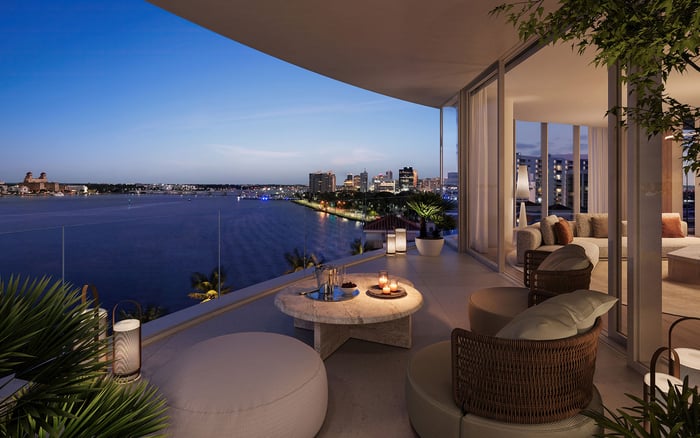
A useful view review begins with the exact residence under consideration. Ask the sales and design teams to identify its orientation, finished-floor elevation and primary sightlines from the living room, bedrooms and terrace, where applicable. Then have a qualified adviser distinguish documented conditions from illustrative material.
Request a visual assessment covering three conditions:
Existing conditions, using dated photographs or other clearly identified visual material.
Approved neighboring construction, where parcel-specific approvals can be established.
A potential development scenario based on verified current rules, clearly labeled as hypothetical.
These distinctions matter. An approved building envelope and a theoretical maximum are not interchangeable. Neither should be presented as a prediction without a supporting parcel review. A rendering, likewise, is not proof that the depicted foreground or lateral opening will remain unchanged.
Ask counsel to examine whether any claimed view protection has an enforceable documentary basis. The information here does not establish a protected corridor for any Origin residence.
A buyer comparing Origin with Bay Harbor Towers should request the same residence-level evidence for each option. Consistent diligence is more useful than assuming that a shared locality means equivalent outlooks or exposure to future construction.
Neighboring development rights require a parcel-by-parcel review. Begin with the properties that intersect the residence’s important sightlines, rather than treating every project in Bay Harbor Islands as equally relevant.
The town’s historical transfer-of-development-rights framework, described in 2011, allowed donor parcels to transfer unused development potential to receiving sites for projects approved by Town Council. Donor eligibility involved five designated zoning districts on the East Island and council approval. Transferable potential was tied to maximum density under the future land use map, parcel size and retained units.
That historical framework warrants investigation; it is not a basis for assigning additional development capacity to a particular neighbor today. It does not establish current entitlements, approved massing or pending applications around Origin.
Have a land-use professional verify current zoning, applicable development standards, parcel boundaries and any relevant transfer approvals or restrictions. Request approved plans and council actions where they exist. Keep pending applications distinct from approvals, and distinguish both from an adviser’s hypothetical analysis.
For an owner, the useful outcome is a parcel map paired with a concise status schedule. Each entry should identify the governing document, its date and the unresolved question. This makes the assessment easier to revisit before closing without confusing historical rules with current permissions.
Origin-specific crane installation and removal dates are not established here. Neither the April 2025 groundbreaking nor the late-2026 completion forecast supports an inferred crane calendar.
Request a written logistics update covering the anticipated lifting strategy, any crane installation and dismantling milestones, and the work expected to remain afterward. Ask which milestones are firm, which are provisional and who will provide updates when they change.
Town construction hours are Monday through Friday, 9 a.m. to 6 p.m., excluding holidays. Those hours are a planning reference, not a guarantee of the experience inside a particular residence. If you plan to work from home or arrange extended stays, ask about expected daytime activity and access arrangements during the intended period of use.
Apply the same questions to a comparison with Alana Bay Harbor Islands. This is a recommendation for consistent buyer review, not a statement that either property’s construction affects the other.
Bay Harbor Islands requires a building permit for most construction work and provides an online application portal for construction-related permits. Use the municipal process to locate relevant records, while confirming each document’s status and scope with the appropriate professional.
A pre-construction survey is required before exterior improvements or site alterations are permitted. Generally, it must have been drafted within six months of the application unless verified by affidavit. A final as-built survey is also required before certificate-of-occupancy approval.
These requirements offer useful checkpoints, but they do not establish that Origin has reached a particular approval stage. Nor does an as-built survey replace a neighboring-parcel analysis or establish view protection.
Before committing to an occupancy calendar, assemble a single owner file containing the residence-specific view assessment, neighboring-parcel findings, current construction update and counsel’s review of delivery provisions. Maintain flexibility wherever the schedule remains provisional. The strongest purchase decision pairs the residence’s appeal with a documented understanding of its surroundings and a realistic plan for first use.
For a considered approach to waterfront ownership in South Florida, explore MILLION.
If branded residences are on your mind — as a home or as an allocation — we would be glad to share what we are seeing, privately.
Begin a quiet conversationOrigin is located at 9760 West Bay Harbor Drive in Bay Harbor Islands, Florida.
The waterfront condominium is marketed as 27 residences across seven floors.
Origin broke ground in April 2025. Foundation work had commenced by June 23, 2025.
No. Late 2026 was the completion target announced on July 9, 2025, not confirmation of delivery or a verified current schedule.
A $30.5 million construction loan from S3 Capital was publicly disclosed in June 2025. That disclosure does not establish an exact loan closing date.
A protected view corridor is not established here for any residence. Buyers should obtain a residence-specific sightline assessment and legal review of any claimed protection.
No. The 2011 framework does not establish current entitlements, approved massing or pending applications for a particular neighboring parcel.
Origin-specific crane installation and removal dates are not established here. Request a dated logistics update rather than inferring them from the completion forecast.
Published construction hours are Monday through Friday, 9 a.m. to 6 p.m., excluding holidays.
A final as-built survey is required before certificate-of-occupancy approval. That requirement does not establish Origin’s current approval status or protect a view corridor.