Luxury service is valuable only when buyers understand who must deliver it, how it is funded, and what happens if the brand relationship or service package changes. Fendi Château and Rosewood Hillsboro Beach require different fee analyses, but both reward document-level diligence.

At the highest end of South Florida’s condominium market, a recognized name can signal design discipline, hospitality standards, and a carefully choreographed residential experience. Yet the lasting value of that promise depends on more than attentive arrival service or a polished lobby. Buyers must understand who is contractually responsible for delivering the experience, how that obligation is funded, and what rights owners retain if the relationship changes.
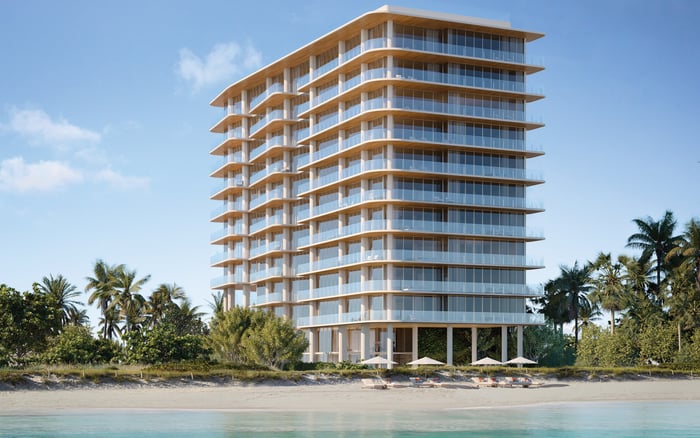
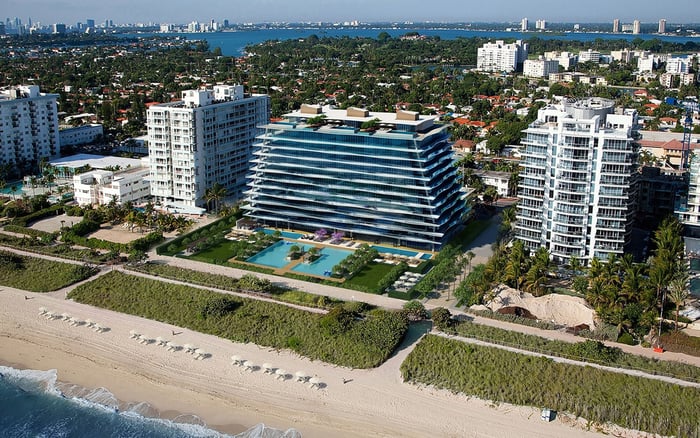
That inquiry is particularly relevant when comparing Fendi Château Residences Surfside with Rosewood Residences Hillsboro Beach. The former is a completed, 12-story oceanfront condominium with 58 residences at 9349 Collins Avenue. The latter is a 92-residence-and-villa development on Hillsboro Beach’s “Millionaire’s Mile,” with disclosed maintenance estimates and an extensive menu of home-management services.
The logo may shape the experience, but the governing documents define the obligation.
For sophisticated buyers considering branded residences, the essential comparison is therefore not brand against brand. It is contract against contract, budget against budget, and remedy against remedy.
Rosewood’s estimated monthly maintenance is $1.74 per square foot with reserves and $1.56 per square foot without reserves. For a 3,000-square-foot residence, those figures translate to approximately $5,220 and $4,680 per month, respectively. The $540 difference illustrates why a headline rate is incomplete unless its treatment of reserves is explicit.
The figures are expressly estimates. A buyer should request the current projected budget and determine what has changed since the estimate was prepared. The review should identify insurance, reserve contributions, repairs, common-area maintenance, hospitality staffing, brand-management expenses, utilities, and any costs allocated differently among residences and villas.
Rosewood also advertises home-management assistance spanning cleaning, maintenance, floral arrangements, and pantry stocking. These services may be highly valuable to second-home owners, but that value depends on pricing clarity. Buyers should distinguish services included in regular charges from optional, usage-based services billed directly to the residence.
Fendi Château presents a different diligence challenge: displayed figures vary substantially. An average association fee of about $2.88 per square foot per month has appeared, while figures of approximately $1.20 to $2.16 per square foot have been shown across different periods. Unit-level monthly charges have appeared as $4,272, $8,899, and $9,283. A charge of $0 has also appeared-an obvious warning against treating any isolated field as authoritative.
These figures should not be averaged into a buying assumption. Unit size, allocation methodology, reporting date, reserve funding, and data-entry quality can all prevent a clean comparison. The controlling package should include the current association budget, unit-specific fee schedule, reserve information, insurance costs, assessment history, meeting minutes, and an estoppel letter. Reported inclusions such as cable, water, sewer, and trash removal should also be reconfirmed.
A branded building’s operating structure can outlast its initial sales campaign, but brand participation should never be presumed permanent. Branded-residence agreements commonly run for about 10 years, often with extensions. After delivery, brand-management fees may flow through association dues, making continuity both an experiential issue and an ownership expense.
At Rosewood, counsel should review the brand agreement’s initial term, renewal mechanics, termination triggers, service standards, and the association’s authority if Rosewood’s involvement changes. Buyers should ask who can renew or terminate, what voting threshold applies, whether a cure period exists, and what operational transition the documents contemplate. These are questions for document review, not assumptions about likely outcomes.
The same discipline applies at Fendi Château, even though the building is already operating. Buyers should identify the current parties responsible for association management, branded elements, resident services, and optional unit-level assistance. A private company offering leasing, repairs, or residence management to an individual owner is not the same as the condominium association’s building-level manager. Confusing the two can obscure accountability and cost.
Buyers widening a Surfside search might also review The Surf Club Four Seasons Surfside or Arte Surfside. These comparisons are most useful when the same diligence template is applied, rather than when amenity descriptions are considered without their contractual and budgetary context.
Owner recourse is not a promise that fees or services will remain unchanged. It is the collection of rights, procedures, and voting powers available when performance, branding, management, or charges evolve. Those rights may reside across the declaration, bylaws, management contracts, budget provisions, and any separate brand agreement.
A focused legal review should answer several practical questions. What standards must management satisfy? Which party can enforce them? What notice, voting, or approval rights belong to the association and individual owners? What remedies are available if required services are not delivered? Can the service scope or brand relationship change without an owner vote? Which costs can be passed through to owners, and under what allocation formula?
The answers should then be tested against governance reality. Meeting minutes and assessment history can reveal how the association has handled prior cost changes, while budgets show whether recurring revenue and reserves support service expectations. Marketing language may describe an experience; governance records indicate how that experience is financed and supervised.
A sound buying principle is simple: establish the recurring ownership model before assigning value to the lifestyle promise. For Rosewood Residences Hillsboro Beach, begin with the latest projected budget, reconcile the estimates with and without reserves, and price optional in-residence services separately. Then have counsel map the brand term, renewal and termination provisions, service standards, and association authority.
For Fendi Château Residences Surfside, disregard isolated fee figures until they are reconciled with association records for the specific residence. Confirm current dues, included utilities, reserves, insurance, special assessments, and the distinction between association management and privately contracted unit services.
In both cases, the objective is not simply to identify the lower monthly figure. It is to determine whether the charge is complete, whether the service promise is contractually durable, and whether owners possess workable rights if either changes. That is the more meaningful measure of long-term luxury.
For discreet guidance on South Florida’s most considered residences, connect with MILLION.
If branded residences are on your mind — as a home or as an allocation — we would be glad to share what we are seeing, privately.
Begin a quiet conversationThe brand can shape service standards and ongoing costs, but its continued involvement depends on the governing agreements rather than marketing alone.
Published estimates are $1.74 per square foot monthly with reserves and $1.56 without reserves.
It equates to about $5,220 per month with reserves or $4,680 without reserves.
No. They are labeled as estimates, so buyers should obtain the current projected budget.
Buyers should verify pricing for cleaning, maintenance, floral arrangements, pantry stocking, and other optional in-residence services.
Public fields vary by unit, period, source, and possible reserve treatment, with some entries even displaying $0.
Request the current budget, unit-specific fee schedule, reserve and insurance information, assessment history, meeting minutes, and an estoppel letter.
Cable, water, sewer, and trash removal have been reported as inclusions, but buyers should confirm the current package.
No. Private leasing, repair, or unit-care services are distinct from building-level condominium governance.
Counsel should examine voting thresholds, renewal and termination authority, service standards, cost-allocation provisions, and available remedies.