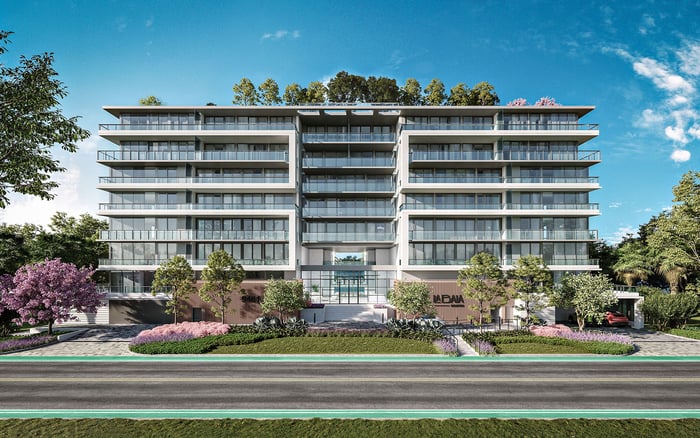
A discreet buyer guide for families considering Origin Bay Harbor Islands as a primary or semi-primary residence, with planning questions for counsel, tax advisors, estate teams, and household decision makers before purchase.

For families evaluating Origin Bay Harbor Islands, the most consequential questions may not begin with finishes, views, or square footage. They begin with intention. Will the residence serve as the family’s true center of life, a semi-primary base, or a seasonal retreat with emotional weight? That distinction can shape conversations with legal, tax, estate, and financial advisors well before a contract is signed.
The appeal of Bay Harbor Islands is often grounded in a rare combination of privacy, access, and residential scale. Yet homestead planning is not a lifestyle slogan. It is a framework for understanding how a family expects to use a property, how ownership should be held, and how the home fits into a broader balance sheet. At Origin Bay Harbor Islands, the residence should be evaluated not only as a place to live, but as part of a coordinated family plan.
In a Bay Harbor search, geography is only the beginning. Families should treat the purchase conversation as a disciplined planning exercise, especially when the home may become the household’s primary or semi-primary address. The earlier these questions are raised, the easier it is to align the real estate decision with residency, estate, school, liquidity, and governance priorities.
The first question is deceptively simple: how will the family actually live in the residence? A property used during school weeks, holidays, work travel, family visits, and extended South Florida stays may sit somewhere between primary and seasonal use. That middle ground can create planning ambiguity, particularly for families with homes, businesses, or obligations in more than one jurisdiction.
Before making assumptions, buyers should ask their advisors what evidence of use, intent, and household organization may matter for their personal circumstances. This is not a question for the closing table alone. It can affect the way a family organizes mailing addresses, professional relationships, travel patterns, household staff, vehicles, school calendars, medical providers, and daily routines.
For some families, the file may be clearly labeled second home. For others, the residence may gradually become the main family base. Either scenario deserves careful documentation and a shared understanding among spouses, trustees, advisors, and adult family members. A beautiful residence can be easy to love. A residence that is poorly integrated into the family’s legal and financial life can be harder to manage.
Families should ask who, or what entity, should own the residence, and why. The right answer depends on facts specific to the buyer, including estate plans, financing needs, privacy preferences, tax considerations, succession goals, and family governance. No buyer should assume that the simplest ownership structure is automatically the most appropriate, or that the most complex structure creates the best protection.
Key questions include whether the home should be owned individually, jointly, through a trust, or through another structure recommended by counsel. Buyers should also ask how that choice interacts with financing, insurance, future renovations, family transfers, and long-term estate planning. If minor children, blended families, business ownership, or multigenerational wealth planning are involved, the conversation should be especially deliberate.
Investment considerations should be kept separate from personal-use decisions, even when both matter. A residence that serves as a family anchor may not be evaluated the same way as a purely financial asset. If the home is expected to remain in the family, advisors should discuss succession, liquidity, carrying costs, and decision-making authority before there is urgency.
Homestead planning is often misunderstood because buyers try to reduce it to a single benefit or filing. In reality, it is a coordination issue. Tax counsel, estate counsel, financial advisors, and real estate professionals may each see a different part of the picture. The family’s task is to make sure those perspectives are reconciled before the purchase becomes irreversible.
A prudent buyer should ask what actions need to occur before closing, what should happen immediately after closing, and what should be reviewed annually. Advisors may recommend different steps depending on the buyer’s residency profile, family structure, existing trusts, business interests, and other homes. The objective is not to chase a generic result. It is to create consistency between the family’s stated intent and the way the residence is actually owned and used.
This is especially important for families balancing South Florida with another home base. A semi-primary residence can be emotionally clear but administratively complex. The family may know where it feels most at home, while documents, calendars, and financial records tell a more mixed story. That gap is what thoughtful planning is designed to address.
For family buyers, homestead planning is inseparable from household rhythm. Private-school calendars, pediatric care, extracurricular commitments, airport routines, work schedules, and visiting relatives all influence whether a residence functions as the center of family life. These practical details may feel softer than title and tax questions, but they often provide the clearest evidence of how a home is used.
Families considering Origin Bay Harbor Islands should map a full year of living, not just an ideal week. Where will children be during exam periods? Where will parents work during peak business seasons? Which home will host holidays? Where will family records, valuables, vehicles, and long-term personal effects be kept? These questions help reveal whether the residence is truly integrated into daily life or reserved for selected intervals.
New-construction searches and established-residence searches can also raise different timing questions. If a buyer is comparing delivery schedules, interim housing, school admissions, and advisory deadlines, the planning calendar should be built backward from the family’s intended use. The real estate timeline and the family timeline should not be allowed to drift apart.
A refined purchase process should include a homestead planning checklist alongside the usual review of contract terms, association documents, financing, and insurance. Family buyers should ask whether any ownership structure under consideration creates limitations or obligations they may not expect. They should also ask how future changes, such as relocation, a child leaving for college, marriage, divorce, or the sale of another residence, could affect the plan.
The due diligence conversation should be written down in plain language. Who is responsible for legal filings? Who will update estate documents? Who is coordinating insurance? Who is confirming that the family’s stated residential intent matches the practical reality of use? The goal is not bureaucracy. The goal is to avoid relying on memory when a decision later matters.
Origin Bay Harbor Islands belongs in that broader family conversation. It is the project focus here because it may attract buyers who are not simply acquiring a luxury residence, but choosing a South Florida base with lasting personal significance. When a home has that role, the questions become more serious, more private, and more important.
The most sophisticated buyers do not separate lifestyle from structure. They understand that a residence can be both emotionally compelling and technically complex. For families, the best purchase is one that feels natural to inhabit and coherent to administer.
Homestead planning should therefore be treated as part of the acquisition strategy, not as paperwork after the fact. Buyers should enter the process with a shared vocabulary, a clear advisory team, and a realistic view of how the residence will be used. The reward is not merely compliance or efficiency. It is confidence.
At Origin Bay Harbor Islands, family buyers should ask the questions that endure beyond closing: Who are we becoming in South Florida? How will this home support that life? And have we structured the decision with the same care we bring to choosing the residence itself?
Should family buyers discuss homestead planning before making an offer? Yes. Early planning helps align ownership, residency intent, estate documents, and household use before deadlines begin to narrow options.
Is homestead planning only a tax question? No. Families should also consider legal structure, estate planning, daily use, school routines, financing, and long-term governance.
What is the first question to ask about Origin Bay Harbor Islands? Ask whether the residence is intended to be primary, semi-primary, seasonal, or something that may evolve over time.
Who should be involved in the planning conversation? Buyers should involve qualified legal, tax, estate, insurance, and financial advisors who understand the family’s full situation.
Can a semi-primary residence create planning complexity? It can. Families with multiple homes should ask advisors how intent, documentation, and actual use should be coordinated.
Should title structure be decided before closing? Yes. Ownership structure should be reviewed before closing because it may affect financing, estate planning, privacy, and future transfers.
Do school plans matter in homestead planning? They may. School calendars and daily routines can help clarify how central a residence is to family life.
Should families document their intended use of the home? Yes. A written plan can help advisors coordinate filings, records, insurance, and future updates with greater consistency.
Is this article legal or tax advice? No. It is a planning framework for family buyers and should be paired with advice from qualified professionals.
What makes the best purchase process for family buyers? The strongest process combines lifestyle vision with careful legal, financial, and estate planning before the residence becomes home.
To compare the best-fit options with clarity, connect with MILLION.
If branded residences are on your mind — as a home or as an allocation — we would be glad to share what we are seeing, privately.
Begin a quiet conversation