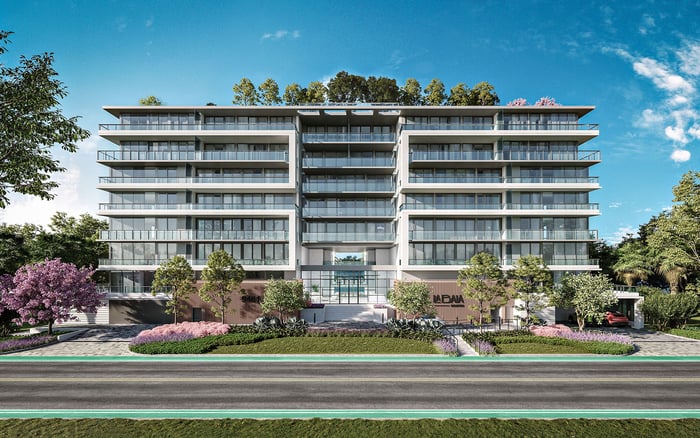
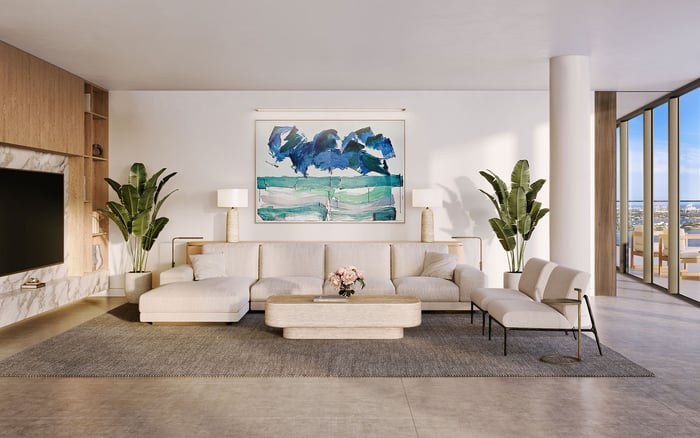
A disciplined comparison of premium condominium lines in Bay Harbor Islands should focus on orientation, view durability, layout efficiency, terrace usability, privacy, total cost and contract terms. Buyers considering Origin, The Well and Alma should rely on current, residence-specific documents rather than project-wide assumptions.

A premium condominium line is not automatically the largest residence or the home on the highest available floor. The stronger choice is the line whose orientation, interior plan, terrace, privacy and cost best support the buyer’s intended use.
That approach is useful when comparing Origin Bay Harbor Islands, The Well Bay Harbor Islands and Alma Bay Harbor Islands. Buyers should avoid applying a project-wide label to an individual residence without reviewing its current floor plan, position, pricing and contractual documents.
Begin with the direction faced by the principal living area, primary bedroom and terrace. Review the outlook from both standing and seated positions, and consider how balcony walls, structural elements and neighboring residences may affect visibility, light and privacy.
A desirable view can support a premium, but the outlook should be evaluated alongside exposure and everyday comfort. Buyers should visit the setting when possible and request current materials that clarify the residence’s position within the building.
View durability also deserves careful consideration. The relevant question is not simply what can be seen today, but whether the buyer has enough reliable information to understand the surrounding context. Any conclusion should be based on available official and contractual materials rather than an assumption.
Headline square footage does not establish how well a residence will function. Buyers should place furniture on the plan, examine circulation paths and check whether the living, dining and kitchen areas can accommodate their preferred arrangement.
Bedroom separation, storage, entry sequence and access to outdoor space can materially affect daily use. Structural columns, narrow passages or awkward corners may reduce practical utility even when the total area appears competitive.
The same review should be applied consistently across the three named projects. A standardized comparison sheet can help buyers record interior area, outdoor area, room dimensions, exposure, privacy considerations and the documents supporting each conclusion.
Outdoor area should be evaluated by depth, shape, access and furnishing potential. A terrace that works for dining or seating may offer more utility than a larger area with an irregular configuration.
Privacy should be checked in both directions. Buyers should consider what is visible from inside the residence, what adjacent occupants may see and whether the arrangement of nearby terraces affects comfort.
Access matters as well. A terrace connected naturally to the principal living spaces may be easier to use than outdoor space reached through a secondary room or constrained opening.
Ask for a current availability schedule covering each suitable line and floor. Compare asking price, interior area, outdoor area and the specific characteristics that appear to support any price difference.
Price per square foot can be one reference point, but it should not replace a qualitative review. A buyer may reasonably value a better plan, greater privacy or a more useful terrace, yet the benefit should be clear enough to justify the added cost.
For another internal point of comparison, buyers may also review Onda Bay Harbor. Any comparison should remain residence-specific and should not substitute one project’s positioning for direct diligence on another.
Before signing, buyers should confirm the deposit schedule, estimated ongoing costs, parking and storage rights, assignment provisions, specifications and completion terms. Where marina access or boat slips influence the decision, the exact nature of those rights and related costs should be established in writing.
Floor plans and marketing materials should be compared with the exhibits incorporated into the contract. Buyers should identify which finishes, appliances and design elements are included and which representations are illustrative.
The preferred line should also match the intended pattern of ownership. A second-home buyer and a full-time resident may assign different weight to storage, privacy, entertaining space and daily circulation. The final selection should reflect those priorities rather than a generalized definition of the best residence.
What is a premium condominium line? It is a recurring stack of residences considered desirable for some combination of orientation, outlook, layout, terrace usability or privacy.
Is the highest available floor always the best choice? No. A lower residence may be more suitable if it offers a stronger plan, more usable outdoor space or better privacy.
How should buyers compare Origin, The Well and Alma? Use the same residence-level criteria for each project and rely on current plans, availability information and contract documents.
Why does orientation matter? Orientation can influence light, exposure, outlook and the experience of both indoor and outdoor spaces.
How should a buyer assess a view premium? Review the view from relevant rooms and seating positions, then compare the benefit with the added cost and available supporting materials.
Why is usable space more important than headline area? Circulation, room proportions, structural elements and furniture placement determine how effectively the stated area can function.
What makes a terrace genuinely useful? Practical depth, a workable shape, convenient access and sufficient room for the buyer’s intended furniture or activities are key considerations.
How should privacy be evaluated? Consider sightlines between interiors, terraces and neighboring residences from multiple positions within the home.
What financial details should be confirmed? Buyers should verify the price, deposit schedule, estimated ongoing costs and any separate charges or rights associated with parking, storage or marina use.
Which documents should guide the final decision? Current contract documents and their exhibits should control, with plans, specifications and availability materials used as supporting references.
For a tailored shortlist and next-step guidance, connect with MILLION.
If branded residences are on your mind — as a home or as an allocation — we would be glad to share what we are seeing, privately.
Begin a quiet conversation