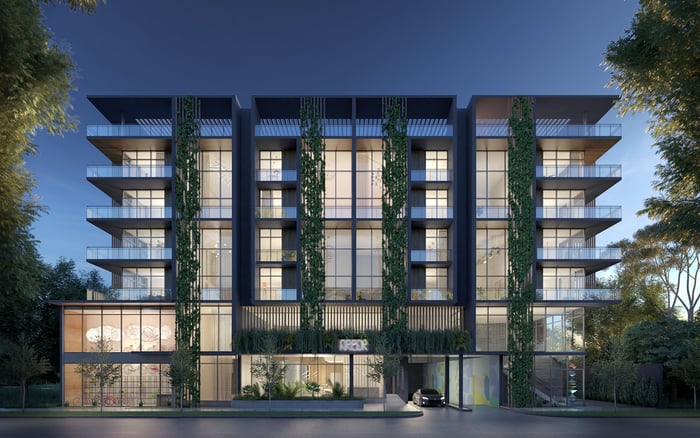
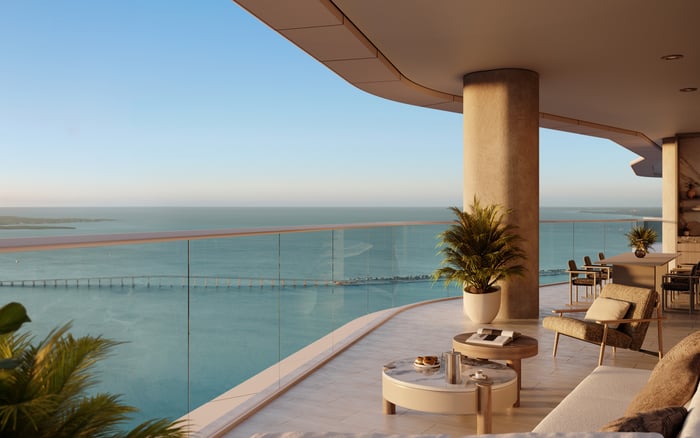
A buyer-fit comparison of Opus Coconut Grove and The Residences at Mandarin Oriental Boca Raton, focused on quiet luxury, building culture, and the service expectations that shape daily ownership.

The most useful way to compare Opus Coconut Grove and The Residences at Mandarin Oriental Boca Raton is not to ask which address is more prestigious. Both belong comfortably within South Florida’s upper residential conversation. The sharper question is which version of prestige feels more natural to the buyer.
Opus Coconut Grove sits within a Miami village-neighborhood context, where value is tied to privacy, local rhythm, and the established residential identity of Coconut Grove. It is not best understood as a resort-flagged product. Its language is quieter, more place-specific, and more dependent on the buyer’s affinity for the Grove itself.
The Residences at Mandarin Oriental Boca Raton speaks in a different register. Its name creates an immediate hospitality reference point, associated with global luxury service and a branded-residence model. For buyers who want the reassurance of a recognized hospitality association in Boca Raton, that identity is central rather than incidental.
Even when buyers use shorthand labels such as Coconut Grove and Boca Raton, the distinction is less about geography alone and more about the emotional contract each residence suggests.
Quiet luxury has become an overused phrase, but in this comparison it has practical force. At Opus Coconut Grove, quiet luxury is rooted in place-based discretion. The appeal is not primarily a famous hotel flag or an international brand promise. It is the idea of living within Coconut Grove’s established residential lifestyle, with the neighborhood itself doing much of the signaling.
That kind of prestige appeals to buyers who prefer subtlety. They may value mature local character over spectacle, and they may see the Grove as a long-form lifestyle choice rather than a seasonal statement. In that sense, Opus aligns with a buyer who wants a luxury residence that feels embedded rather than announced.
Mandarin Oriental Boca Raton offers a different answer. Quiet luxury here can be understood through confidence in a known hospitality name. The brand provides shorthand for service expectations, international familiarity, and residential polish. The buyer does not need the building to shout; the association already speaks in a refined, legible way.
This is why the comparison is not a contest between understatement and luxury. It is a choice between two forms of understatement: one expressed through neighborhood discretion, the other through brand-backed assurance.
Building culture matters because it shapes the feel of ownership long after the purchase. At Opus, the likely draw is residential life connected to Coconut Grove’s sense of place. Buyers already drawn to the Grove often want a home that participates in that environment rather than standing apart from it.
The broader neighborhood context reinforces that idea. Projects such as Arbor Coconut Grove and Four Seasons Residences Coconut Grove show how varied the Grove’s luxury vocabulary can be, from locally integrated residential expressions to globally recognized names. Opus sits most cleanly on the place-led side of that conversation.
At The Residences at Mandarin Oriental Boca Raton, building culture is more naturally framed around the familiarity of a branded-residence environment. That does not mean a resident is buying a hotel room experience. It means the residential proposition is attached to a hospitality name that many buyers already understand before they arrive.
For some owners, that familiarity is a major advantage. It can create confidence around expectations, tone, and style of service. In Boca Raton, where established luxury living already has many forms, the Mandarin Oriental association gives this project a distinct and recognizable position.
Concierge depth is where the two properties require particular care. For Opus Coconut Grove, the strongest supported reading is not hotel-style service. The project is better framed around its Coconut Grove identity and the residential lifestyle that comes with it. Buyers should evaluate its services directly, but the editorial contrast should remain focused on privacy, local character, and neighborhood fit.
For The Residences at Mandarin Oriental Boca Raton, concierge depth can be discussed more confidently as part of the project’s branded identity. The Mandarin Oriental name itself signals a hospitality-driven residential model. Buyers who prioritize service expectations, recognition, and a brand language associated with luxury hospitality will naturally place more weight here.
That does not automatically make one residence more refined than the other. It simply means the service question is central at Mandarin Oriental Boca Raton and more secondary at Opus, where the surrounding neighborhood identity carries much of the lifestyle value.
Boca Raton buyers considering adjacent luxury options may also compare the branded-service confidence of Mandarin Oriental with projects such as Alina Residences Boca Raton, where the decision often becomes less about a single building and more about the preferred tone of ownership.
The Opus buyer is likely drawn to Coconut Grove first. They want Miami, but not necessarily the most visible version of it. They value a residential village feeling, a sense of local continuity, and the discretion that comes from being part of a neighborhood with its own history and rhythm.
The Mandarin Oriental Boca Raton buyer may be looking for a more explicit service framework. They may divide time between markets, host frequently, or simply appreciate the confidence that comes with a known hospitality name. The appeal is not only the Boca Raton address, but the way the brand organizes expectations before a resident ever steps inside.
In practical terms, Opus is the stronger fit for buyers prioritizing Coconut Grove lifestyle, privacy, and local character. Mandarin Oriental Boca Raton is the stronger fit for those prioritizing brand-backed service expectations in Boca Raton.
The key is to avoid confusing prestige with sameness. These two residences may attract similarly sophisticated buyers, but they answer different questions. Opus asks whether the buyer wants quiet luxury grounded in place. Mandarin Oriental asks whether the buyer wants quiet luxury supported by a globally recognized hospitality identity.
Is Opus Coconut Grove a branded residence? Opus Coconut Grove is best positioned around its Coconut Grove identity rather than a resort or hotel brand identity.
What makes The Residences at Mandarin Oriental Boca Raton different? Its defining distinction is the Mandarin Oriental name, which gives buyers a recognizable luxury hospitality reference point.
Which property is more discreet? Opus Coconut Grove is the clearer fit for buyers seeking place-based discretion and neighborhood integration.
Which property is more service-led? The Residences at Mandarin Oriental Boca Raton is more naturally framed as service-led because of its branded hospitality association.
Is this comparison about which building is more prestigious? No. The more useful question is which prestige language fits the buyer’s life and expectations.
Who is the likely Opus Coconut Grove buyer? A buyer who values Coconut Grove lifestyle, privacy, and local residential character will likely understand its appeal quickly.
Who is the likely Mandarin Oriental Boca Raton buyer? A buyer who prioritizes brand confidence, service expectations, and Boca Raton luxury living may find it more aligned.
How should buyers think about concierge depth? Concierge expectations are more central to the Mandarin Oriental proposition, while Opus should be evaluated through its neighborhood-led residential identity.
Does Coconut Grove compete directly with Boca Raton? They serve different lifestyle preferences, with Coconut Grove emphasizing Miami village character and Boca Raton offering its own established luxury rhythm.
Can both choices qualify as quiet luxury? Yes. Opus expresses quiet luxury through local discretion, while Mandarin Oriental Boca Raton expresses it through branded assurance.
If you'd like a private walkthrough and a curated shortlist, connect with MILLION.
If branded residences are on your mind — as a home or as an allocation — we would be glad to share what we are seeing, privately.
Begin a quiet conversation