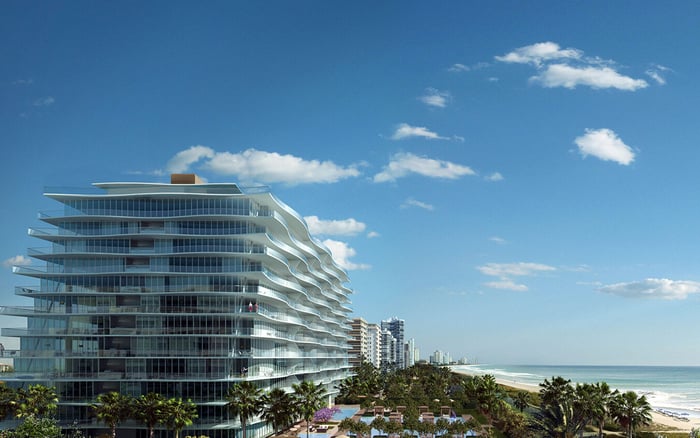
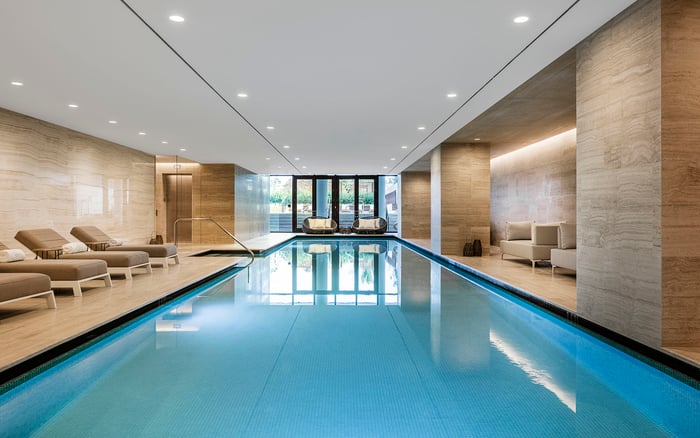
A discerning Miami Beach acquisition requires more than an exceptional view. Test the residence’s floor-plan scarcity, everyday privacy and association finances against relevant resale evidence before assigning a premium.

An exceptional residence should feel effortless. Its acquisition should be anything but casual. In Miami Beach, the distinction between a beautiful apartment and a defensible purchase rests on three questions: how difficult is the floor plan to replace, how private is daily life, and how clearly can the building account for its recurring costs?
These questions are related, but not interchangeable. A rare layout does not establish a resale premium. A secluded arrival does not prove financial discipline. An extensive service offering does not establish whether an association is adequately reserving for future work. The buyer’s task is to translate each quality into evidence a future purchaser can also understand.
The strongest acquisition case is not simply that a residence is exceptional. It is that its distinctions are useful, verifiable and supported by an ownership structure the buyer can evaluate.
First-quarter 2026 Miami Beach luxury-condominium figures illustrate why headline numbers require restraint. Five-bedroom residences averaged $44 million, or $7,949 per square foot. Two-bedroom residences led transaction activity, with 21 closings and 58 active listings. Neither observation establishes what a particular residence should command or how quickly it will sell.
Over the same period, monthly closed sales increased from 15 in January to 19 in March. Yet average pricing declined from $2,286 per square foot in January to $1,981 in February and $1,902 in March. More transactions and lower average pricing can coexist; neither measure alone settles an individual valuation.
A separate first-quarter 2026 luxury-resale measure placed Miami Beach pricing at $1,178 per square foot, down 14.8% year over year, while selected new oceanfront developments carried substantially higher pricing. These measures cover different market definitions and should not be combined into a single valuation series.
For a buyer considering The Perigon Miami Beach, the useful question is which completed transactions genuinely resemble the residence under consideration-not which broad average best supports the asking price.
Floor-plate scarcity begins with a comparison of plans, not a description of exclusivity. Ask how many residences offer a similar interior area, bedroom arrangement, exposure and relationship between entertaining space and private rooms. Then distinguish nominal size from usable space.
A larger residence may warrant closer attention if its circulation serves the buyer’s household particularly well. Square footage alone, however, cannot demonstrate that advantage. Examine whether guests can reach entertaining areas without passing bedroom doors, whether service movement intersects with family routines, and whether the plan accommodates its intended use without substantial alteration.
When evaluating Apogee South Beach, apply those questions to the actual residence and its competing inventory. Do not presume that a project name proves a particular floor configuration or arrival arrangement.
There is no established standard percentage premium for floor-plate scarcity. Seek transaction-level support for any premium, recognizing that a personal preference is not necessarily a transferable resale advantage.
Assess privacy as a sequence: arrival, elevator access, entry, interior circulation and outdoor use. Ask whether elevator entry is private or shared, how many residences use the floor, and how visitors and service personnel reach the apartment. Verify each answer rather than treating privacy as an implied feature of luxury ownership.
Terrace privacy deserves a separate inspection. Consider sightlines from neighboring residences and common areas, then assess the places where the household would actually sit, dine or entertain. A compelling view and a discreet outdoor room are different attributes.
For 57 Ocean Miami Beach, as for any candidate, request the relevant plans and inspect the specific residence’s access routes and sightlines. These are property-level diligence questions, not claims about an unexamined unit.
There is no established citywide privacy premium. Document what the residence delivers, and distinguish what that experience is worth to you from what a future buyer might pay.
Association dues can support master windstorm and property insurance, association-held flood coverage, common-area maintenance, elevator service and staffing. In many buildings, they also include water and sewer. Monthly assessments fund both operations and reserves; an amenities tour cannot explain the entire fee.
Start with two measurements: the absolute monthly association obligation and that obligation divided by interior square footage. The first establishes the cash commitment; the second helps compare residences of different sizes. Neither replaces an examination of what the assessment covers.
Account separately for property taxes, owner’s insurance, utilities and other recurring charges. Avoid double-counting expenses already included in the association budget. There is no reliable single Miami Beach carrying-cost benchmark: building services, insurance and reserve obligations vary substantially.
A low current assessment should prompt questions, not automatic approval. Ask whether the budget reflects anticipated work and reserve contributions. Evaluate a higher assessment against its components rather than accepting it simply because the building offers a polished service experience.
Request the association’s inspection report, reserve study, budget, insurance-renewal history, pending assessments and board minutes. Read them together. The budget describes current funding; the inspection and reserve materials help identify obligations that may not be apparent during a showing.
Florida’s milestone-inspection and structural-integrity-reserve requirements apply to qualifying condominium buildings. Confirm their relevance to the candidate building and examine any resulting inspection, repair or funding exposure before finalizing the ownership-cost analysis.
Stress-test the purchase against higher recurring expenses and any disclosed assessment obligations. The purpose is not to predict an unsupported increase. It is to establish how much uncertainty the buyer is comfortable accepting and which questions must be resolved through association records before closing.
Exceptional sales demonstrate possibility, not a universal benchmark. A residence at The Surf Club Four Seasons Surfside reportedly resold for $30.3 million, or $7,143 per square foot, after an $18.4 million transaction in July 2025. That is a property-specific example in Surfside, not a general Miami Beach comparable.
Build the final purchase case around three distinct conclusions: why the floor plan is difficult to substitute, which privacy attributes have been verified, and what the association’s financial documents reveal about carrying costs. Keep market comparables separate from personal lifestyle preferences.
The objective is not to eliminate judgment. It is to ensure that the premium you pay today rests on qualities you can articulate tomorrow, without depending on a record transaction or an assumed resale timetable.
Explore a more considered approach to your next residence with MILLION.
If branded residences are on your mind — as a home or as an allocation — we would be glad to share what we are seeing, privately.
Begin a quiet conversationNo standard floor-plate premium is established by the supplied evidence. Compare the actual layout with relevant competing residences and completed transactions.
Five-bedroom residences averaged $44 million, or $7,949 per square foot, in the first-quarter 2026 Miami Beach luxury-condominium dataset. That average does not establish the value of an individual residence.
No. The 21 closings and 58 active listings indicate activity in that segment, not a guaranteed selling period.
Verify elevator entry, residences per floor, visitor and service access, interior circulation and terrace sightlines for the specific residence.
The supplied evidence establishes no citywide percentage premium for privacy. Separate the value of the experience to your household from evidence of its resale value.
They can cover master insurance, common-area maintenance, elevator service, staffing and reserves. In many buildings, water and sewer are also included, but the actual budget must be checked.
Compare both the absolute monthly assessment and its cost per interior square foot. Account separately for taxes, owner’s insurance, utilities and other recurring charges.
Review the inspection report, reserve study, budget, insurance-renewal history, pending assessments and board minutes before underwriting carrying costs.
Milestone-inspection and structural-integrity-reserve requirements apply to qualifying condominium buildings. Their inspection, repair and funding implications are relevant to ownership costs.
The reported $30.3 million resale is an exceptional, property-specific Surfside example. It should not be treated as a general Miami Beach valuation benchmark.