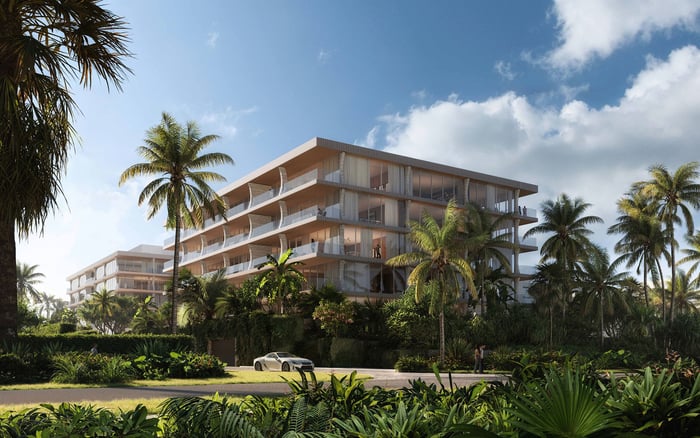
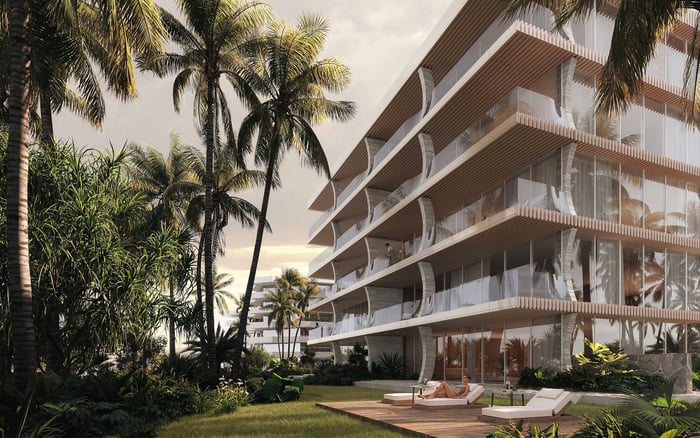
A buyer-focused framework for coordinating association insurance, replacement-cost valuations, wind deductibles, and personal loss-assessment protection at two South Florida branded residences.

For buyers considering The Ritz-Carlton Residences® Palm Beach Gardens or Shell Bay by Auberge Hallandale, operational planning deserves the same attention as the residence itself. The essential question is not simply whether the association carries insurance, but how the building's protection, the owner's coverage, and available liquidity work together after a loss.
An association's master policy and an owner's HO-6 policy address different exposures. Building insurance is not a substitute for personal coverage, and an insurance expense in the association budget does not establish adequate limits or manageable deductible exposure. Neither a brand name nor a purchase price answers those questions.
The objective is a coordinated insurance plan: identify what the association insures, what remains the owner's responsibility, and what could become an assessment. Treat the following as buyer diligence, not as a description of either development's policy terms.
Replacement cost concerns reconstruction, not the residence's sale price or market value. A premium comparison is incomplete without understanding the insured values behind it. Request the association's replacement-cost valuation, its date, the property it includes, and the assumptions supporting it.
Compare that valuation with the insured-property schedule and applicable limits. Ask the association's insurance adviser to explain whether the documents remain aligned and how property changes are reflected. A lower premium is not, by itself, evidence of a better insurance arrangement.
For buyers comparing Palm Beach options, including The Ritz-Carlton Residences® West Palm Beach, the same discipline applies independently to each association. Shared branding does not establish shared limits, deductibles, or allocation rules.
Pricing depends on replacement-cost values, location, construction, roofs and systems, claims history, limits, deductibles, and available insurers. Generic premium estimates cannot replace a quote tied to the actual property and coverage terms.
A percentage deductible is meaningful only when its calculation base is known. Wind or hurricane deductibles must be applied to the value specified in the policy, subject to minimums and other conditions-not automatically to the repair bill.
Consider a strictly illustrative example: a 5% deductible applied to $200 million of insured value equals $10 million. These are not verified terms for either development. The example shows how a seemingly modest percentage can create a substantial funding requirement.
For any multi-building association, establish whether the deductible applies per building, per location, per occurrence, or against a combined insured value. Ask the broker to show the calculation in writing, using the actual policy wording and property schedule.
Then distinguish the association's deductible from an individual owner's possible assessment. Obtain the governing allocation formula rather than dividing the deductible equally among residences. Review the association's budget, reserves, pending assessments, and governing documents before estimating an owner's exposure.
Florida requires residential condominium unit-owner policies to include at least $2,000 in property loss-assessment coverage for assessments arising from the same covered direct property loss. The deductible for that property loss-assessment coverage cannot exceed $250. Confirm the legal requirements and policy language applicable at purchase or renewal.
The $2,000 requirement is a statutory floor, not an assurance of sufficient protection. The $250 limit concerns the property loss-assessment deductible; it is not a cap on the association's wind deductible or the owner's total financial exposure.
Loss-assessment coverage responds to qualifying insured losses. It is not blanket reimbursement for every special assessment, reserve contribution, or structural-repair assessment. A larger limit may be useful, but it does not remove exclusions or make an otherwise uncovered assessment payable.
Ask the HO-6 insurer, in writing, whether assessments funding an association deductible qualify. Request specific answers for wind, hurricane, and flood-related assessments, including exclusions, sublimits, and separate deductibles. Keep the potential assessment amount distinct from the amount the personal policy would actually cover.
The interior coverage discussion should begin with responsibility, not a standard allowance. Identify which components and improvements the owner must insure, then size building-property coverage to the actual finish package. Do not assume the association's replacement-cost valuation captures every owner responsibility inside the residence.
In Florida, the unit-owner policy is excess over other insurance covering the same property. Coordination matters: ask the association's broker and the personal insurer to clarify their respective coverage boundaries. Apparent overlap does not guarantee payment.
Review flood insurance separately from wind coverage. Confirm whether the association carries ordinance-or-law and equipment-breakdown protection, paying attention to limits and conditions. The purpose is to understand the arrangement before a claim, not discover its boundaries afterward.
Whether the search centers on Palm Beach Gardens or Hallandale Beach, the document request should be specific. Obtain the master-policy declarations, complete policy wording, endorsements, insured-property schedule, and wind and hurricane deductible provisions. A coverage summary alone is not the full contract.
Alongside the insurance file, request the deductible-allocation formula, association budget, reserve information, pending assessments, and applicable structural reports. Review available loss history with the insurance adviser. These materials help distinguish insured risk from obligations that may require separate owner funding.
Before committing, request a written scenario for a covered wind loss showing the deductible calculation, the association's funding approach, the owner's allocated share, and the HO-6 response. Run a separate flood scenario rather than assuming the same outcome. Each should use the actual documents, not generic percentages.
The final decision should rest on three distinct figures: the potential association funding need, the owner's possible allocated assessment, and the portion an insurer would actually reimburse. Combining them into a single reassuring coverage number obscures the practical question of liquidity.
For both featured residences, a prudent purchase file requires more than proof of insurance. It requires a documented understanding of valuation, deductibles, allocation, exclusions, and personal protection, reviewed with qualified insurance and legal advisers. That preparation keeps the ownership experience focused on the residence rather than an avoidable financial surprise.
For a considered approach to South Florida residential ownership, explore MILLION.
If branded residences are on your mind — as a home or as an allocation — we would be glad to share what we are seeing, privately.
Begin a quiet conversationNo. The policies address different exposures, so owners should review both and clarify their respective coverage boundaries.
No. The document requests and coverage scenarios are buyer diligence recommendations, not representations of either development's policy terms.
No. Replacement cost concerns reconstruction, while purchase price reflects market value; buyers should review the association's valuation and insured-property schedule.
Apply it to the value specified in the policy, including relevant minimums and conditions. Do not automatically apply it to the repair bill.
A 5% deductible applied to $200 million of insured value equals $10 million. Those figures are illustrative, not verified terms at either featured development.
Florida requires at least $2,000 for assessments arising from the same covered direct property loss under residential condominium unit-owner policies. Confirm the applicable legal requirements and policy wording at purchase or renewal.
No. It concerns the property loss-assessment deductible, not the association's wind deductible or an owner's total assessment.
No. Coverage concerns qualifying insured losses, so reserve contributions and structural-repair assessments should not be assumed reimbursable.
Obtain the association's allocation formula and review it alongside the policy, budget, reserves, and pending assessments. Do not assume an equal division among residences.
Yes. Review flood insurance independently from wind coverage and ask the HO-6 insurer whether flood-related assessments are excluded or subject to coverage restrictions.