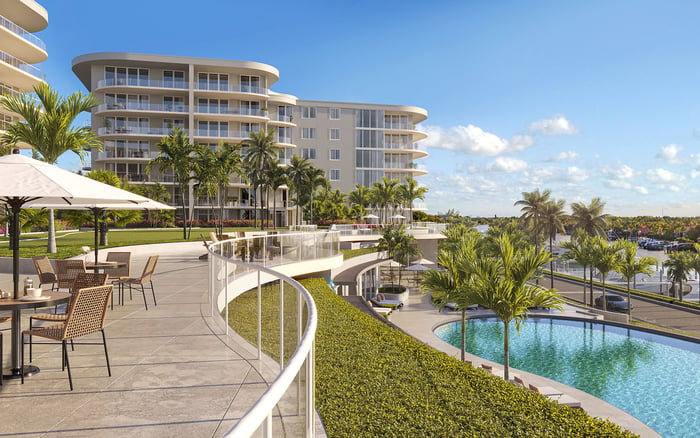
A buyer-focused framework for evaluating operating budgets, service-contract increases and staffing commitments at The Ritz-Carlton Residences® Palm Beach Gardens, with particular attention to assessment allocations and long-term carrying costs.
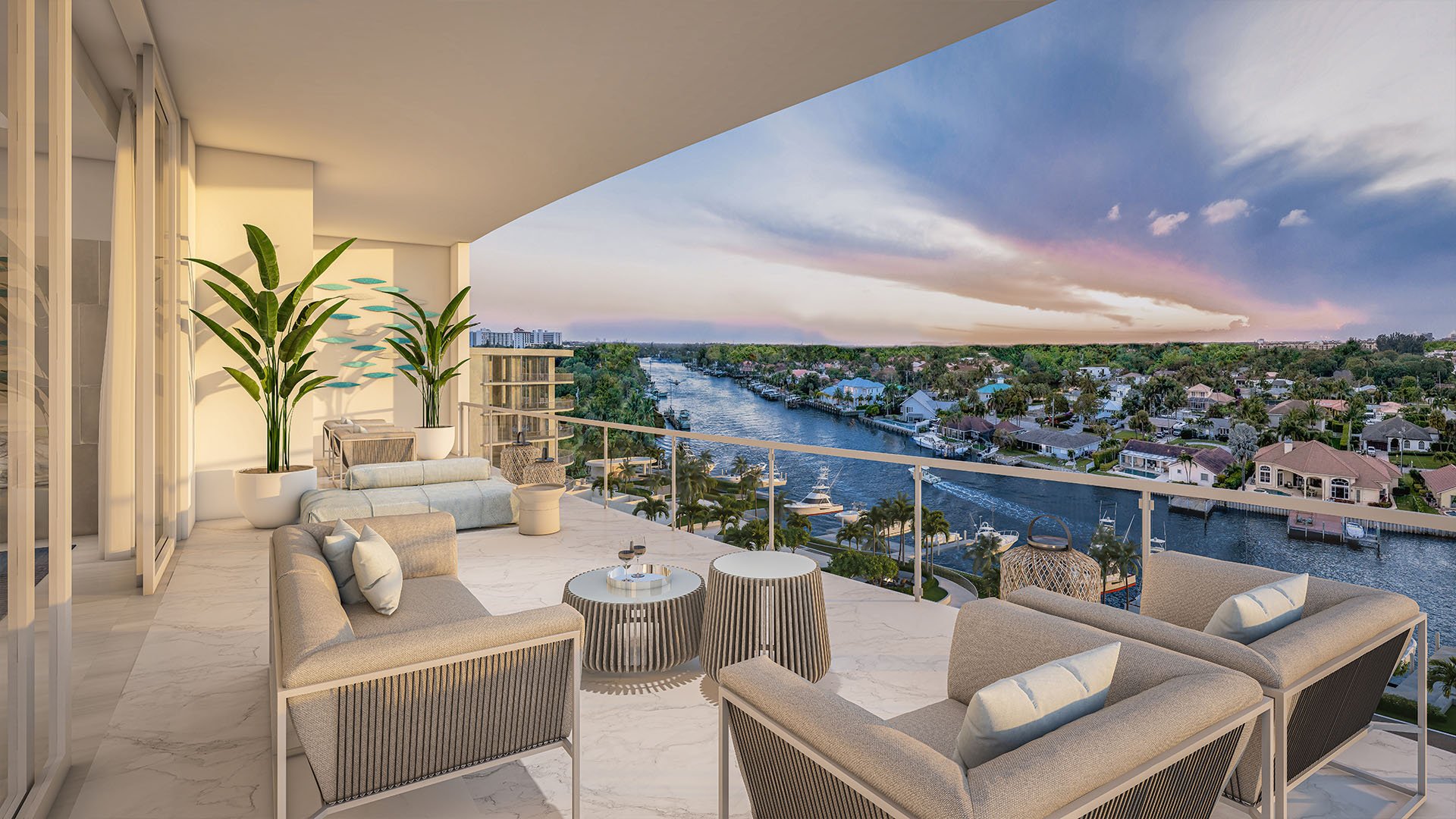
At The Ritz-Carlton Residences® Palm Beach Gardens, the ownership proposition extends beyond the residence itself. Marketed at 2200 PGA Boulevard, the development comprises 106 residences across three seven-story buildings on approximately 14 Intracoastal acres. Concierge assistance, valet service and shared waterfront facilities make operational execution central to its appeal.
For a Palm Beach County buyer, the question is not simply what the monthly assessment will be at closing. It is whether that assessment credibly funds the promised experience-and how the underlying obligations may change. A service promise becomes financially meaningful only when its scope, staffing and payment responsibility are clear.
Treat actual budget variances, contractual increases and staffing levels as matters for document review, not conclusions to draw from an amenity presentation. The objective is predictable ownership, not necessarily the lowest assessment.
The developer is Catalfumo Companies, the architect is Spina O’Rourke + Partners and the general contractor is Seawood Builders. DMBH Residential Investment, LLC uses Ritz-Carlton marks under license from Marriott International; the brand is not the developer or seller. Marriott has not independently confirmed the developer’s marketing representations.
These distinctions matter when determining who is responsible for an operational obligation. Buyers should have counsel connect each advertised service to the applicable management agreement, governing documents or resident-paid arrangement. Ask counsel to confirm that the purchase review includes all applicable Florida condominium disclosure documents.
If The Ritz-Carlton Residences® Miami Beach is also under consideration, apply the same discipline independently. A shared brand name does not establish identical staffing, assessment inclusions or contractual protections.
Request the original projected operating budget, its latest revision and actual results where available. Compare equivalent periods and service scopes. Do not mistake a partial operating year for a fully staffed annual cost base.
The reconciliation should explain changes in payroll, insurance, utilities, service contracts, management fees, reserves and assessment revenue. For each material change, ask whether it reflects a price increase, expanded service, timing difference or revised assumption. Keep forecast revisions separate from actual spending variances.
Payroll deserves particular scrutiny: an apparent saving may reflect vacancies rather than lasting efficiency. Conversely, a higher contract allocation may fund a broader service scope. Neither interpretation should be assumed without supporting detail.
Advertised monthly HOA estimates include $0.80-$2.50 per square foot and a separate range of $4,664-$7,168. These figures are not a verified, unit-specific assessment schedule. Establish their applicable budget periods, inclusions and allocation bases before comparing them.
Request a written calculation for the selected residence using its percentage interest and the applicable budget. Identify included utilities, insurance, reserve contributions and any developer subsidy, if one exists. Do not divide total costs equally among 106 residences unless the governing allocation supports that calculation.
The advertised service program includes full-time, on-site concierge and property management, serviced by The Ritz-Carlton. It also includes pool and valet staff, butler, doorman and porter services, plus 24-hour security. That security commitment does not confirm that every other service operates continuously.
Ask for a position-by-shift schedule specifying coverage hours, overnight assignments, seasonal additions, outsourced roles and any shared personnel. Reconcile that schedule with budgeted wages, benefits, payroll taxes, overtime and relief coverage. A job title alone does not establish how many people are needed to deliver the service reliably.
Then test everyday resident situations: an evening arrival, a delivery during a busy valet period or move-in assistance while concierge staff handle reservations. These questions reveal whether multiple advertised functions depend on the same personnel.
Finally, distinguish coordination from delivery. Arranging transportation, spa appointments or guest-suite reservations does not establish that the underlying service is included in assessments. Obtain the resident charge schedule and availability rules rather than assuming an all-inclusive model.
Obtain the management, security, valet, pool, landscaping, elevator, HVAC, generator, life-safety, cleaning and waterfront-maintenance agreements, where applicable. Build a contract register showing each agreement’s current fee, service scope, effective dates, renewal provisions and termination rights.
For each agreement, identify whether increases are fixed, CPI-linked, capped or otherwise adjustable. Check the index definition and adjustment date where relevant. Read a stated cap closely if labor increases, utility costs or reimbursable expenses can be charged separately.
Minimum staffing obligations also belong in this review. They connect service quality to financial commitments and may limit the ability to reduce spending without changing coverage. Ask who approves additional work and whether transition costs apply when a provider is replaced.
A buyer also evaluating The Ritz-Carlton Residences® Pompano Beach should request its agreements separately. Compare documented obligations, not presumed similarities between branded properties.
Marketed facilities include two guest suites, a waterfront clubhouse, private dining, wellness and spa facilities, fitness and yoga space, automobile-detailing facilities and backup generators serving the buildings. Each warrants questions about operating responsibility, maintenance and eventual replacement.
Separate routine expenditure from reserve funding. Generator servicing, for example, should not be confused with a replacement allowance. Apply that distinction to major building systems and waterfront assets, and ask how reserve assumptions relate to the anticipated maintenance program.
Insurance requires its own review. Consider premiums, covered risks, exclusions and catastrophe deductibles together. Ask how deductible exposure would be funded and whether that funding is distinct from ordinary reserves. An assessment figure alone cannot answer those questions.
Use illustrative annual assessment increases of 3%, 5% and 8% to test carrying-cost tolerance. These are sensitivity assumptions, not forecasts for this development. Model them against a verified, unit-specific starting assessment, keeping resident-paid services and other ownership expenses separate.
For contract analysis, compare fixed increases with capped-CPI and open-ended escalation structures. If a subsidy, waived charge or complimentary service exists, test its expiration separately. Do not assume any such arrangement applies here.
Before committing, seek three connected documents: a reconciled budget, a funded staffing schedule and a contract register identifying escalation exposure. Together, they should explain what ownership buys today and which obligations may change tomorrow. The most reassuring outcome is not an attractive opening number, but a service model whose costs can be understood.
For a discreet perspective on South Florida ownership decisions, explore MILLION.
If branded residences are on your mind — as a home or as an allocation — we would be glad to share what we are seeing, privately.
Begin a quiet conversationThe development is marketed at 2200 PGA Boulevard, Palm Beach Gardens, FL 33408, on approximately 14 Intracoastal acres.
The development comprises 106 residences across three seven-story buildings.
No. Catalfumo Companies is identified as the developer, while DMBH Residential Investment, LLC uses Ritz-Carlton marks under license from Marriott International.
Request the original projected budget, its latest revision and actual results where available. Reconcile changes across equivalent periods and service scopes.
The advertised ranges are not a verified, unit-specific assessment schedule. Check them against the selected residence’s percentage interest, budget year, included services and reserve contributions.
That should not be assumed. Although 24-hour security is advertised, the hours and availability of other services require separate confirmation.
Review positions by shift, wages, benefits, payroll taxes, overtime and relief coverage. Identify overnight assignments, seasonal additions, outsourcing and any shared personnel.
Identify the increase formula, adjustment timing, caps and separate pass-through charges. Review renewal provisions, minimum staffing obligations and termination or transition costs as well.
Distinguish routine maintenance from reserve funding and replacement allowances. Review insurance premiums and catastrophe deductibles separately from ordinary operating costs.
No. These are illustrative sensitivity assumptions for testing affordability, not forecasts of this development’s assessments.