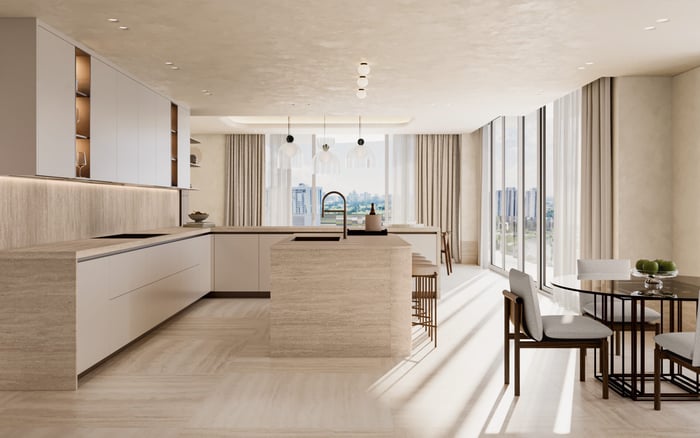
A buyer-focused due diligence guide to understanding whether One Thousand Museum Downtown Miami complements or duplicates existing private-club memberships.

One Thousand Museum Downtown Miami holds a distinctive place in the South Florida luxury conversation: a highly visible Downtown condominium for buyers who expect privacy, design pedigree, service, and a resort-caliber residential rhythm. For many ultra-premium buyers, however, the essential question is not simply whether the building feels exclusive. It is whether its lifestyle offering materially improves daily living, or whether it repeats privileges already purchased through golf clubs, yacht clubs, social clubs, dining clubs, wellness memberships, or private urban memberships.
That is the private-club-overlap question. It should be treated as buyer due diligence, not as a label for the building. A condominium can feel club-like without operating as a private club, just as a private club can offer hospitality without replacing the intimacy of a well-run residence. The task is to identify where One Thousand Museum Downtown Miami adds convenience, where it duplicates existing benefits, and where the association structure differs from the membership structure a buyer may already know.
The most sophisticated buyers will not reduce the decision to amenities alone. They will ask whether the value proposition is primarily privacy, architecture, location, service density, amenity access, or a blend of those attributes. That framing keeps the conversation disciplined and prevents a beautiful lifestyle presentation from obscuring recurring costs, rules, and practical limitations.
The first request should be straightforward: ask for a complete list of resident amenities and services, then separate what is included in ownership from what carries an additional charge. In a luxury condominium, this distinction is essential. Some experiences may be part of the building’s common offering, while others may be optional, usage-based, reservation-based, or governed by separate service protocols.
Buyers should avoid comparing marketing language with club language. Instead, compare functions. If a buyer already relies on a private club for fitness, wellness, dining, social events, guest hosting, private rooms, or concierge support, the question becomes whether the building replaces any of those uses, supplements them, or simply adds a parallel layer.
This is especially important for buyers who split time across South Florida. A primary resident may value immediate in-building convenience differently than a seasonal owner. A buyer with an established Downtown routine may evaluate the building against urban clubs and nearby dining, while a waterfront buyer may compare it with a marina lifestyle, yacht services, and club-based entertaining elsewhere in the region.
The second question is financial: which costs are embedded in condominium association dues, and which are optional or usage-based? Association dues can make a building’s lifestyle feel seamless, but they can also blur the true cost of benefits that overlap with other memberships.
A clean comparison should include annual condominium dues, recurring service charges, private-club dues, food and beverage minimums where applicable, guest fees, event charges, and other recurring lifestyle costs. The point is not to eliminate overlap at all costs. Many affluent buyers intentionally choose redundancy because it creates comfort, flexibility, and privacy. The point is to quantify the overlap cost so the buyer understands what is being purchased twice and why.
For example, a buyer who already uses a club for fitness and entertaining may still value having wellness, social, or concierge conveniences close to the elevator. The premium may be justified if it reduces friction during weekday mornings, last-minute guest visits, or short seasonal stays. Conversely, if the buyer rarely uses building amenities and spends most leisure time at a private club, the overlap may feel expensive rather than elegant.
Private clubs are often defined by their access culture. Guest privileges, event approvals, reservation windows, dress codes, conduct rules, and peak-time customs shape the actual experience more than the amenity roster. Condominium associations operate differently, so buyers should examine the governing documents and ask direct questions.
Key issues include whether guest access is more restrictive, more flexible, or materially different from existing club privileges. Buyers should also ask whether amenity reservations, private events, or peak-time access are guaranteed, prioritized, waitlisted, or subject to condominium rules. A beautifully appointed room has different value if it cannot be used when family, clients, or friends are actually in town.
The review should extend beyond social spaces. Documents may address rentals, events, noise, pets, service access, guest procedures, and resident conduct. If a buyer is considering the property as a second home or potential resale asset, these rules matter because they affect both personal enjoyment and the way future buyers perceive flexibility.
In a private club, service culture is usually part of the brand identity. In a condominium, service delivery can depend on the association, in-house staff, third-party operators, or a combination of management relationships. Buyers should ask whether services are staffed in-house, outsourced, or managed through the condominium association.
That question matters because service consistency is not only about personnel. It is also about budgets, governance, and approval rights. Buyers should ask how changes to amenities, service standards, staffing levels, or operating budgets are approved. A service level that feels compelling at purchase should be evaluated for durability over time.
It is also important to ask whether amenities are intended primarily for residents, or whether certain spaces may be used by guests, outside partners, brokers, events, or third-party operators. Some buyers welcome a more animated environment. Others prize residential privacy above all. Neither preference is wrong, but the building’s operating model should match the buyer’s expectations.
The private-club-overlap analysis should end with a personal hierarchy. For some buyers, One Thousand Museum Downtown Miami may be most compelling as a private urban base with immediate access to services and amenities. For others, the draw may be architecture, Downtown proximity, privacy, or a more service-rich alternative to a conventional condominium.
The building’s value should not be judged solely by whether it replaces a club membership. Luxury buyers often maintain multiple overlapping environments because each serves a different mood: the residence for discretion, the club for community, the yacht for movement, the pool for routine, and the city for spontaneity. The question is whether the combination feels coherent.
A disciplined buyer will make a side-by-side matrix. List each existing membership and each relevant building benefit. Mark what is redundant, what is complementary, and what is unique to the residence. Then assign a practical value to each category based on actual behavior, not aspiration. The result is a clearer picture of whether the building’s convenience, service density, and privacy justify the duplicated spend.
Before making a final decision, buyers should request the condominium documents and review the sections governing amenity use, guest access, events, rentals, pets, noise, dress codes, and service access. They should ask for a current explanation of what ownership includes, what is optional, what is billed separately, and what can change through association approval.
They should also ask about peak-time protocols. If a buyer expects to host during major cultural, sporting, or social weekends, the rules around reservations and private events may matter as much as square footage. If a buyer travels frequently, guest procedures and service access may be central to the ownership experience.
Finally, buyers should test the lifestyle against a normal week. Where will workouts happen? Where will guests be hosted? Which concierge needs are truly recurring? Which club memberships remain emotionally or socially indispensable? The best acquisition is not necessarily the one with the longest amenity list. It is the one whose rules, costs, privacy, and daily usefulness align with the way the buyer actually lives.
Does One Thousand Museum Downtown Miami operate like a private club? Buyers should not assume that. The better question is whether its residential amenities and services overlap with benefits from existing private memberships.
What should buyers ask for first? Request a complete list of amenities and services, with a clear distinction between included ownership benefits and anything billed separately.
How should club members evaluate overlap? Compare fitness, wellness, social, dining, event, and concierge uses against the clubs already in your annual budget.
Are condominium dues the same as club dues? No. Condominium dues support association operations, while private-club dues are membership obligations with different governance and access structures.
Why do guest rules matter? Guest access can determine whether a building supports the way you host family, friends, colleagues, or seasonal visitors.
Should buyers review condominium documents? Yes. Documents can address amenity use, rentals, pets, noise, events, dress codes, and service access.
What if the building duplicates benefits I already have? Duplication is not automatically negative if it adds convenience, privacy, or time savings that you value.
Who controls changes to services or staffing? Buyers should ask how the association approves changes to amenities, service standards, staffing levels, and operating budgets.
Is private-club overlap more important for seasonal owners? It can be. Seasonal owners may place extra value on convenience during short stays, while full-time residents may judge daily utility more closely.
What is the final buyer test? Decide whether the building’s privacy, architecture, location, service density, and amenity access justify the recurring cost in your lifestyle plan.
For a tailored shortlist and next-step guidance, connect with MILLION.
If branded residences are on your mind — as a home or as an allocation — we would be glad to share what we are seeing, privately.
Begin a quiet conversation